

When Is The Best Time To Remove Winter Mulch In Preparation For Spring?
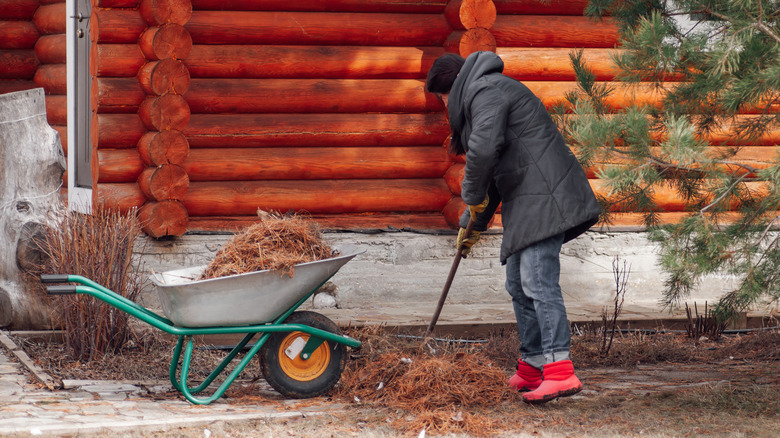
Many types of plants need mulch in winter. Winter mulch protects plants by preventing excessive dry-out from harsh winds while keeping roots alive as the temperature plunges. Some mulch materials even provide nutrients as the organic matter they're made of breaks down. However, all those benefits are of little use if you don't remove the mulch the following spring — it's then that heavy, old mulch can do more harm than good.
Broadly speaking, removing thick winter mulch in stages as spring approaches gives perennials the chance to get acclimated to the warming weather. At the same time, it provides some protection if an unexpected cold snap occurs. In general, the rule of thumb is to start raking the mulch away from plants gradually when the temperatures stay around freezing or above. Every few days over the course of a couple of weeks, remove a little more of your winter mulch.
The danger in leaving heavy mulch layers on your garden beds for too long in spring is that they can damage perennial shrubs and plants. There are a few other reasons to remove and replace mulch in late winter or early spring. Pests or their eggs may have overwintered in the dense layers of wood chips, straw, or other types of mulch that attract the most bugs. In addition, the mulch may contain diseased plant debris. If, however, you inspect the mulch and don't see any insect eggs or diseased foliage, it's likely safe to add your winter mulch to your compost pile.
Match de-mulching strategies to plant types
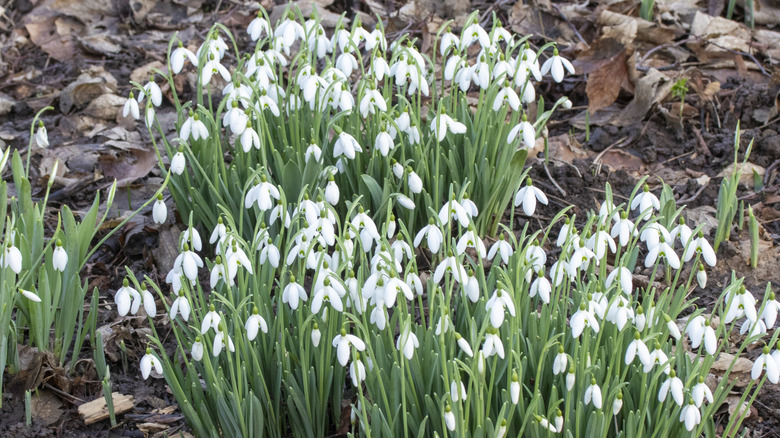
When working out timing and technique for mulch removal, the maddening answer is that it depends. The earliest spring bulbs, such as snowdrops, are also usually the tiniest and most fragile. Winter mulch should be removed from their beds before they even begin to emerge. If possible, do this on a warm winter day when the mulch isn't frozen and chunky, as hard clumps could potentially harm the delicate blooms. Daffodils and tulips are sturdier and pop out of the ground a little later in spring, so you can wait until you see shoots before removing mulch. Even then, gloved hands are gentler than rakes when dealing with frozen mulch.
Herbaceous perennials like peonies, hostas, and daylilies, which die back to the ground in the winter, rely on a covering of mulch to protect their tender sprouts when they first break ground in spring. Keep gently poking through the mulch to see if the shoots have emerged. The emergence of shoots is a telltale sign that it's time to remove old mulch. This way, you'll avoid smothering the new growth and provide much-needed sun and water at the right time.
Finely shredded leaves pose a potential exception to these mulch removal rules, particularly if you've used the material in a vegetable garden. Shredded leaves aren't as heavy as most other organic mulches, and new shoots can usually push through the fluffy material. After the last frost date, simply pull the mulch away from planting rows and sow seeds or plant seedlings as usual. Rake the mulch back into place when the plants are taller than the 2- or 3-inch layer of mulch. Of course, you will probably need to replenish the leaf mulch in spring.