

Plant These Bulbs In The Fall For Intensely Fragrant Spring Flowers
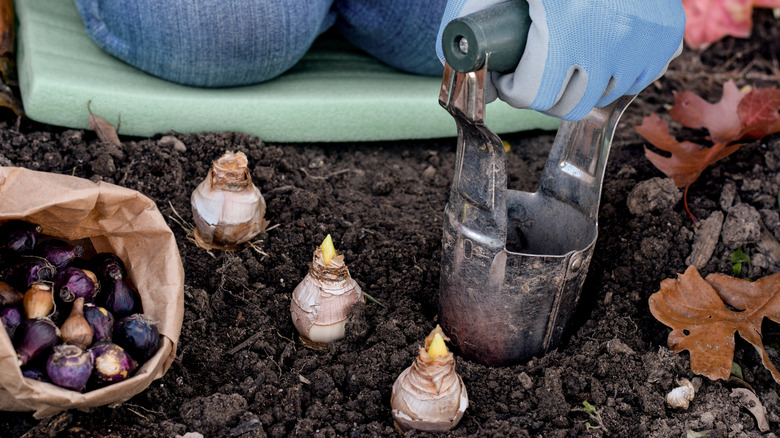
When you're deep into fall, it can be difficult to think about what you want to experience in your garden once spring comes around again. Depending on where you live, your garden is probably preparing to go to sleep, and you're imagining those long winter days spent cozying up in front of the fire. Even though you may already have a small collection of enchanting spring-flowering perennials that'll keep blooming once other flowers fade, it's good to remember that fall is the perfect time to plant spring bulbs. Taking action now gives you something to look forward to as the garden wakes up again in spring. If you're super fond of fragrant flowers, why not consider planting Narcissus 'Baby Moon' bulbs in fall?
While you may think these bulbs resemble daffodils, jonquils are actually a specific type of daffodil within the Narcissus genus, which includes many related cultivars and hybrids. The other distinctions that set jonquils apart from other daffodils are that they have hollow stems, multiple blooms per stem, and always flower in shades of yellow. 'Baby Moon' is no exception. It sports small, yellow, daffodil-like flowers, usually three to five per stem. This pretty plant is widely considered one of the most fragrant in the entire genus. Plus, it's categorized as a miniature variety because it only reaches a height of eight to 12 inches. You'll also find that, since this cultivar blooms late in the season, it will keep the floral party going right through spring.
Your guide to planting Narcissus 'Baby Moon' in the garden in fall
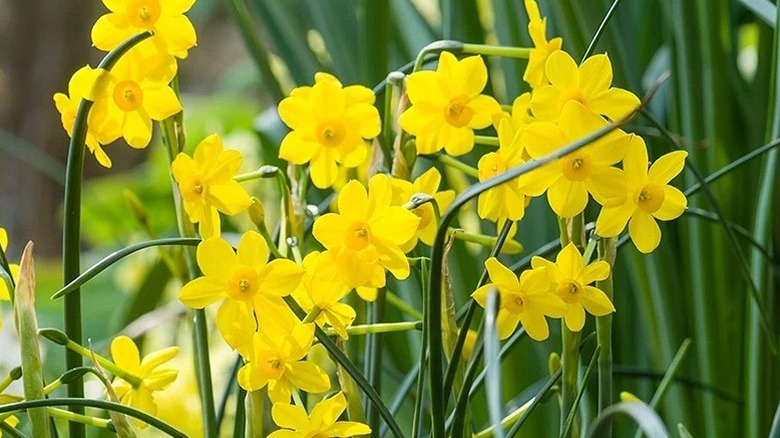
This jonquil cultivar thrives in USDA Plant Hardiness Zones 5 through 9; it needs a period of around 12 to 16 weeks of cold to produce its fragrant blooms. That's precisely why planting Narcissus 'Baby Moon' bulbs in fall is ideal. Choose a sunny spot or, at most, a location with dappled shade. If your soil is not all that fertile, you might want to add a balanced fertilizer before or during planting.
For the best display in spring, consider planting 'Baby Moon' in groups of at least six bulbs or in drifts, spacing each bulb at least 3 inches apart or three times the bulb's width, whichever is greater. This is the best way to plant your bulbs for a soft and natural look. Remember to bury the bulbs 6 inches deep (or three times their depth) with the pointed end facing upward.
Once the bulbs are in the ground, there's really not much else you have to do. You can cover the area with 2 to 3 inches of mulch, which will help to insulate the bulbs from weather extremes and stop the soil from drying out completely. Then it's just a case of waiting until late spring, when those pretty 'Baby Moon' flowers appear and fill the air with gorgeous fragrance. If you want a spring garden bursting with color, plant other bulbs in November, including Dutch irises, anemones, tulips, crocuses, snake's head fritillaries, and more.