

Forget Asters: The Fall-Blooming Perennial You Should Grow In Wet Parts Of The Yard
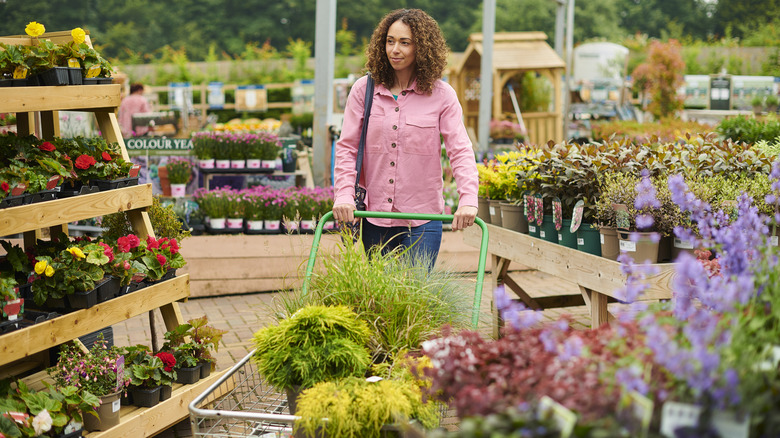
Asters have plenty of value — they can help bring more pollinators to your yard and garden, will add a pop of color to your outdoor space in late summer and early fall, and will freely self-seed in optimal conditions for pretty blooms year after year without extra effort. The only problem? They're not the ideal choice for wet, swampy areas. Asters are prone to root rot and powdery mildew if they're not given proper airflow and drainage, so in these parts of your garden, Riddell's goldenrod (Solidago riddellii) can act as a fantastic alternative.
Riddell's goldenrod thrives in USDA Hardiness Zones 3 through 7, similar to asters' Zone 3 through 8 range, and they're both most often grown as perennials. Riddell's goldenrod is fantastic for attracting bees and has particular importance to these populations thanks to its late-blooming status, just like asters. It doesn't just look pretty in your garden — it helps local pollinators thrive at a time when access to food starts to become more scarce. This species is native throughout the central U.S., popping up as far south as Arkansas and as far north as Canada, so it's a low-maintenance flowering plant that you can feel good about incorporating into your garden.
Unfortunately, goldenrod's reputation has taken a hit thanks to the fact that its sunny yellow blooms can be easily confused with ragweed. The two plants grow in similar locations, have the same coloring, and bloom around the same time, so it's not shocking that some have placed the blame on goldenrod for their allergies. You can rest assured that this isn't the case — goldenrod won't give you the seasonal sniffles like its doppelganger.
How to plant and care for Riddell's goldenrod
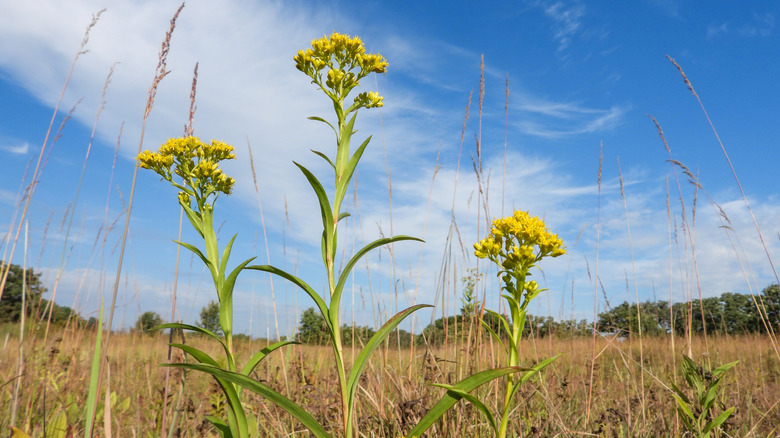
Riddell's goldenrod can be grown from both starts and seed, depending on what you have access to, but if you want color more quickly, the latter option is a better bet. Plant starts either in the spring or in the fall, around a month before the first frost, and sow seeds in the fall to allow for natural cold stratification. This species of goldenrod will bloom in the first or second year when grown from starts, but from seed you'll have to wait two to three years to see its pretty yellow color.
Thankfully, this waiting period requires next to no work on your behalf — as long as your flowers are planted in an area that sees full or partial sun and has consistently wet soil, care is very hands-off. Riddell's goldenrod isn't prone to damage from disease, deer, or insects, so all you really need to do is divide the clump every two or three years if things start looking cramped. Once color does appear, you can deadhead your garden's flowers to increase the chance of more blooms, if desired.
Riddell's goldenrod can look somewhat spindly in the garden, shooting up top-heavy stalks that can reach up to 2 to 3 feet tall at maturity, so consider pairing the plants with denser, bushier picks that require the same growing conditions to add some variation to your beds. Hardy hibiscus (Hibiscus moscheutos), marsh marigold (Caltha palustris), and swamp sunflower (Helianthus angustifolius 'Low Down') would all make for stunning companions.