

Spraying Your Planters With WD-40: What It's For And Why It's Recommended
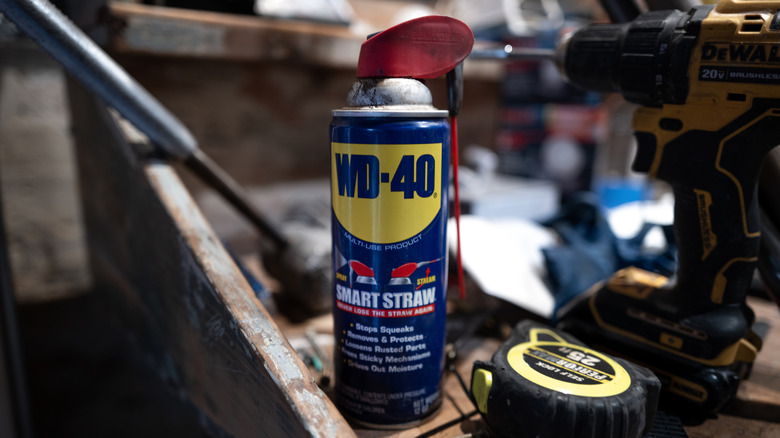
Inviting your friends and family over for barbecues or parties sounds like a good time. But these happy expectations may soon be replaced with an age-old predicament when you glance at your outdoor planters: are they looking chalky (imagine the horror)? Time, UV exposure, and contact with nature's vagaries often leave our gorgeous planters looking drab, faded, or discolored. While your friends are sure to understand, it would be nice to restore their shine and luster, as if they were brand new, and not some time-hardened pieces looking to be replaced.
Turns out, you can take your planters from boring to beautiful in a pinch with that trusted can of WD-40 chilling in your utility shed or kitchen cabinet. The process is easy and doesn't require much elbow grease. Apart from WD-40, keep spare rags and a small bowl of water handy so you can wipe your planters down. Another bonus? You can remove calcium buildup and stains on potted plants with the same can of WD-40.
Spray WD-40 to restore sheen on your planters
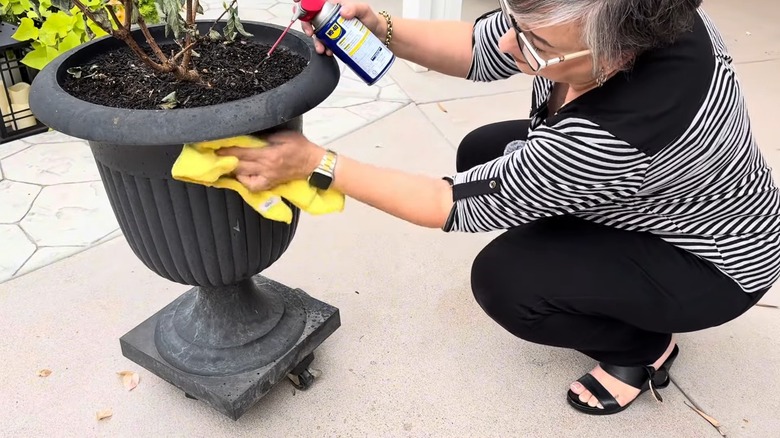
Ready to make big changes to your yard with the help of WD-40? First, clean your planters with a damp cloth. This should get rid of any mucked-up dirt and debris, bringing out some of the original finish. For stains that are especially persistent, feel free to switch to a soapy water solution.
Once dry, take a clean rag and spray some WD-40 on it. One reason not to spray the lubricant directly on your pots is to prevent spray drift from getting on the leaves or soil. WD-40 is a petroleum derivative and coats any surface it gets on with an oily residue. This works wonderfully for planters, giving them with a wet and saturated look and making them seem glossy and dark. But it can be harmful for leaves, as the oily coating impairs respiration, leading to their untimely death. In fact, consider avoiding this hack around edible plants unless you're working with an empty planter.
Next, rub the sprayed-on rag evenly along the planter. You should notice immediate results, with the surface darkening. You may also notice rust (in case of metal containers) breaking down afterwards. Finally, using a clean, dry cloth, give the planter a quick wipe down to scoop up any excess material. Otherwise, it may attract dust. If you want your planters looking shiny and glistening in the sunlight, you can follow up with a tire shine, though it isn't necessary.
What to know before spraying WD-40 on your planters
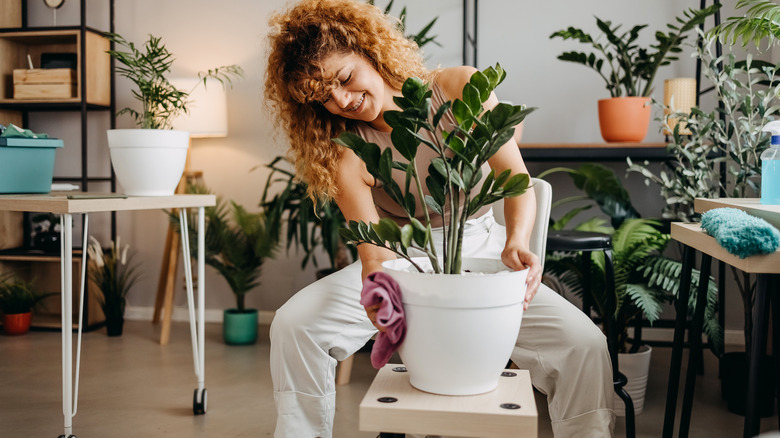
Before busting out the spray can, ensure you're working outdoors or in a well-ventilated area. Even though WD-40 is considered relatively safe, repeated or close contact can irritate your lungs, eyes, and skin, so take the necessary precautions. Also, pay attention to the planter's material. WD-40 can be used safely on plastic, resins, and painted or unpainted metal. If your pots are rubber or hosted over rubber feet, reapplications may cause the material to swell. This trick may work for wooden containers too, though it may cause some staining, so spot test before going all-in. If you've repurposed food containers into planters, avoid spraying them with WD-40, as they can deteriorate.
While you may notice immediate results, remember they aren't a permanent fix. With time, the restored glossy finish may mellow to a more matte look, requiring a redo. Rain may also wash it off. Moreover, it may leave your planters sticky. So, ensure your planters are in their permanent resting spot before using the spray. However, if you're looking for a long-term, durable solution, try a UV-resistant spray paint or sealants instead.