

How To Reduce Grass Sticking On Lawn Mower Blades With An Affordable Find (It's Not WD-40)
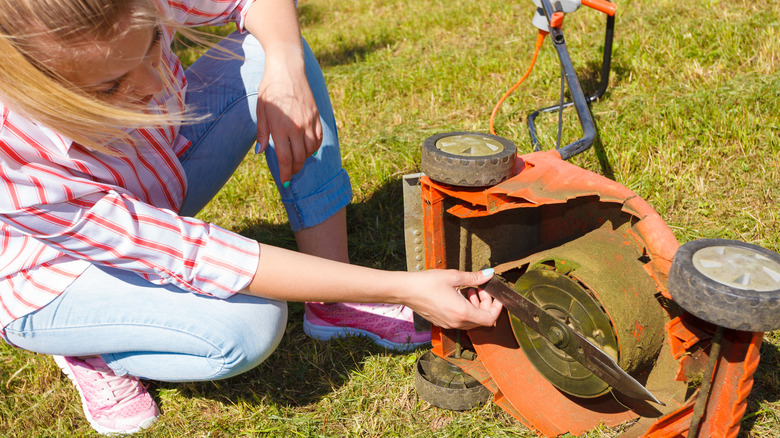
It's no secret that the underside of your lawn mower gets exposed to a lot of grass clippings. Those clippings tend to stick to the blades and undercarriage of your mower, especially if you're cutting a lawn while it's wet. One way to lessen the buildup of clippings is to only mow your grass when it's dry. But let's face it, if you live somewhere that receives a lot of rain, sometimes you don't have a choice but to mow wet turfgrass. A better, all-weather solution is to lubricate your mower blades with a graphite lubricant.
To avoid having to constantly clean their mower blades, some people treat them with a ceramic coating, which prevents those clingy clippings from sticking in the first place. There's even a simple WD-40 hack that'll keep grass off your lawn mower blades. However, wet lubricants are prone to collecting debris and gumming up your mower's mechanisms, while ceramic lubricants don't last long. That's why graphite lubricants are another option worth considering. A dry graphite lubricant goes on like paint and may even keep your mower blades free from cut grass buildup for a mowing season or two. Use it on the types of lawn mower blades that give the cleanest cut to save time on mowing, cleaning, and maintenance. It can also prevent damage to the underside of your mower, as stuck clippings may cause rust.
How to safely apply graphite lubricant to your mower blades
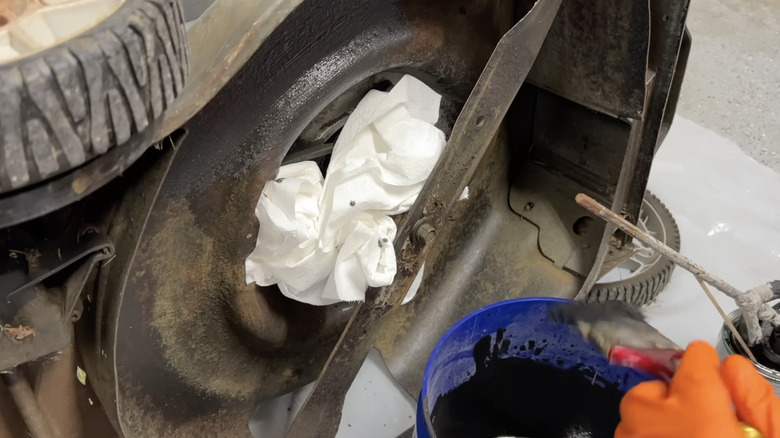
Graphite lubricants are applied while liquid and dry to form a smooth, hydrophobic surface that repels wet grass clippings and other debris. They typically come in either liquid form or as an aerosol spray. Regardless of which brand or type you use, the application can get a little messy, so line your work area with cardboard before you begin. Power off your mower by disconnecting the spark plug wire if it's a gas mower or removing the battery if it's an electric model. Then tip the mower onto its side for safer access — follow the manufacturer's tipping instructions — and remove the blades. Wash and dry the blades thoroughly. Also clean the underside of the mower if you're planning to lubricate the deck at the same time. It is okay to hose down a lawn mower or use a power washer.
Next, if you're lubricating the mower deck, place painter's tape over any areas you don't want to coat and protect the belt with paper towels. If using a liquid graphite lubricant, stir it thoroughly before applying. Once mixed, it should have a consistency similar to paint. Use a paintbrush to apply the graphite lubricant to the mower blades and, if desired, the underside of the deck. One coat may be all you need, but you can apply additional coats until no bare metal shows through. The lubricant should dry within minutes, but it can take four to eight hours for it to fully cure. Once the finish has cured, replace the mower blades and you're done. You can look forward to fewer sticky clipping messes for at least a mowing season before needing to reapply the graphite lubricant.