

Wood Vs Metal Files: Are You Choosing The Right One?
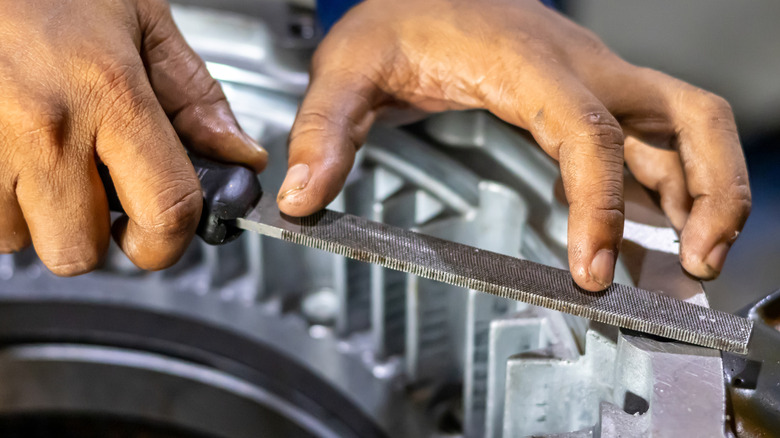
At its most basic, a file is a piece of hardened metal with a toothed surface used for shaping different materials. Typically, you might think of a file as a metalworking tool, like sharpening lawn mower blades. Some people might also use the same file for shaping wood, but while it is capable of doing so, it's not really the correct tool for the job. Wood and metal files are not the same, and their uses depend on the task you're trying to accomplish and how quickly you want it done.
Metal files come in many styles and are primarily used in metalworking and woodworking settings to sharpen blades, remove uneven textures, and modify components. The two most common are flat files and mill files, which look very similar apart from small variations in shape. Flat files are generally more aggressive, with cutting teeth on both sides, whereas mill files are more of a finishing tool. Some other types include half-round files, triangular files, and needle files.
Since metal files are also used in woodworking settings, you might wonder why we bother with wood files at all. It's all about cutting efficiency. Metal file teeth are close together, and because metals are hard, the filing action produces only tiny waste particles. On the other hand, since wood is much softer, the shavings quickly clog a metal file's teeth. This results in frequently stopping to clear that waste with a wire brush or file cleaning card, which can be frustrating if you're trying to work fast. And if you don't remove all of it, you'll soon have to revive your rusty metal file. To avoid this scenario, you'll need a wood file, or rasp.
When to use a wood file
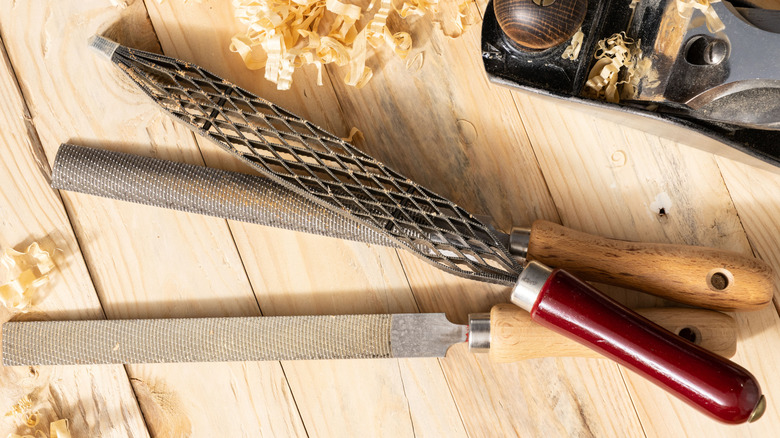
Files specifically for wood are actually called rasps. They have triangular teeth raised from the surface and have larger gaps than metal files. The space between the teeth lets sawdust clear without clogging. These tools are usually used for preliminary shaping, smoothing sharp edges, and making intricate shapes or curves. Rasps are often solid, like metal files, although some, such as Shinto rasps, have an open grid of teeth that cut wood and clear waste particularly fast.
The bottom line in the wood vs metal file debate is that the name gives the game away. Metal files and wood rasps have specific functions, and you shouldn't try to use one for the other. Wood files will not shape metal at all, but metal files can shape wood in a pinch (if you don't mind the clogging; if you do, stick to using a rasp for wood). Regardless of which you choose, always follow metalworking and woodworking safety precautions, especially wearing a mask. Most sawdust will irritate your nose and throat, but some woods cause allergic or asthmatic reactions, and a few are even toxic.