

Spraying Vinegar On Aluminum And Cast-Iron Pans: Why It's Not Recommended
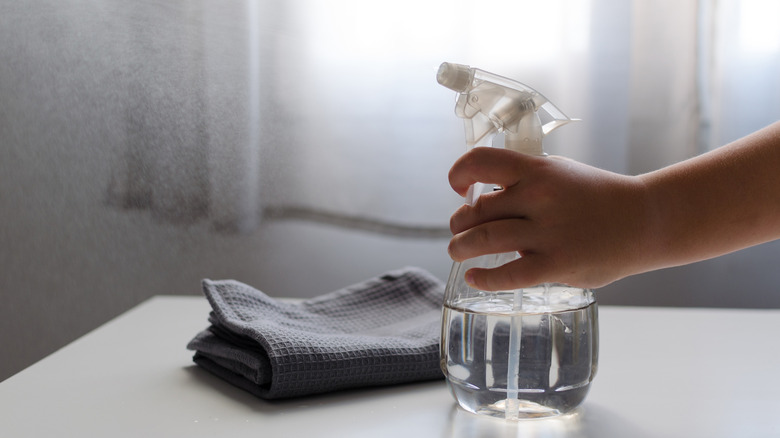
Vinegar is one of the most popular natural cleaning ingredients out there, and for good reason. It puts up a powerful fight against musty smells, hard water stains, and stuck on grease, among many other things, while simultaneously functioning as a primary ingredient in salad dressings. The fact that this cleaner is completely non-toxic is one of its best characteristics, but it can also lead to the false impression that it's safe to use on every surface. The acidic nature of vinegar might not cause damage to us, but when it comes to certain materials, it can do more harm than good. Such is the case with cast iron and aluminum pans.
Both of these metals are incredibly durable and can handle massive amounts of heat without issue, but they're not resistant to everything. In the case of cast iron, vinegar can dissolve the seasoning on the pan, leaving it prone to rust. If it's left on for an especially long period of time, it can even etch the surface of the metal, causing pits and severe damage.
Aluminum is also highly reactive with acids like vinegar, and cleaning your pans with it can break down the surface of the material. A quick rinse or accidental spritz likely won't be enough to cause severe damage, but it's certainly not the best way to clean this metal on a regular basis. If you want to protect your cast iron or aluminum cookware, vinegar should only be used as a cleaning agent occasionally, carefully, and for very specific purposes.
When vinegar can be used to treat cast iron and stainless steel
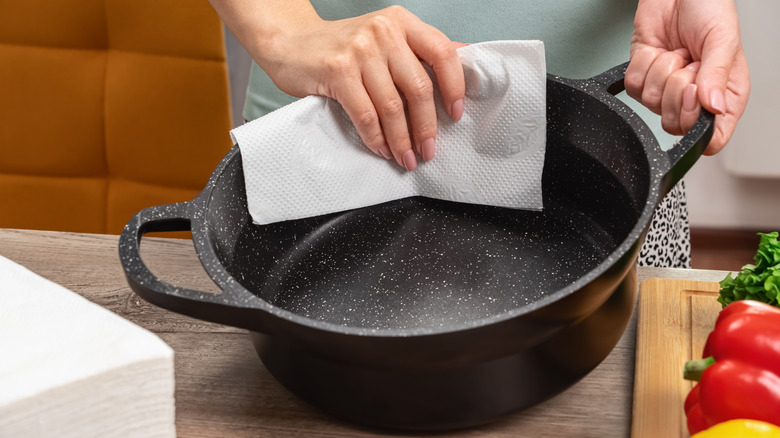
When it comes to these two materials, think of vinegar like bleach — it doesn't need to be used every day, but it can come in handy for bigger jobs. If you're facing off against rust spots or discoloration, it's worth pulling it out. If not, stick to warm water and dish soap to keep your pots and pans clean.
Vinegar removes rust from cast iron skillets when it's mixed 1-to-1 with water and used as a soak. Keep the pan in the solution for 30 minutes to an hour to lift these stubborn spots. Once it's made it through the rust, however, it gets to work dissolving the seasoning, and soon after that, etching the surface of the metal, so monitor the process closely. Some people actually recommend doing an extended soak on purpose if your cast iron pan is too smooth or polished to season effectively, but this is a fairly rare situation that should be handled with an abundance of caution.
In the case of aluminum pans, vinegar is a great tool for eliminating hard water stains or discoloration. To get rid of that annoying, dull film, fill the pan with water, add a tablespoon or so of vinegar, and bring the mixture to a simmer for five to 10 minutes. For hard water stains, go for a 50/50 soak just like with cast iron and allow it to sit for 30 minutes. After you're done with all of these treatments, you should immediately rinse the pan and fully dry it to prevent accidental damage.