

Not A Swiffer: Clean Floor Grout With An Easy Solution That Also Brightens
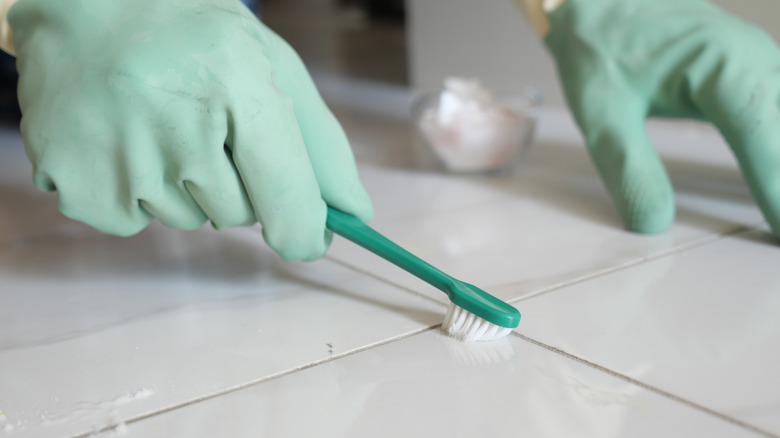
No matter how shiny and bright your tiles are, your floors will always look a bit dingy if you don't extend the same level of care to the grout. Unfortunately, keeping grout clean is a notoriously difficult task. The little valleys between your tiles have a knack for collecting dirt, grime, and spills, so it's necessary to bring dirty grout back to life on a somewhat regular basis. Mopping or using a Swiffer might provide a modest improvement on the situation, but if you really want your space to feel refreshed, try using oxygen bleach mixed with hot water.
Oxygen bleach, also frequently referred to by its common brand name, OxiClean, is a very different product from standard chlorine bleach, despite the similar name. Chlorine bleach can be a bit intimidating to work with because it's so harsh. It can completely strip the color out of materials it's applied to. What's more, you should never mix bleach with common cleaning products or you risk creating toxic gases as a byproduct of chemical reactions. Oxygen bleach, on the other hand, is significantly gentler. It doesn't contain chlorine and instead relies on the power of oxygen molecules to lift stains and dirt.
With that being said, it's still important to follow the manufacturer's instructions when you're trying out any new cleaning product, especially when dealing with a material that's as temperamental as grout. Always perform a spot test in an inconspicuous area before applying a product to your entire floor. If the results aren't what you hoped for, go in with a cleaner specifically designed to be safely used on grout instead.
How to clean your grout with oxygen bleach
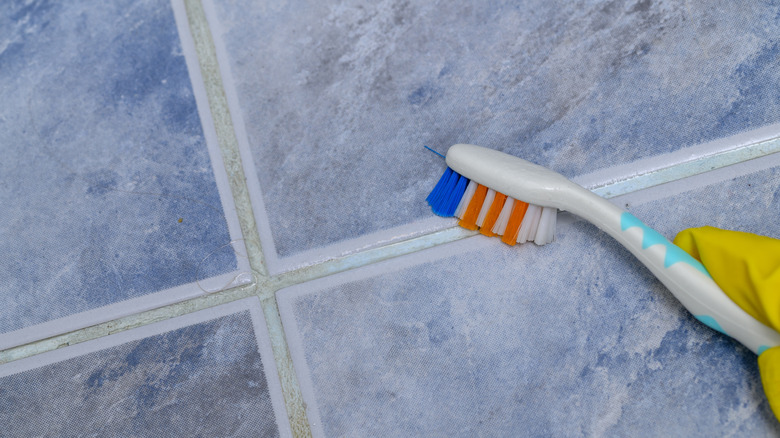
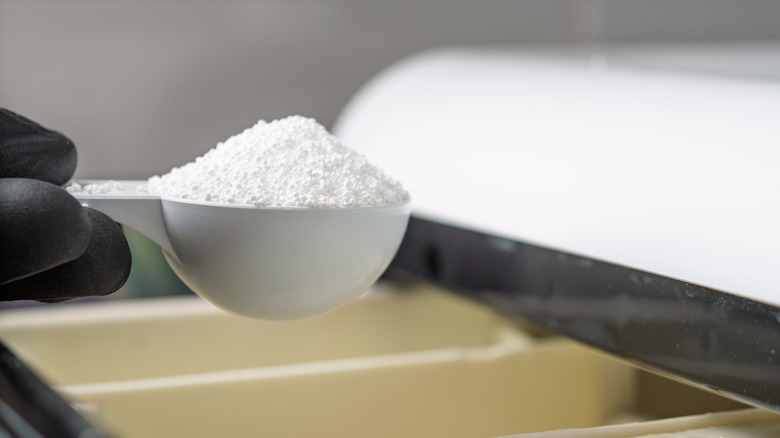
All you need to complete this job is warm water, your oxygen bleach powder, a microfiber cloth, and a small brush for scrubbing. There are two methods you can use, but the only real difference between them is the ratio of oxygen bleach to water. For a more controlled, concentrated cleaning solution, mix oxygen bleach with a small amount of hot water until it forms a paste. If you'd rather spray or pour the cleaner onto grout, dissolve 2 tablespoons of powder in 2 cups of warm water — or scale up the ratios to create as much of this solution as you need.
Start by sweeping, mopping, or vacuuming your floor so you're starting with a debris-free surface. Apply your mixed water-and-oxygen-bleach solution to the grout lines and wait for the product to lift any stains. The brand of oxygen bleach you chose may have wait times listed on the packaging, but it's standard to wait for about 15 minutes. Once the solution has done its job, go in with your brush and give each grout line a good scrub. Rinse everything with clean water and wipe off any residue with a cloth to finish off the job.
It's best to work in small sections and move across the floor gradually to ensure the water-and-oxygen-bleach solution doesn't dry out before you have time to scrub and rinse. It's a labor of love, but the results should be worth the effort. Oxygen bleach can lend a serious helping hand and minimize the amount of cleaning you have to do in the long term. If there are areas of grout that are stubbornly clinging onto dirt, go in with an additional round of spot treatments.
What to keep in mind before trying this grout-cleaning hack
While oxygen bleach is considered very safe for use on grout, the same can't be said for all types of tile. Porcelain and ceramic tile are fair game, but when it comes to natural stone, things get a bit trickier. What you need to know about natural stone tile before you clean it with oxygen bleach is that it's prone to chemical damage and etching, especially from highly acidic or powerful cleaners. While this cleaning hack is focused on the grout, you'll inevitably get some of the mix on the edges of your tiles. It's best to stick with a pH-balanced cleaner that's specifically designed for use on natural stone.
There's also, of course, a potential risk of discoloration. Most grouts are perfectly fine to clean with oxygen bleach, and discoloration is less common than with chlorine bleach. With that being said, it's best to be cautious, which is why we recommend doing a patch test first. A water-and-oxygen bleach solution may also leave behind a white cast on your grout or tiles after cleaning. Don't worry, this isn't permanent. It just means that there was some oxygen bleach left behind. Go in with some more clean water to remove this haze, then consider following up with a coat of grout sealer to keep your floors looking pristine for as long as possible.