

You Don't Need Hydrangeas: There's A Fragrant Tree That Butterflies Love
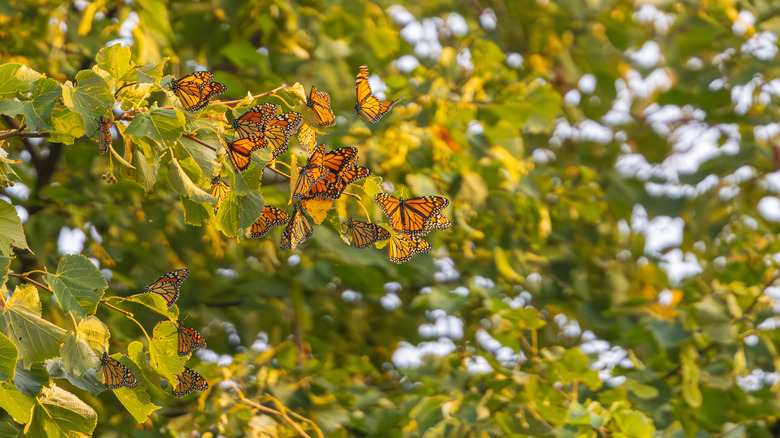
If you're looking for a native tree that smells as good as it looks, boasts a rich history, and attracts butterflies, sassafras (Sassafras albidum) may just be the perfect tree for you. Also known as red or white sassafras, this fragrant tree has a long use as a culinary and medicinal resource for Native Americans and early colonists. These days, it's equally valued for its nectar-rich flowers, which draw a range of pollinators. Sassafras plays host to several moth and butterfly species, making the tree an ideal backbone to your butterfly garden.
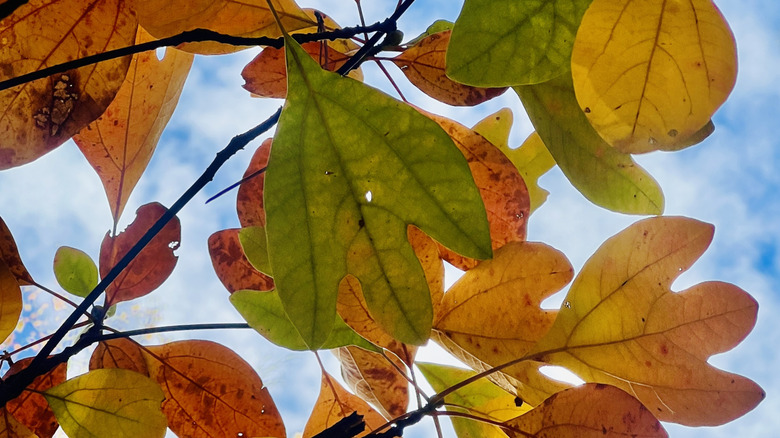
The tree's unique foliage emerges as three separate leaf shapes, depending partly on age and light conditions. Leaves may be triple-lobed, oval, or mitten shaped, often on different parts of the same tree. In the fall, even more variety is at hand, with leaves blazing in shades of orange, burgundy, and gold. Among the many types of wildlife that visit the sassafras (from song birds to black bears), the spicebush swallowtail butterfly is especially dependent on the tree. Sassafras typically hosts swallowtail larvae, as well as the colorful imperial moth.
Just as sassafras' leaves provide variation for the eyes, your nose will also get a smorgasbord of scents – the tree reminds people of fruit loops and root beer! The bark is sweetly spicy, the leaves and their stems are on the lemony side, and roots are, fittingly enough, root beer scented.
Grow the easy-going sassafras tree
The best time to plant young sassafras trees is either spring or fall. Ideally, look for seedlings to plant. Often homeowners are willing to pay extra for more mature trees, but this is not a wise investment in the case of the sassafras. This species' long taproot dislikes disruption as it gets larger, making younger sassafras trees a much better option. You can also grow this fragrant, fast-growing tree from seed, and it's a perennial in USDA plant hardiness zones 4 to 9.
If possible, establish the sassafras tree in an area that has acidic, sandy soil. If you don't have those conditions, a well-drained area will still likely yield good results. Choose an area that gets mostly sun or is partly shaded. The tree's leaf variation allows the it to get the nutrients it needs in different light conditions, producing more lobed leaves in lower light and oval foliage in sunnier spots.
How much space you devote to the butterfly-attracting sassafras depends on whether you're happy to let it spread or are determined to keep it to a single-trunked specimen. Left to its own devices, the common sassafras will turn itself into a 40-foot-wide thicket, acting as fast-growing, natural privacy screen in your yard. To keep it under control, remove the tree's suckers as they emerge from the ground. Likewise, you can control the height of the sassafras through pruning, if desired. It's capable of reaching heights of 60 feet. If you prefer to keep it to the height of a small tree or large shrub, cut the entire plant to the ground every few years.