

Should You Store Your Grill Tank Empty Or Full During The Winter?
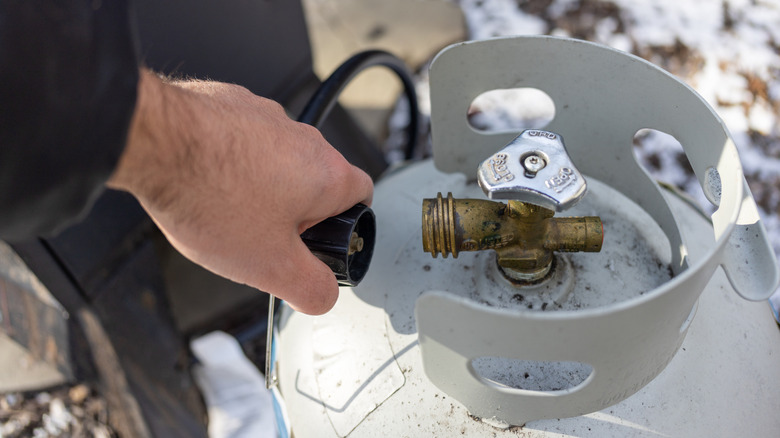
The propane versus charcoal grill debate may rage for eternity, but whichever you prefer, few can deny the pleasure of cooking outside and biting into a juicy piece of grilled meat on a nice sunny day. But the saddest part of owning a grill is having to put it away when the weather starts to get cold. If you're on "team propane," that means you need to consider what to do with the gas tank when it's time to cover and store the grill for the winter. Should you empty the tank, or fill it up before storing it?
The good news is, it doesn't really matter – although filling the tank before it goes on hiatus does give you a jump start on your summer to-do list when grill season returns. It takes years for propane to go bad, so your grill's gas tank will be just fine in storage for several months regardless of fill level. You also don't need to worry about moisture in the tank while it sits unused for a short period. When properly filled, propane tanks are sealed and contain only liquid propane and vapor, so there's no air inside to create condensation. . Nonetheless, there are some important considerations for safely storing your propane grill tank.
How to safely store your grill tank during winter
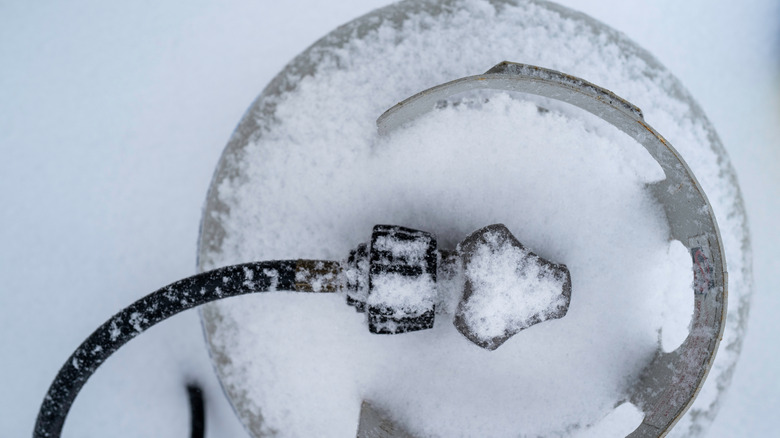
Although you don't have to worry about the propane fill level, there are some important steps to prepare your grill's gas tank for winter storage. First, close the gas valve and disconnect the tank from the grill. Then perform a thorough inspection. Examine the connection valve and tank for damage or leaks. If the valve is shut, but you smell gas (propane is odorless, but a scent is added for safety), you might have a bad propane tank.
If everything looks good, it's time to find a good storage spot. Always store your propane tank outdoors, positioned upright on a stable surface where it won't fall over. Keeping it off of grass or soil can also help prevent rust on the bottom. Never store your grill's tank inside, which is an easy mistake to make with propane tanks. This includes carports, patios, and other "outdoor" spaces that are still partially enclosed. And although your tank should stay outside, keep it out of direct sunlight.
If you can't find a shaded location for the tank, use a protective tarp or cover. This helps to keep it free of moisture from rain, snow, and ice that could potentially cause rust. Additionally, ensure the tank is safely away from any heat sources, such as fire pits or outdoor space heaters. And finally, it's a good idea to inspect the tank monthly for any rust, leaks, or damage that might have occurred from exposure to the elements. Then when warm weather arrives, your grill's fuel is ready to go.