

Using A Steamer On Glossy Walls: What It's For And Why It's Recommended
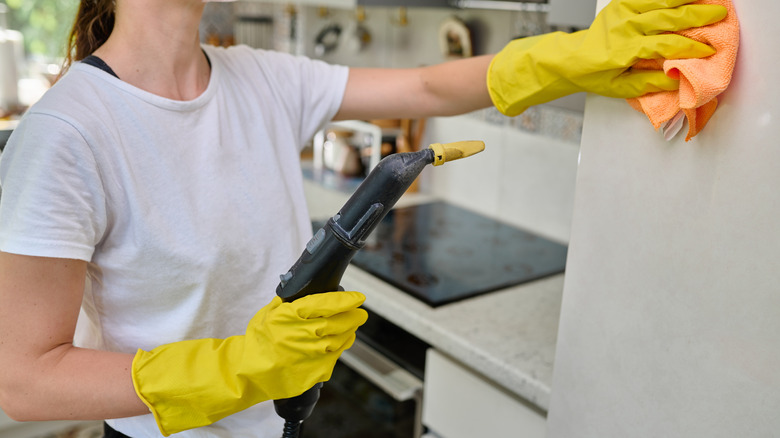
While you might be very familiar with the steam cleaner you use to effortlessly clean your hard floors, there are, of course, other types of steamers that can handle those hard-to-clean, grimy surfaces such as shower screens, kitchen counters, and even dirty grout on wall tiles. But did you know that you can also use a steamer to clean and freshen your walls, as long as you follow a few simple guidelines? For one, this trick only works on certain surfaces: walls that have been finished with gloss or semi-gloss enamel paint.
You might be wondering why you would want to steam clean your walls in the first place. It's surprising how much dirt, dust, finger marks, and scuffs these vertical surfaces can attract. They can even absorb certain odors. For a fresh, crisp clean, steaming is often recommended because it uses no chemicals and arguably requires much less effort than, for example, physically washing down the walls with a sponge dipped in soapy water. The highly heated vapor may help dissolve grease, loosen up dirt, and kill bacteria and mold spores.
However, there are certain types of walls that you don't want to steam clean. You risk damaging walls that are finished with a flat or matte paint, as the heat and moisture in the steam can cause the paint to bubble or get covered in water marks. Similarly, the hot steam easily lifts wallpaper from the wall, so you shouldn't use a steamer to clean papered walls. In fact, this laundry room essential is a no-fuss way to remove wallpaper.
Identify your wall surfaces before using a steamer to clean them
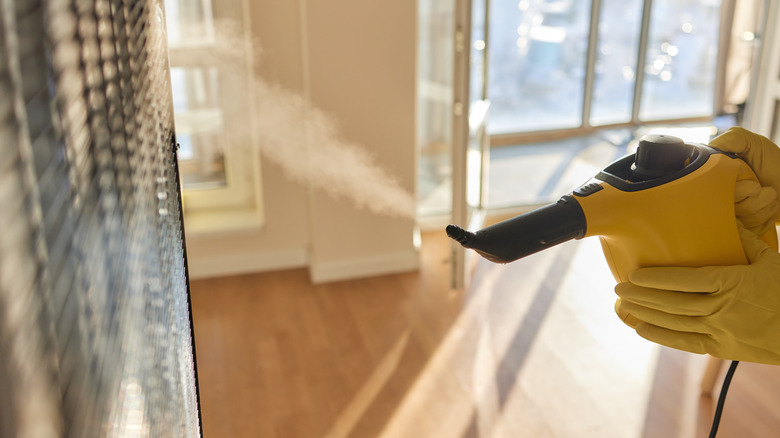
You can use a steamer to quickly clean and sanitize surfaces without the need for chemicals. However, if you're unsure what type of paint is on your walls, it's a good idea to test the steamer on a small, inconspicuous spot. Make sure you allow for around 15 to 30 minutes of drying time to see whether the steam has caused any issues. Remember that the steam is extremely hot and damp, which is why only moisture-resistant gloss or semi-gloss paint can handle steam cleaning.
One of the most important things to remember when using a steamer on glossy walls is never to stay on one spot too long. You want to constantly move the steamer across the wall so that you don't concentrate moisture in one area and run the risk of wetting the drywall behind the paint. This is the main reason you want to set your steamer to dry-vapor output with a temperature of around 240 to 300 degrees Fahrenheit. Essentially, the higher the temperature, the drier the steam will be. There's also a dangerous downside of steam cleaners you should be aware of — you can burn yourself if you're not careful. Direct the steamer away from your body and wear protective clothing and headgear.
As you're holding the steamer nozzle a few inches away from the wall and working your way from ceiling to floor, wipe away any water straight away with a clean microfiber cloth. You'll also remove any dirt and dust that the steam has loosened up on the wall at the same time. Once you've finished with your walls, you can move onto other things you never knew you could clean with a steamer, like your oven and ceiling fans.