

More Reliable Than Wood: The Long-Lasting Alternative For Patios
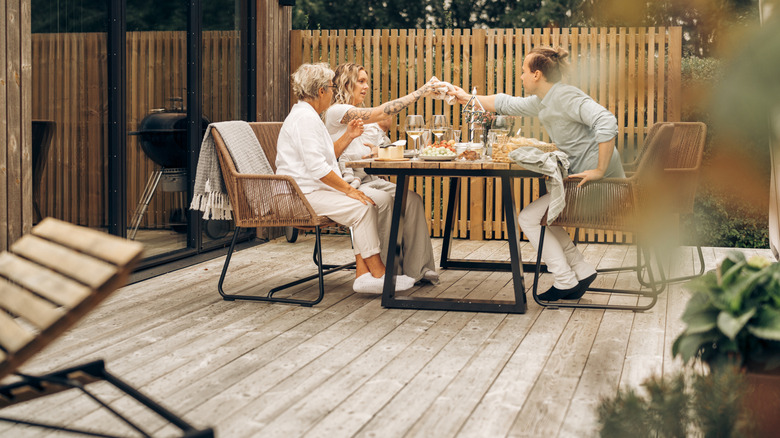
Several materials are available for constructing patios in residential and commercial locations. Some of the most popular hardscape options include concrete (poured or pavers), natural stone, and gravel. For an elevated patio or deck that has a look that will take you back to nature, though, pressure-treated wood, standard wood, and composites are found with regularity. Standard wood is probably the most popular because of its ease of installation and comparatively low cost to other options.
If you're considering using new lumber or old wood pallets for your patio, you may have some concerns about the longevity of the material. That's why many people eventually migrate to brick. It offers a timeless style and the ability to get creative with colors and layout patterns. In areas with wide variations in weather or with direct sunlight (or lots of rain) much of the year, brick is the more durable choice, especially if you stick with severe weathering (SW) bricks. They give you added protection against precipitation and freezing temperatures, while wood can splinter, warp, and pop out of place during freeze-thaw cycles. The wood absorbs moisture during these thaws, and the expansion as the moisture turns to ice in below-freezing temperatures can warp the wood out of shape.
Especially when compared to using wood in a raised patio (or deck), SW brick is a longer-lasting option. Wood patios may last 10 to 15 years, while the best brick can last hundreds of years with the right maintenance. With wood patios, you have to perform regular maintenance, such as sealing and pressure washing. SW bricks require minimal care, aside from occasionally sweeping debris, removing weeds, and caring for the mortar or sand setting.
Why severe weathering brick outlasts wood for patios
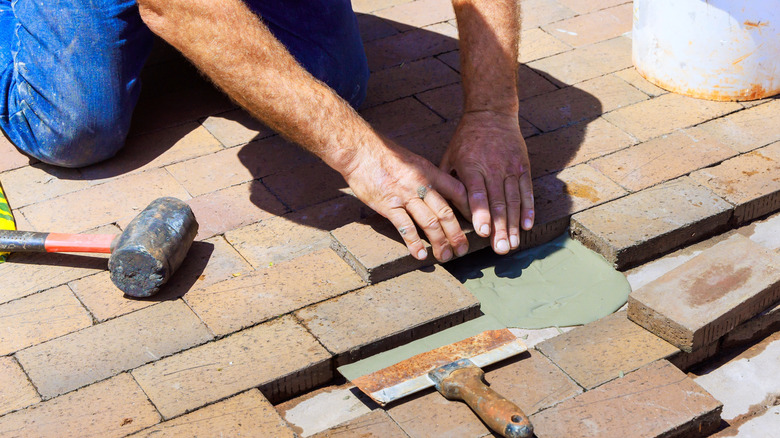
If you decide to go with brick, pay attention to the build quality and classification of the material. There are three classes that indicate how well your chosen brick will stand up to tough weather, ground temperatures, and precipitation: severe weather, moderate weathering, and negligible weathering. The SW classification is the most durable. Depending on the climate where you live, you may need to avoid moderate weathering to construct a long-lasting patio that is far more durable than wood patios. The only time you should choose negligible is if you're using the brick inside.
For patios that will primarily support light foot traffic and furniture, you'll want ASTM (The American Society for Testing and Materials) C902 paving bricks to deal with the weather and climate in most of the United States. ASTM C902 products are made for areas where people walk and gather, like patios or sidewalks. The brick may also be called SX, rather than SW, but it still means it's able to withstand all weather types.
Even repeated sun exposure can cause a wood deck to buckle. The ultraviolet (UV) radiation in sunlight breaks down the materials that hold wood fibers together; it also bleaches any stain and breaks down sealants. UV rays can also affect the natural protective layers found in wood, causing it to absorb water during rain and dry out fast in direct sun, which enhances splintering and buckling. All kinds of C902 paver bricks (including the SX or SW classification) tend to handle UV rays without fading. Beyond using it for patios, severe weathering brick is more durable than standard brick for garden beds, sidewalks, and pathways that are in contact with the ground.