

No More Basic Tile Floors: Consider This Luxurious And Durable Alternative Instead
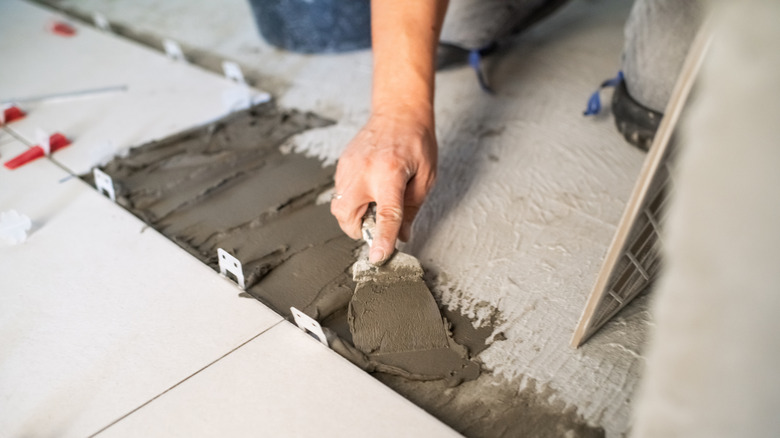
Plain tile flooring is a classic choice, but over the years, it's also become a major turn-off for many homebuyers and owners. Simple porcelain and ceramic picks that are common finds in builder-grade homes don't do much to add to the personality of the space or make an impact on the overall design. Often, the materials chosen during these builds are simply the most cost-efficient and widely palatable available. If you're finally settling into the space, however, you might be due for an upgrade that actually speaks to your personal style. Sintered stone is a great option.
Despite what the name might imply, sintered stone isn't a naturally occurring stone — it's just designed to look like it is. This material consists of a combination of natural minerals that have been heated to extreme temperatures and compressed together into a slab. The idea is similar to how quartz surfaces are made, but sintered stone doesn't rely on any resins or binders to keep things together. The final result is a material that looks and feels similar to natural stone without the difficult and time-consuming maintenance that the latter often requires. While it will certainly run you more than standard porcelain tile, its overall durability, low porosity, and stylish look make it a fantastic and long-lasting alternative to natural stone for homeowners who are craving a luxe upgrade that actually holds up well against regular wear and tear.
The pros of choosing sintered stone flooring

Let's start with the pros. One of the biggest things that sets sintered stone apart from natural stone tile is the fact that it's non-porous. Most natural stone requires regular sealing to protect it from damage from spills or cleaners, and if you slack on this maintenance, you could see serious negative impacts. This makes sintered stone a much more lax alternative for those who don't want to have to commit to a regular schedule of treatments. Additionally, sintered stone is resistant to staining, scratches, heat up to 300 degrees Fahrenheit, and weather, so regardless of where you're planning to install your flooring, you can rest assured that it will be able to withstand whatever is thrown at it.
Because it's a man-made material, sintered stone flooring's other major positive is its customizability. It's available in a massive number of colors and finishes that mimic the look of natural stone, so everything from dramatically veined Calacatta marble to sleek, dark basalt is on the table. Since sintered stone is most commonly sold in the form of large-format slabs, the pattern you choose will really get the chance to shine. Minimal grout lines result in less visual interruption in the appearance of the material as well as easier cleaning, so the overall impact is bold and modern while still remaining exceptionally easy to maintain.
Potential downsides of sintered stone flooring
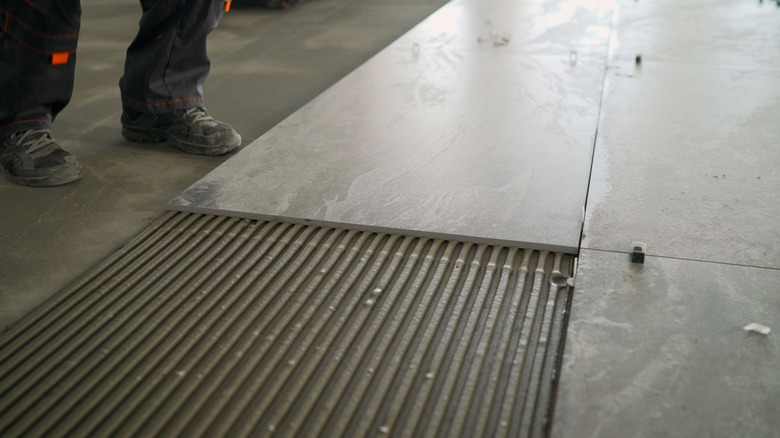
Sintered stone flooring has very few downsides functionally and aesthetically, but it does present some roadblocks in terms of accessibility. This is a fairly new material, and because it hasn't quite taken off yet, it can be more difficult to find, especially for a reasonable price. There's also the chance of running into hiccups with installation — many workers aren't yet familiar with how to work with sintered stone, so there's increased potential for damage. It's very durable overall, but it's prone to chipping at the edges and requires professional equipment and training to cut.
There's also, of course, the price. While the cost of materials and installation will vary based on your location, the specific retailer you go with, the design you choose, and the layout of your home, you can expect to pay a premium compared to more basic porcelain or ceramic tiling. According to data from Alvis, the general cost of materials per square foot typically sits between $40 and $120 for sintered stone. You'll also have to add in the price of labor, which is usually between $30 and $60 per square foot, along with removal of your existing flooring, if necessary, and shipping, which can vary significantly depending on your chosen supplier and its location. The most popular sintered stone manufacturers are all based out of Europe, so shipping can result in a fairly hefty charge for American customers.