

Spraying Natural Carpets And Rugs With Vinegar: Why It's Not Recommended
We may receive a commission on purchases made from links.
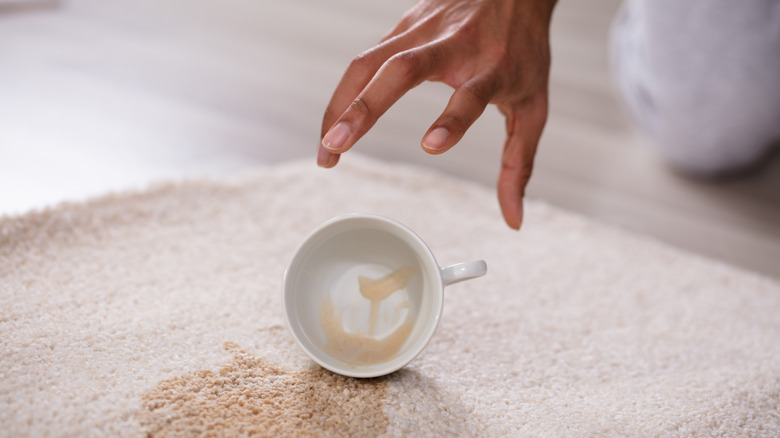
Distilled white vinegar can be a versatile cleaning tool that can tackle a variety of household messes, so you may have considered spritzing some on a rug to quickly address a stain. It's an inexpensive, biodegradable option that's probably already in your pantry, so why not try it? You're not totally off base with that thought. This everyday staple contains acetic acid, which can safely break down dirt and grease on certain types of carpeting. But if your rug or carpet is made of natural fibers, cleaning it with vinegar may do more harm than good. That same stain-removing acetic acid can dry out and frazzle wool, silk, and other natural fibers, causing unwelcome color distortion.
Even for synthetic rugs and carpeting, there are limits to how well vinegar can work on set-in stains, especially if they come from an acidic substance, such as ketchup or soy sauce. A specialized carpet cleaning solution is a better way to address those stubborn problems, and enzymatic cleaners are more effective for the messes pets leave behind. But the risks of cleaning with vinegar are greater for rugs made of wool or other natural fibers. If you're not sure what your rug or carpet is made of and how it will react with vinegar, try dabbing some vinegar on a small, inconspicuous patch to test colorfastness. If you see the dye start to run, don't use vinegar as a cleaner anywhere else.
Why vinegar is harmful to natural rugs and carpet
Using vinegar is a mistake to avoid when cleaning or reviving carpet or natural fiber rugs because most bottled vinegar has a pH level between 2.4 and 2.7, which puts it at the acidic end of the pH scale. Natural fibers need a more neutral cleaner with a pH between 5 and 8 to protect their delicate makeup. Cleaning vinegar, which is higher in acetic acid than the distilled white vinegar you're likely to find at a grocery store, poses an even greater danger to natural fiber rugs and carpets. Higher acidity is the main difference between white vinegar and cleaning vinegar; even if you're up for taking a chance with distilled vinegar, reserve the cleaning vinegar for heavy-duty messes and keep it far away from your natural carpet or rug.
Either way, vinegar damages natural fibers most with prolonged use, so if you've only sprayed it on your carpet or rug a few times, you can safely switch to a different rug cleaner. Not reversing course quickly, however, can shorten the life of your flooring, especially if it's made of a particularly sensitive natural material. Even if the damage doesn't make the carpet or rug unusable, it will still affect its appearance. You might notice some fibers separating from a rug as it weakens, or the carpet's colors fading or bleeding as a result of continually applying the vinegar to spills and stains. If the fibers have been colored using vegetable dyes, as is the case with some Persian rugs, unwanted color changes are even more likely.
How to clean your natural fiber rugs or carpet safely
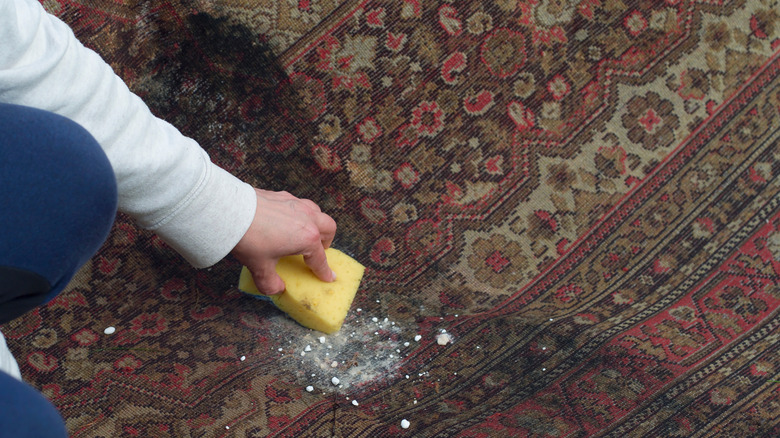
While it's clear that vinegar is not the way to go, the next logical question is, "How can I clean my natural rug or carpet safely?" The exact method depends on the natural material your flooring is made of, but regularly vacuuming your rug or carpet should set you up for success. It prevents dirt from getting trapped among the fibers. When you're faced with a stain, avoid rubbing it as you clean it up; this worsens the stain and exacerbates fiber damage.
Wool rugs benefit from wool-safe detergent with a neutral pH rather than acidic or alkaline cleaners, whereas sisal, jute, and similar plant fibers shouldn't be exposed to anything more than a dab from a cloth dampened with water. They do best with dry powder cleaners. If your rug or carpet is made of wool, blot it with the wool-safe cleaner followed by lukewarm water, then leave it to air-dry. Move from the edge of the stain to the middle when you're blotting so the stain doesn't spread.
For rugs made of sisal, jute, viscose, or bamboo, blot the stain with a dry cloth or paper towel as soon as possible, then use a powdered cleaner like Capture Carpet & Rug Dry Cleaner, followed by vacuuming. When you need to get rid of odors or lift light acidic stains, you can use a simple kitchen ingredient to keep your jute rug clean: baking soda. You can give your cotton rugs a mild soap-and-water spot treatment, or wash them by hand or in your machine, depending on what's on the care label. If DIY methods aren't effective, though, it's time to find a professional rug cleaner that's ideally WoolSafe accredited. They typically employ the least intrusive cleaning methods.