

10 Ways To Clean And Revive Carpet (And 5 Mistakes To Avoid)
We may receive a commission on purchases made from links.
The internet is awash with DIY carpet cleaning "hacks" that use household items to remedy stains. But the reality is, if you're trying to deep clean and revive wall-to-wall carpet, you need to follow a similar approach as the pros. Wall-to-wall carpet is costly to install, and to get a thorough clean without causing damage, using the right products, tools, and techniques is key. We're talking about proper washing — with shampoo, stain removers, and a good rake to restore the pile.
If it's been a while since you cleaned your carpets, and you're unsure how to go about it, then this guide can help. In it, we'll cover the basics to ensure you clean your specific carpet type with the most appropriate method. We'll cover the specific cleaners required for different stains, including "presents" from your pets and those marks of shame where you got a little carried away with the cabernet. Crucially, we'll also go over some common mistakes to help ensure that your DIY carpet wash doesn't end up doing more harm than good.
First, get to know your carpet
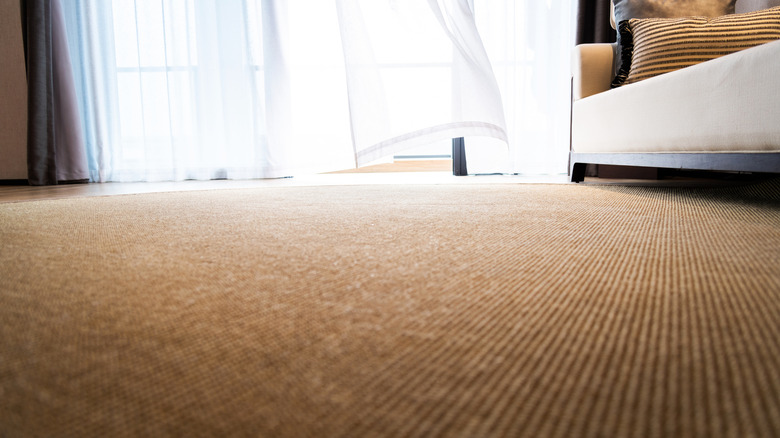
Before you dive into action, first work out what types of carpet you're dealing with. Believe it or not, not all carpets are the same. Sure, there are some carpets out there that are impossibly easy to clean and maintain. However, there are others, like Axminster and some Wilton carpets, that feature a natural jute backing. If over-wetted, these backings can warp and shrink — damage that's often irreversible. Similarly, sisal carpets, while hard-wearing, are nevertheless made from fragile plant fibers. If over-wetted, these carpets can develop water stains.
If you didn't personally have the carpet installed, and therefore don't know its composition, you might want to get a carpet professional's opinion. If you discover any offcuts in the home, or can access the backing, you might be able to use the backstamp to get more information.
Thoroughly remove soil with an (ideally HEPA) vacuum cleaner
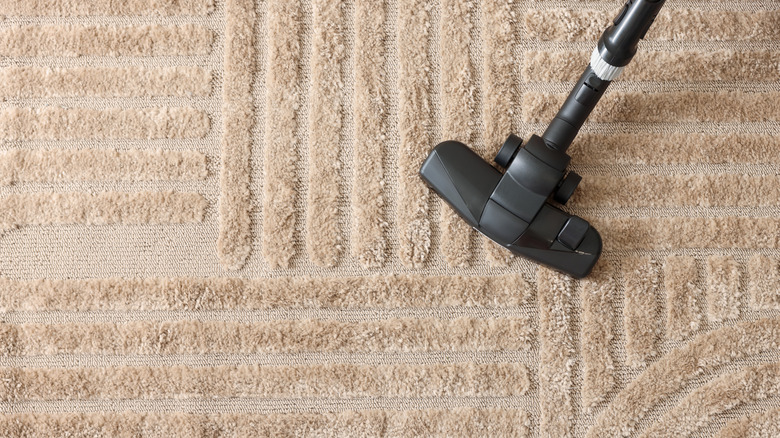
There's no point attempting a wet-clean until you've removed as much dry soil from the carpet as possible, so before you go any further, give it a thorough vacuum. To do this, vacuum the floor in all directions, moving north to south and east to west. On more durable cut-pile carpets (those with the fibers trimmed low to the backing), use a beater-bar-fitted vacuum to agitate the fibers and remove as much soil as possible. And take your time. Even if carpets are on your list of things to vacuum every week, there can still be lots of dirt inside those fibers. A slower pass will ensure your unit has plenty of time to remove it.
If you can, it pays to use a vacuum fitted with a HEPA filter. It's not essential, but it'll help to ensure that even the tiniest particles of dust are removed, instead of being recirculated around the room. Also, if your model allows, ensure that your vacuum is adjusted to the type of carpet you're cleaning. If it's too low, it could snag the delicate loops on certain higher-pile carpets.
Treat animal urine stains with an enzymatic cleaner
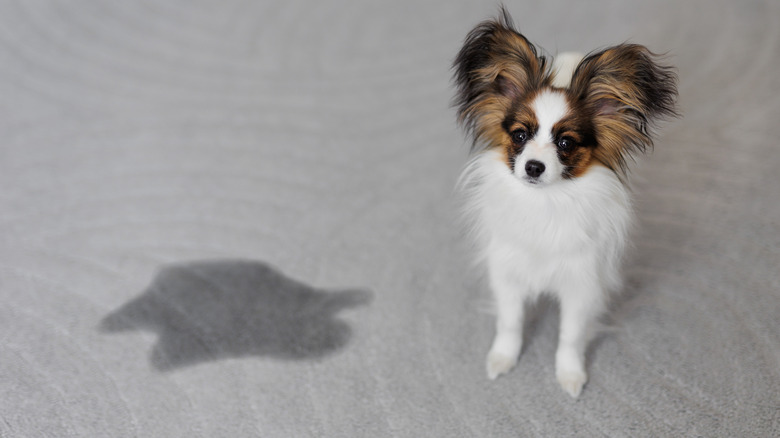
Pets are wonderful things, aren't they? They're fiercely loyal, and they have a knack for raising a smile after even the hardest day at work. However, they also bring with them their own specific cleaning requirements. And when it comes to flooring, it's fair to say that some carpet cleaning methods for pet owners are decidedly better than others. This is especially true with pet urine stains.
These types of stains contain organic compounds, including proteins and uric acid, which can make them particularly difficult to remove. For best results, they require specially formulated enzymatic cleaners. These solutions contain enzymes that break down the organic material in the stain, helping to eliminate both the stain and the odor at its source. Some products also contain beneficial bacteria that continue digesting leftover organic matter after the enzymes have done their work. Once the organic residue has been broken down, it can be more easily removed from the carpet. To use these cleaners, simply follow the instructions on the label. Generally speaking, you'll want to try to absorb as much of the stain as possible while it's wet (by blotting, not rubbing!), before applying the cleaner. And note that if stains are allowed to dry, you may need several applications in order to fully remove them.
Use a tannin remover to lift tea, coffee, and wine
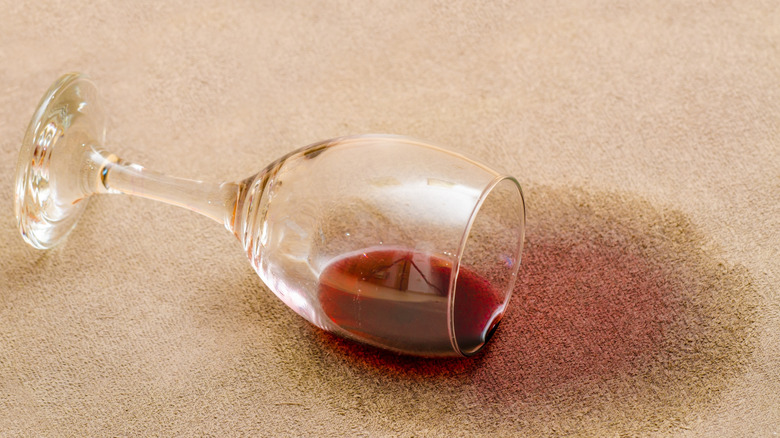
Oenophiles will know that most wines have a certain amount of tannins inside them. So, too, do coffee and tea. Tannins are the plant compounds that give these drinks their signature, ever-so-slightly-bitter flavor. They're also stubborn as all heck when allowed to soak into carpet fibers. And while there are some easy ways to remove coffee stains from your carpet, depending on the severity and whether the stain has dried, you may find that a specialized cleaner is best for the job.
Tannin removers are specifically designed to break down the compounds that make these stains so stubborn. You use them in much the same way — blotting the stain first, before applying the cleaner. Once the remover has done its work, you then blot as much of it out as possible. You can speed up dry times by weighing a wad of paper towels over the spot, which can help to prevent a common stumbling block known as "wicking," which we'll cover in more detail later. Two options we found on Amazon include Tann-X, which has a fair amount of reviews reporting success with coffee stains, and Wine Away.
Give oil marks the boot with a solvent-based stain remover
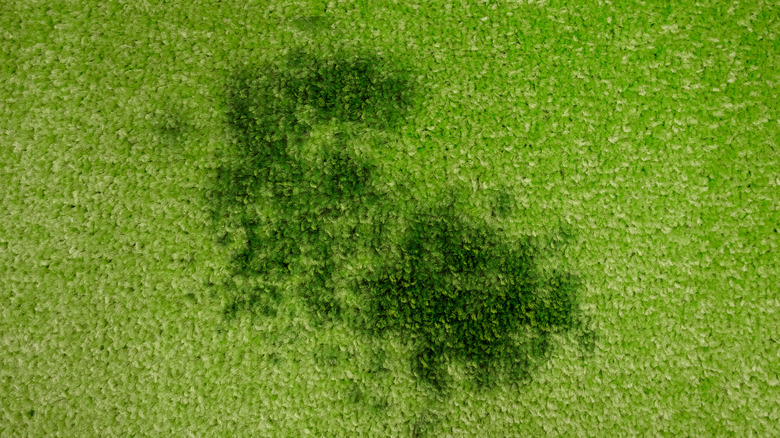
Some carpet stains can inspire dread in even the most experienced home cleaner. Things like oil, tar, food grease, etc. — all can cause panic that you've finally pushed your carpet to its limits. But before you speed off the drive like Homer Simpson, wait! You may just be able to get whatever it is out of your carpet with a solvent-based cleaner.
Per the name, these cleaners work to "dissolve" greasy stains. Because they're alkaline in nature, they emulsify the grease, making it much easier to lift with your carpet cleaner. With that being said, that alkaline nature means you need to be thorough when you come to rinse your floor. Residual alkalinity can cause carpets to get dirty more quickly. As we'll see later, you can easily test your carpets using pH sticks and ensure that you've removed all traces of your cleaner before allowing it to dry.
Use a high-quality carpet cleaner regularly to ensure consistent cleanliness
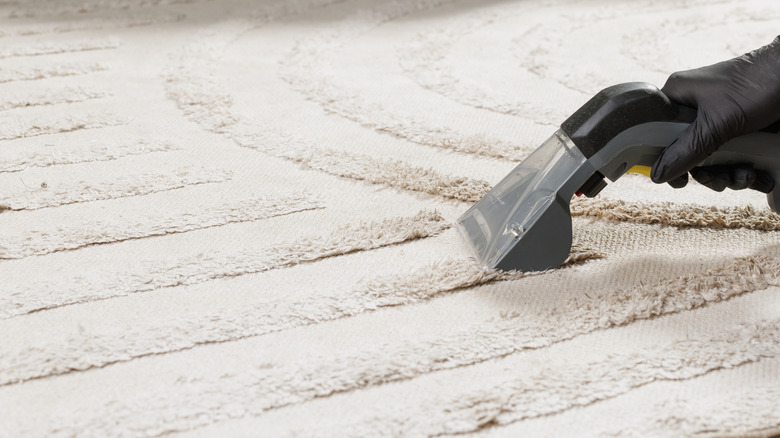
If you're determined to handle your deep carpet clean by yourself instead of hiring a professional, then the equipment you use matters. So, too, does the regularity with which you use it. Professionals tend to arrive equipped with dedicated, powerful tools for each part of the cleaning process. And even the best domestic carpet cleaner on the market is unlikely to achieve the same level of cleanliness on a seriously soiled carpet. Instead, they're best for regular maintenance on carpet that's kept reasonably clean.
So, if you're planning to clean your carpets yourself, then do it regularly, and aim to invest in the best-quality machine you can afford. In terms of frequency, aim to vacuum carpets once a week, and give them a deep wet clean with a carpet cleaner at least once or twice a year. As for the machine you use, look for one with a decent-sized tank (to ensure it holds plenty of clean and waste water). Machines with tools, like agitation brushes and suction wands, will also make your life easier. Finally, invest in a machine with as high a wattage as possible. More power usually means better cleaning, which is important if you're hoping to achieve near-professional results.
Understand the importance of pH in your carpets
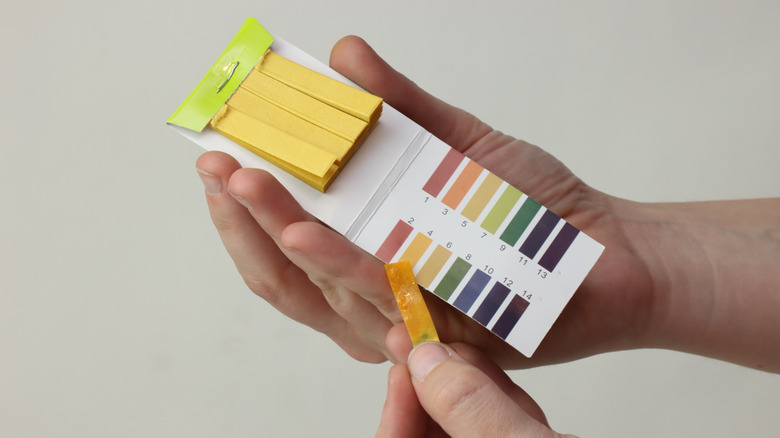
If you're wet-cleaning your carpet, then it's important to extract as much of the cleaner as possible afterwards. Most carpet cleaning solutions are alkaline, which is what makes them so effective at lifting and emulsifying heavy soils, oils, and grease. However, carpet pH needs to hover around neutral to slightly acidic once cleaned and dried. If you don't remove cleaner residues and restore your carpet to neutral, the residual alkalinity will effectively act like glue. It'll grab hold of any dirt that comes your carpet's way, making it prone to re-soiling much faster than if you'd restored it to neutral.
So, extract as much water and detergent as you can, and when you're done, check your carpet's pH. You can buy home testing kits to do this, like these Plastic pH Test Strips from LabRat Supplies. Moisten a small spot on the rug with a few drops of water, then dab the strip against the area so it absorbs some of the water. If it still reads slightly alkaline, then give your carpet another rinse. Alternatively, you could do what the professionals do and give your carpet an "acid rinse." This involves a final pass over your carpet with a mildly acidic solution, which neutralizes any residual alkalinity.
Rake your carpet pile, before and after cleaning
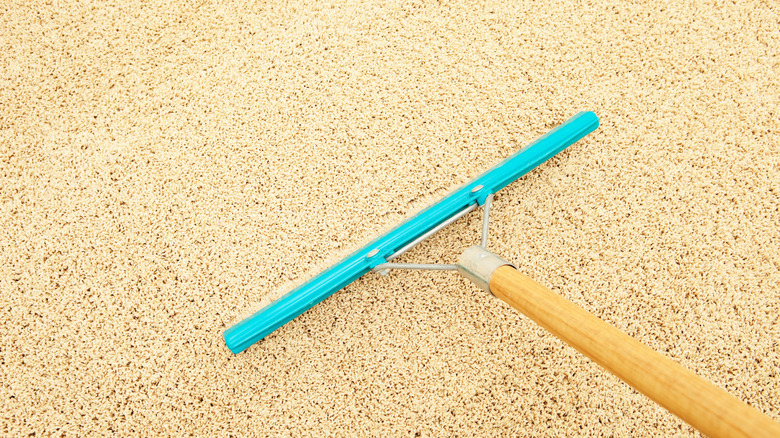
A carpet rake is one of the most overlooked cleaning tools, especially in households with pets. They're shaped like brushes and are used to rake against the nap of your carpet and restore any downtrodden fibers. As for when you should rake your carpet, it's best to do it once after you've vacuumed, and again once you've cleaned the carpet and it has dried. You can also use some carpet rakes to remove excess pet hair from the fibers. This 2-in-1 Carpet Rake from Walensee, for example, has two "head" materials to cover hair removal and pile restoration on different types of carpet.
Once you've finished your deep clean, consider grooming high-traffic areas periodically to help keep carpet fibers from becoming matted. If carpet fibers are allowed to remain flattened for extended periods, they may become more difficult to restore, especially in heavily used areas. And even if you don't have a carpet rake to hand, you can always use a stiff-bristled brush, provided that it's clean and suitable for your carpet type. The last thing you want is to rake more dirt into your carpet!
Try treating furniture dents with ice cubes
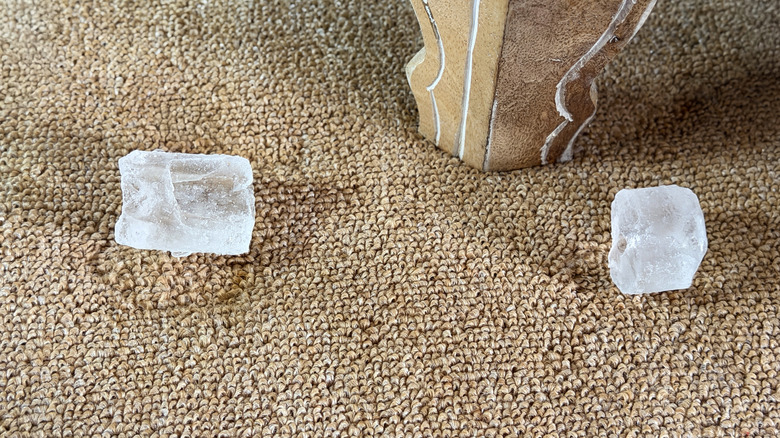
Furniture dents may not be much of a problem, especially if you plan to put the furnishings back exactly where they were once you've finished cleaning. But if you're switching things up, perhaps doing away with the L-shaped sofa that's dominated your living room for decades, then this ice hack could help to fix your carpet dents. The idea is that the slowly released moisture from ice cubes helps to relax and restore compressed carpet fibers.
To try this method, place an ice cube in each of the dents and let them melt. Once they've melted, start blotting. The goal is to help the carpet fibers swell, but if you push it for too long without removing the water, it could creep its way into the backing. This is a surefire recipe for mold and damp smells, and if you're working with a jute-backed or sisal carpet, excess moisture could damage those natural fibers. Once the ice has worked its magic (and you've kept excess water blotted), grab a spoon. Scrape gently against the nap and you should notice the fibers once again starting to stand proud.
Dry your carpet quickly by opening windows, using a fan, and removing moisture from the air
It doesn't matter how thoroughly you clean your carpet or how nice your chosen cleaner smells. If your carpet doesn't dry quickly, then all your work could be for naught. Any leftover moisture will continue to soak down into the carpet's backing, eventually contaminating the underlayment and causing it to mold. That water can also start to smell and, in severe cases, can cause delamination — where the multi-layered backings of your carpet start to come apart.
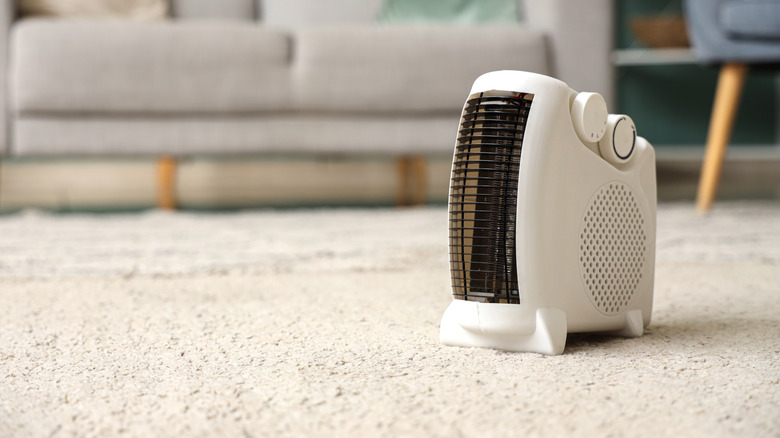
Fortunately, there are various ways to expedite the drying process. The first is to follow our earlier suggestion and use a powerful machine to extract as much water from your carpet as possible. It's recommended that you ventilate your room by opening the windows and, if you can, place a fan in the space to keep the air circulating. If conditions are cold, then switch on the heaters to help things dry more quickly. Or, if it's hot and humid, fire up the air conditioning. You can also run a dehumidifier in the space. Combined with powerful water extraction, you should find your carpet dries out nicely within just a few hours.
Mistake: Assuming more shampoo means a cleaner carpet
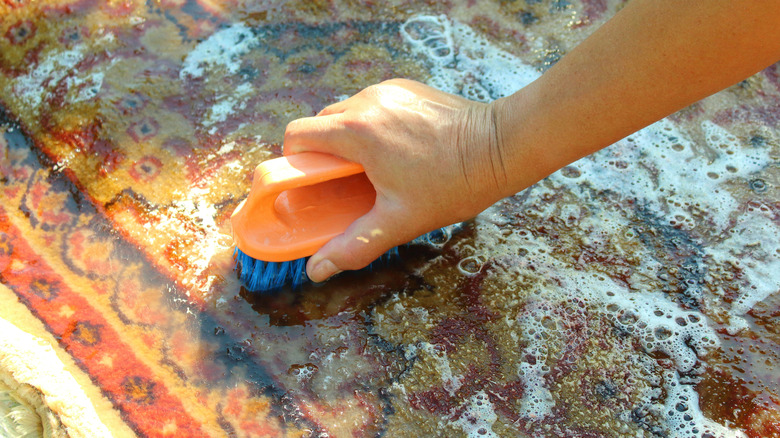
The first of our five "no-nos" is to avoid going crazy with carpet shampoo. We understand the temptation. Especially if your dog decided that it was too windy to bother "going" outside. But hear us when we say that even with the smelliest stain, less is usually more. Don't forget, if you leave shampoo residues in your carpets post-clean, then they're likely to get dirty more quickly. Excessive shampoo also leaves you needing to use more water to extract it from the carpet. And the more water you use, the greater risk you have of leaving your carpets damp and prone to issues like mold and delamination.
Instead of guestimating, follow the instructions on the bottle of carpet shampoo precisely. You're much better off following those instructions correctly across multiple cleans (and dries) than applying too much, and then having to overwet the carpet to remove the shampoo.
Mistake: Dousing stains in vinegar
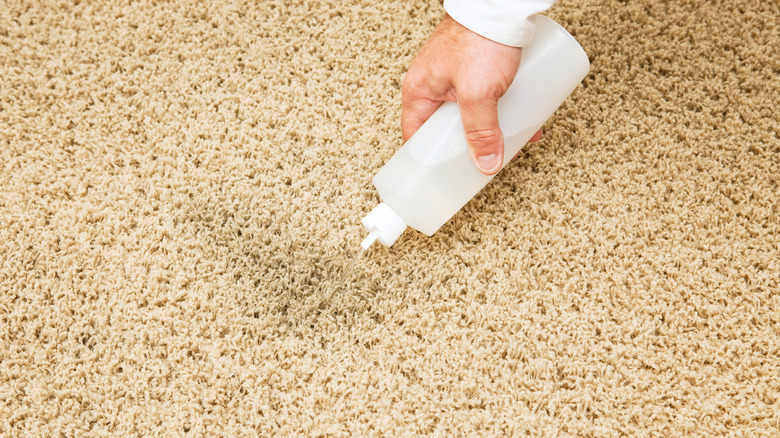
While there are various ways you can use vinegar to fix issues around the house, you should avoid using it on your carpets. It's widely touted as a home remedy hack for stain removal; however, its use comes with some limitations and risks. Since vinegar is quite acidic, it can potentially contribute to color fading and damage sensitive carpet fibers — especially those made with organic materials like wool. The smell is also quite unpleasant to some people and may linger until it fully dissipates. What's more, it's rarely as good at removing certain stains as specifically formulated cleaners.
Now, there are some exceptions to this rule. For example, you can, in a pinch, use diluted vinegar to rinse excess shampoo from your carpet, thus helping to reduce any excess alkalinity and restore the fibers to a neutral pH. Generally speaking, though, it's best to avoid excessive shampooing in the first place, and we wouldn't advise doing a vinegar rinse on sensitive fibers. And for stains, it's often better to wait an extra day or two for a dedicated stain remover to arrive in the mail than botch it just because you have vinegar in the cupboard.
Mistake: Using baking soda as your mainstay cleaner
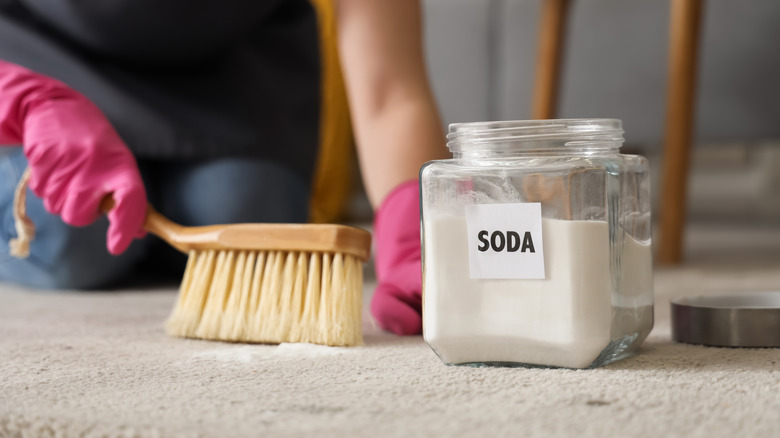
There are several baking soda cleaning hacks that are worth trying, including a couple that could help with your carpets. For example, baking soda can be used as a deodorizer, especially for mild smells. Unfortunately, even if you give your baking soda plenty of time to clean your carpet, it's unlikely to be as effective as dedicated carpet cleaning solutions. You should also bear in mind that its use could actually damage the fibers.
Baking soda is naturally abrasive. That's what makes it such a useful cleaning product in other parts of the home. Unfortunately, even with the best vacuum cleaner, it's hard to remove every trace of baking soda from a carpet. Any that's left behind will continue to be trodden into the fibers, and because the particles are abrasive, this ongoing contact can lead to irreversible damage. It can also be harmful to your vacuum cleaner and lead to clogged, inefficient filters.
Mistake: Using too much water
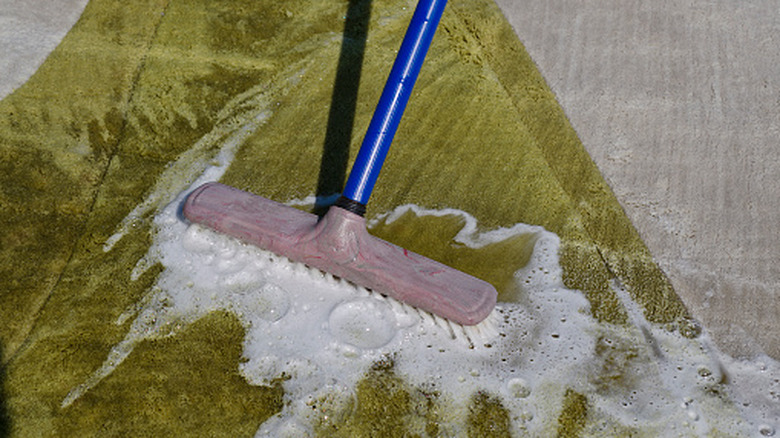
Oversaturating carpets when cleaning is an easy mistake to make, whether you're using a dedicated machine or cleaning the carpet by hand. If you overwet your carpets, you may struggle to pull all of the water back out. And when that happens, you're likely to run into issues like bad smells, delamination, and mold buildup. It can also lead to shrinkage and warping with certain carpet types, like those with natural jute backings.
Shrinkage happens when the carpet backing expands and retracts as it absorbs moisture and gradually dries out. It's especially common with fitted carpets, and if it happens, you'll likely need to pay for a professional to come out and re-stretch it for you. Finally, some carpets, particularly light-colored ones, may experience browning — even if you initially thought you'd managed to clean them. This phenomenon is known as wicking. When you over-wet carpets, the moisture tends to seep into the carpet's backing and often doesn't dry like the moisture in the fibers above. Since those fibers are often highly absorbent, as soon as they start to dry, they pull more moisture back from the layer beneath. That moisture is often dirty, thus causing your carpet to effectively "re-stain" itself.
Mistake: Assuming professional carpet cleaning is a waste of money
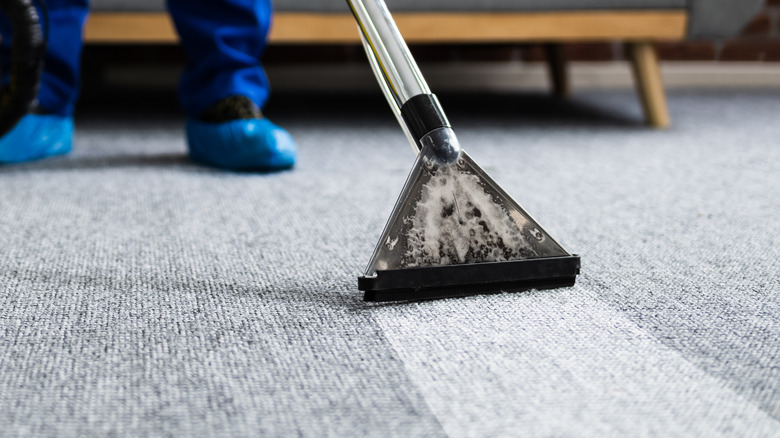
If, having read through the other dos and don'ts in this guide, you're having a crisis of carpet cleaning confidence, then call a professional! Carpets are often very expensive. Even the most budget-friendly options are likely to cost more than hiring a cleaner, especially when you add up the costs of the carpet, the underlayment, and the fitting.
It could be that you don't know how to identify your carpet type and therefore don't trust yourself to clean it appropriately. Alternatively, you may have found yourself contending with a particularly stubborn stain, and are unsure if you can remove it without damaging the carpet. Either way, if you don't trust yourself to clean your carpet without mishap, this might be one of those jobs around the home best left to a professional.