

More Durable Than Plywood And Vinyl: The Material To Use For Shed Walls
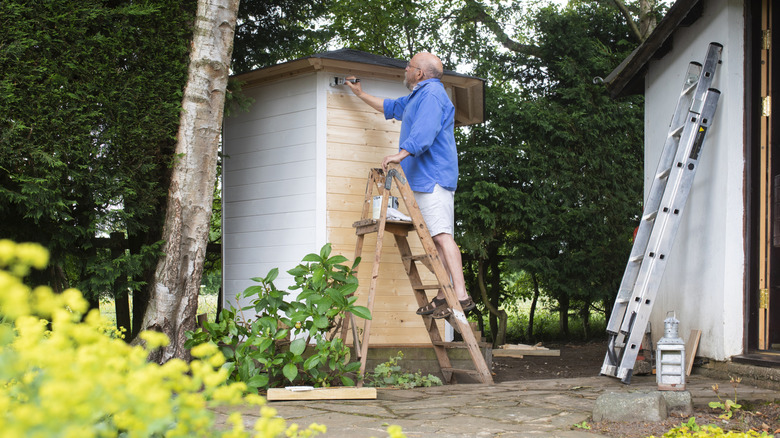
While you might have endless possibilities for adding a shed to your backyard, most likely your main decision will be what material you want to use for the shed walls. Apart from price, the major consideration is going to be durability. Depending on where you live, you want to select the perfect type of material that's going to last for many years and preferably one that's not going to require too much maintenance. Among the more popular choices are plywood and vinyl, both of which have their pros and cons. However, there is another material that can be more durable in a range of climates — metal.
When compared to sheds made from plywood, metal ones are likely to have greater durability because wood structures can be prone to rotting from all that moisture. Plywood sheds would also require much more maintenance to protect the timber from moisture and insect damage. Plus, you'll have to repaint or stain it every few years.
Being generally more structurally strong if anchored well, a metal shed is going to handle adverse weather conditions like strong winds better than a vinyl shed will. You may even find that a structure with vinyl walls may crack if exposed to weather extremes like severe heat and cold, especially if it's not well made. Plus, metal is more fire-resistant than vinyl, which may be an important consideration where you live.
Choosing the right metal for your shed and limitations
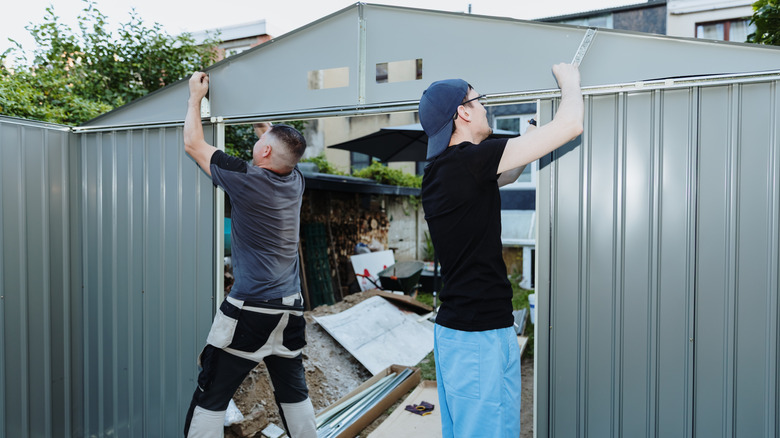
Many modern metal sheds are made from aluminum or galvanized steel. Thanks to the metal's protective coating, galvanized steel sheds offer greater resistance to rust, making them especially long lasting in areas that are not constantly exposed to high humidity and salt spray. This is the most common type of metal that shed kits you can purchase from places like Lowe's are made of. You can also find prefabricated sheds made from galvalume steel, which is a cold-rolled steel coated with aluminum, zinc, and silicon. This type of metal is quite popular as a roofing material, and the coating makes it even more corrosion resistant. Choosing the right metal for your shed will greatly depend on what's available in your area, what type of extreme weather protection you're going to need, and your budget.
If you live in a coastal region that experiences relatively high humidity, you need to be vigilant about protecting your shed from rust and corrosion. In this instance, a shed made from aluminum is going to be a good choice because this material doesn't rust. In drier areas, a shed made from galvanized or galvalume steel is perfectly fine and will most likely last you around 20 to 30 years. Lastly, keep in mind that it will be more difficult to control the internal temperature of a metal shed, as it's likely to be colder in winter and hotter in summer. So you'll need to be mindful of what you should and shouldn't store in your outdoor shed.