

How To Test If Your Garden Soil Contains Lead
We may receive a commission on purchases made from links.
When you're preparing your garden, there are several steps you'll want to take before you ever pick out the vegetables you'll want to grow. While you may be more acquainted with learning how to tell if your home has lead, you should be aware of the levels of lead in your garden as well, which you can do through specialized testing procedures. Before starting the testing process, it's important to know that lead is natural in soil, and you're likely to find at least small amounts throughout your yard.
However, typically, healthy ranges for lead in soil are anywhere from 15 to 40 parts per million, according to the University of Massachusetts. Pollution, however, can increase these numbers, creating the potential for various health risks with exposure. This can be an especially notable problem if you plan on gardening with children or have pets spending time digging and playing through the soil of your garden. Most instances of lead pollution in soil are from the past, whether that's the lead paint phased out in the 1970s or the leaded gasoline phased out in the 1970s to 1990s. However, much of this pollution can remain in the soil today, leading to those lead levels you may wish to test before starting your garden. There are several different methods to test your soil quality before planting. This includes at-home testing as well as more rigorous laboratory testing. If you discover high amounts of lead in your garden, don't give up hope just yet. There are still ways to bring your dream garden to reality.
Testing your garden for lead (and what to do if you find it)

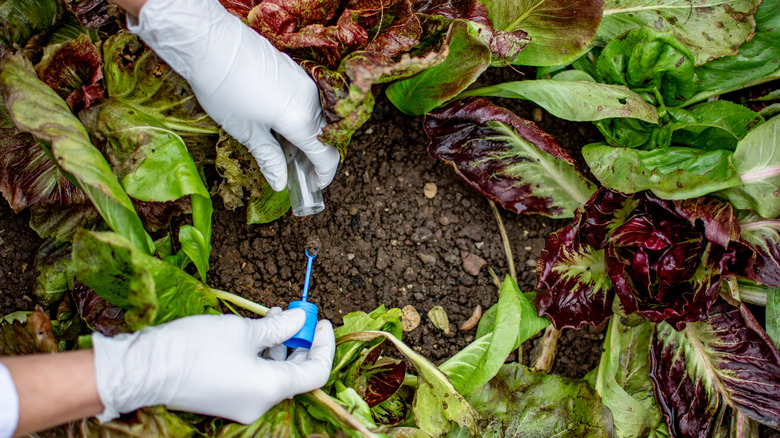
At-home testing comes in two different forms. The option is a test done entirely at home: you purchase a specialized home-based soil testing kit like the Slgi lead test kit, follow the directions, and compare the results on your own to determine if lead levels are too high. These do not require any correspondence with a laboratory, delivering faster results, oftentimes within minutes. However, they can introduce greater room for error, especially if you're not familiar with soil testing, and they may not always be as accurate as professional testing. There are also at-home kits for which you purchase the supplies online then send the samples into the brand's website. Aside from at-home testing, your other option is to collaborate with a certified lead risk assessor. These are professionals specializing in identifying lead hazards around the home. You may also be able to work with local health departments or agricultural departments to determine if your garden soil contains high levels of lead.
After testing your garden for lead, you may be wondering what your options are if the results come back with unsafe levels. Fortunately, finding higher levels of lead doesn't mean that you need to forgo your gardening adventures altogether. Instead, you'll need to approach them carefully to reduce the likelihood of ingestion or inhalation that could cause lead exposure. Elevated container gardens offer one of the simplest solutions, so long as you use store-bought soil that's safe. You can also carefully remediate the top few inches of soil in your yard and replace it with store bought alternatives for direct gardening, but this requires additional testing and precautions to prevent exposure.