

People Are Putting Hand Sanitizer On Silverware: Why It's Recommended
We may receive a commission on purchases made from links.
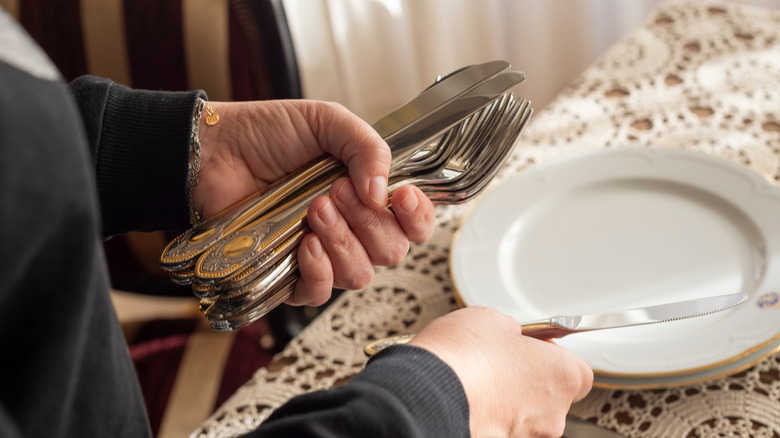
You're in a dilemma. You've pulled out your best silverware and set the table ahead of a special celebration dinner. Your guests will be arriving soon, but a couple of pieces have already developed a bit of tarnish, even though you cleaned your silverware a few weeks earlier. When this happens, there's no need to panic because there's an easy fix hiding in your bathroom: hand sanitizer.
In addition to using it to remove stains from wood, people are also putting hand sanitizer on their silverware because the alcohol in the product can help remove light tarnish. Even silver restoration expert Jeffrey Herman recommends using hand sanitizer to remove light brown tarnish from silverware. Unfortunately, it's not possible to completely prevent silver from tarnishing, as this is a natural reaction that occurs when the metal comes into contact with the sulfur compounds in the air. This is because sterling silver contains a small percentage of copper or other metals, which react with sulfur in the air, causing tarnishing. While using hand sanitizer is a quick fix, it's won't help you polish your entire silverware collection the way a commercial product would. However, it is worth trying the sanitizer first, as you likely already have some on hand. It won't abrade the silverware's surface, making it a gentler cleaning option.
How to remove light tarnish from silverware
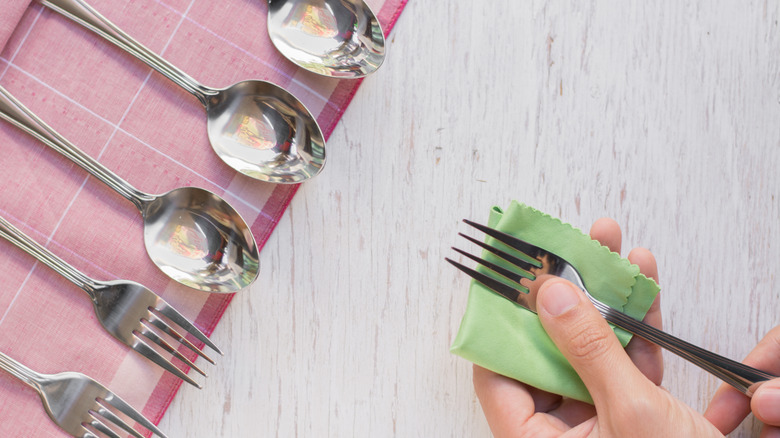
Before getting started, make sure your hand sanitizer is alcohol-based and doesn't contain any aloe vera. A product like Purell Advanced Hand Sanitizer Gel should work well. Avoid alcohol-free sanitizers, as some may contain chloride, which could damage your pieces and cause further discoloration. The alcohol in the sanitizer is what helps break down those sulfur compounds responsible for the tarnish. To apply it, simply squeeze a bit of the hand sanitizer onto a clean cloth or cotton ball, then rub it over the darkened spots until they disappear.
To remove any residue, rinse the pieces with warm water and use a cotton dish towel to wipe them completely dry. Don't allow your silverware to air-dry because this may leave water stains. As a final tip, if you like to leave a few favorite pieces out on display in your home, you can give them a layer of protection by applying something like Meguiar's Ultimate Quik Wax. This should be reserved for silver pieces intended for display, not those intended for serving or eating. All you have to do is spray it on and then use a very soft cloth to buff the surface. Alternatively, you may have another option tucked away on the back of a pantry shelf: this forgotten pantry liquid, glycerin. It can not only clean your silverware but also leave a protective coating on its surface.