

Does Adding Fertilizer Come Before Or After Using Lawn Aerators?
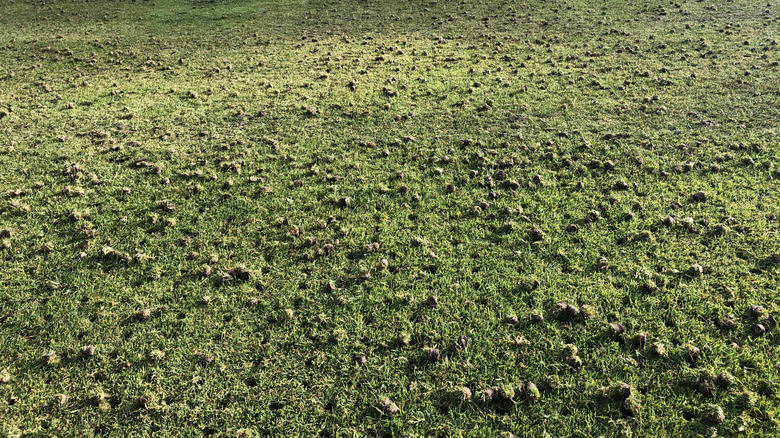
If you care about maintaining a great, thick, lush green lawn, you may know there is a debate about when to aerate your lawn and apply fertilizer. Both are essential jobs for a healthy lawn in the long term, but how do you avoid doing them out of order? Should you feed your lawn first so it has nutrients available before the stress of aeration? Or should you go ahead and start punching holes in your soil? The answer is simple: the best tactic is to apply fertilizer after lawn aeration.
A core aerator pulls out plugs of soil, making thousands of little holes in the ground. If you fertilize first, you run into two big problems: You risk disrupting the slow-release coating that is common for granular fertilizers as you roll the aerator over the lawn, and pulling up soil cores could physically displace a good portion of the fertilizer you just spread. Overall, this is potentially a big waste of time and energy, and you won't be getting the most out of your fertilizer application.
By instead aerating your lawn for healthier grass and applying fertilizer immediately after, you will drop the nutrient-rich formula straight into the holes that have been made. This means you will deliver essential nutrients directly to the roots of your lawn, which supports healthy root growth, helps your lawn recover more quickly from being aerated, and leads to stronger, denser grass throughout the rest of the growing season. However, keep in mind that timing is everything — steering clear of other common lawn aeration mistakes, like aerating an overgrown lawn, will ensure your soil is properly prepared before feeding.
Why aeration makes your fertilizer work harder
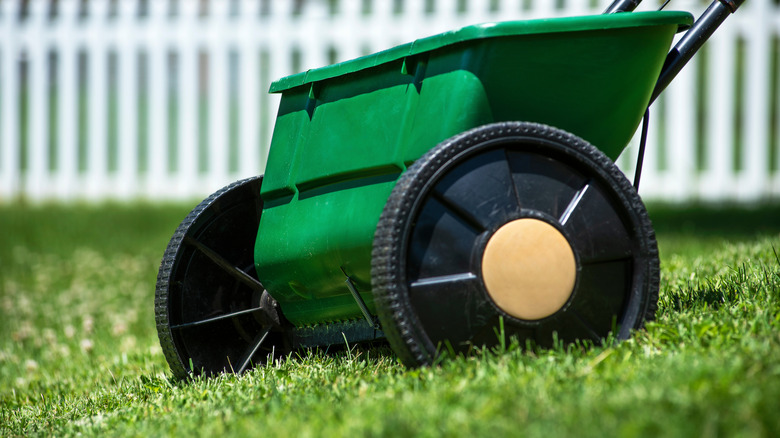
You might be wondering if you can skip aeration altogether when you fertilize your lawn. You don't necessarily have to aerate every single time you fertilize, but it's a helpful step, especially for compacted soil. Over time, everyday activities like walking on the lawn or using a heavy lawnmower pack the soil down tight, creating a dense layer that restricts the key things needed to grow a healthy lawn — air, water, and nutrients, as well as root expansion. If you apply fertilizer on top of a lawn that is heavily compacted, the majority of it won't actually reach the root zone, which is where your grass needs those nutrients most. Instead, it will build up in the thatch or be washed away during the next heavy rain and into the neighboring stormwater drains.
Aerating your lawn improves the soil structure, which means air, water, and nutrients can more easily infiltrate into the soil and reach the roots. The newly created holes also create collection points for any new fertilizer you apply, and your grass roots will be able to naturally stretch more deeply into the loosened soil to access what they need. These deeper roots will, in turn, help your lawn become more drought-tolerant, not to mention helping it cope better with summer heat and recover more quickly from regular lawn care. Ultimately, aerating before fertilizing your lawn ensures that every dollar you spend on quality lawn fertilizer actually goes toward nourishing your grass rather than running off into the driveway.