

What To Do If Your Yard Smells Like Vinegar
Roses, dried leaves, morning dew... your yard can smell like many lovely things. From fresh flowers to fragrant herbs that smell incredible, stepping outside should be like a breath of fresh air. So when you venture out in the morning holding a hot cup of joe, you probably don't expect to smell vinegar. What on earth could be causing this nasty smell? And more importantly, what can you do about it?
To those who've never experienced it, it might sound hard to believe. The sour, sharp, and pungent smell of vinegar isn't really something you associate with the outdoors, but it's not as uncommon as you'd think, and it can be caused by several things. There are three main offenders: compost, mulch, and freshly cut trees. They each release acetic acid in different ways, and vinegar is really just water and acetic acid. It's a completely natural process, which is reassuring — acetic acid isn't inherently dangerous or bad, it's just smelly. But that doesn't mean you should just leave it be. In fact, if the reason why your yard smells of vinegar is composting or mulching, it's an indicator that something is wrong, and you should fix it.
The first step, though, is to find the culprit behind why your yard smells, because depending on the cause, the best fix will vary. For example, if it's your compost heap that's starting to smell, adding dry material to the mix can help. If it's your mulch, a bit of aeration and yard work should do the trick.
How to fix your yard's vinegar smell, depending on the source
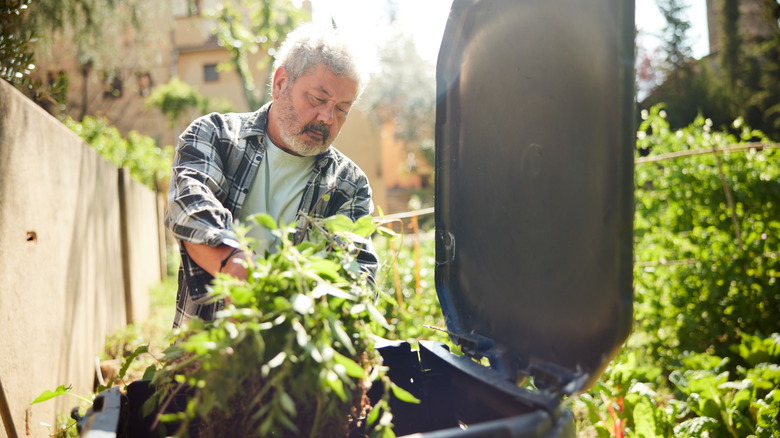
The first place to look (or in this case, sniff) is your composting bin. Vinegar gets its unique smell during a natural fermentation process in which organic products like fruits, grain, or rice get eaten by yeast and ferment into alcohol. The same process can happen in your composting bin, but only if something has gone wrong. A healthy compost shouldn't ferment, and it should have an earthy, natural smell to it, more similar to soil than vinegar. The issue might be that your compost bin is overpacked with wet and nitrogen-rich materials, like coffee grounds, kitchen waste, fruit, or grass clippings. Or it might be waterlogged. To fix either problem, turn the compost thoroughly and add dry, carbon-rich products to your bin, like cardboard, dry mulch, straw, or wood chips.
The smell might also come from your mulch going bad. This can happen when mulch is piled too high and there isn't enough airflow, which creates similar conditions for fermentation. The issue with this isn't just smell, but also the risk of damaging plants. To fix this, spread the mulch into a thin layer, water it, and let it dry. Make sure to remove it from around plants to protect them.
Finally, you may notice a vinegar smell around freshly cut trees. Even the healthiest of trees can release some acetic acid into the air when they're cut, and some varieties do this more than others. In some cases, the trees might be infected with bacteria, which causes the smell to be stronger. If you notice a vinegar smell in your yard and you've just recently cut trees, that's your answer. Some people cover it with coffee grounds or other strong scents, but otherwise, just wait it out and it will dissipate.