

Keep Your Garden Beds Debris-Free With A Handheld Tool From Amazon

We may receive a commission on purchases made from links.
The Fiskars Xact Hand Rake is a compact seven-tine garden rake for clearing fallen leaves, twigs, and other debris from tight spaces in your flower beds. If you've ever tried maneuvering a full-size rake between established perennials and shrubs, you'll know how awkward it is, particularly when you're trying to avoid damaging delicate stems or accidentally uprooting something. The best leaf rakes that help keep your lawn in tip-top shape probably aren't the right choice for working in the close confines of established beds. This smaller rake from Fiskars gives you more control, so you can work around your plants rather than dragging a large rake head through them and hoping for the best.
The seven slightly flexible stainless steel tines are arranged in a fan shape about five inches wide. They're well-suited to gathering loose debris, while the narrow shape of the head makes it easier to reach between plants and beneath low-growing shrubs without causing damage. At about 17 inches long, the rake also gives you plenty of extra reach without being cumbersome. It has an ergonomic SoftGrip handle that's weighted for better balance. It's a useful hand tool for maintaining established beds throughout the growing season, especially when you want to tidy up without disturbing mature plants you've worked so hard to nurture all year.
How to rake around established plants without damaging them
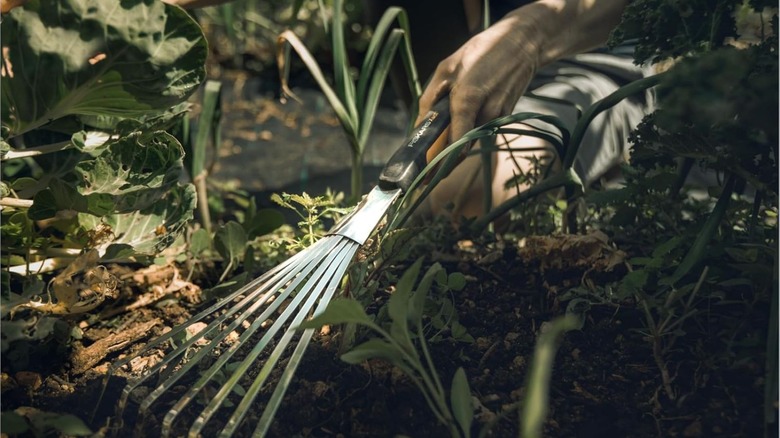
When using a tool like this on established beds, one of the most important things to remember is that you need to keep the tines near the surface rather than digging them deep into the soil. You're not trying to till the soil, just clear debris from the surface. Hold the rake at a relatively shallow angle and use short, gentle strokes to draw loose leaves and other debris away from the plants and toward you. The aim is to catch the unwanted material without scraping away your topsoil, disturbing shallow roots, or dragging all of your mulch out of the bed.
When you're working around perennials, make sure you work away from the crown rather than pulling debris into the center of the plant. Be particularly careful around emerging bulbs and tender spring shoots, too, as even a small rake like this one can damage delicate new growth if you accidentally catch it with the tines. If you can't clearly see what's beneath the leaf litter, move it aside with your gloved hands first to protect young spring bulbs pushing their way to the surface.
You can adjust the rake's action by changing the angle and pressure. Keep the tines almost flat against the surface for loose leaves, lifting them slightly as you pull. For debris snagged around woody stems, angle the tines a little further downward and use a slightly firmer, controlled pull. However, if the rake catches on roots or you feel resistance, don't force it. Stop and free the tines by hand rather than risk damaging your plants.
Getting into awkward spaces, raking selectively, and caring for your rake

The narrow head and longer handle of the Fiskars Xact Hand Rake make it well-suited for working beneath shrubs, between densely planted perennials, and around the edges of raised beds. For more awkward spots, try approaching from different directions, pulling small amounts of debris into an open area where you can collect them. Don't drag the rake through dense ground cover or tangled stems, though, as you'll damage your plants and probably end up uprooting half of them. In those spots, picking debris out by hand works better, while a full-size leaf rake will be faster for open areas.
Be selective in what you remove, too. One common end-of-year gardening mistake is over-tidying your beds. A scattering of healthy fallen leaves is beneficial. It provides insulation for plant roots and shelter for overwintering insects. There's no need to strip your beds bare. Instead, concentrate on excessive accumulations, particularly thick matted leaves covering perennial crowns. When you're working over mulch, be sure to only use light strokes to lift the debris without disturbing the mulch underneath. Once you've finished, brush any trapped leaves and soil from between the tines. If necessary, wash off any stubborn dirt with water and a little mild detergent, then let the rake dry completely before storing it to help prevent corrosion.