

How Painters Clean Brushes So They Can Be Used Over Again And Still Look New
We may receive a commission on purchases made from links.
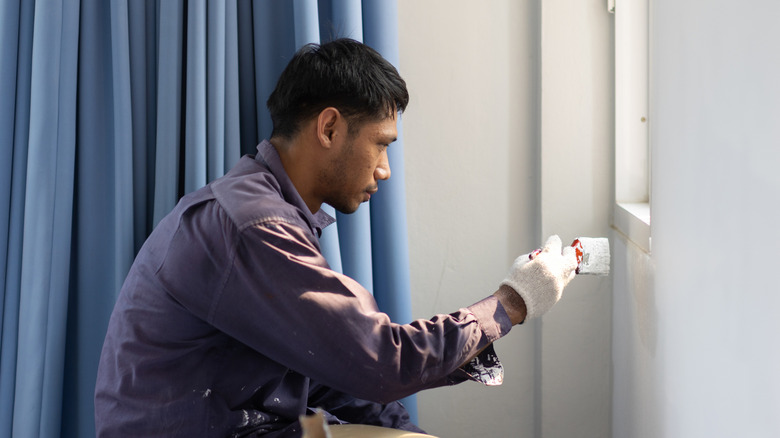
Picture this: You've wrapped up a rather excellent DIY paint project, and you can't wait for the coat to dry and for the colors to set beautifully. Everyone is proud of you, all eyes are on the finished project, yet the brushes that helped you get the job done are still drenched in paint. Cleaning them may be a chore, but professional painters insist that it's maintenance worth doing— these tools can last you for years as long as you care for them properly. Fortunately, for most interior paints, all the brush really needs is some warm water, dish soap, and a wire brush to restore it to its original state (and a little bit of elbow grease, of course).
It's important to note that the warm water and dish soap combo works well for rinsing off most recently used brushes. However, if you leave leftover paint to dry on a brush, you can eventually render the tool unusable. That's why it's so essential to clean your brushes immediately after a painting session, especially if you own high-quality paint brushes from a brand like Purdy, a brush brand professional painters like for a reason. If you're already dealing with stiff, paint-covered brushes, don't fret. Some paint thinner can help remove dried paint and leftover oil-based paints without much hassle.
Cleaning each type of paint from brushes, the pro way
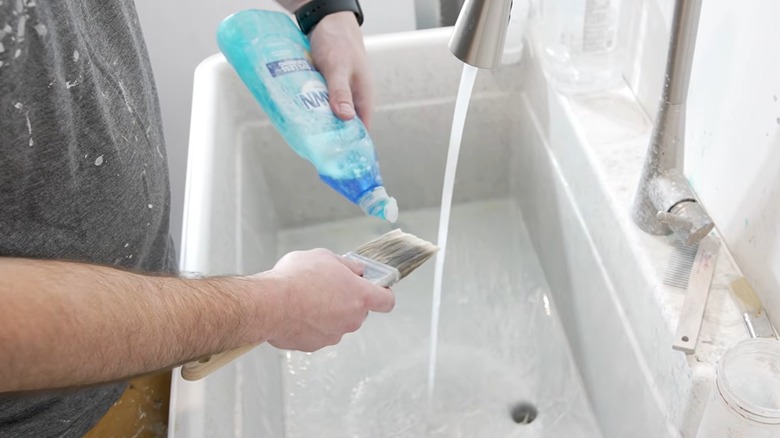
For water-based paints, such as latex and acrylic, start by removing as much excess paint as possible by rinsing the brush with warm water and and letting the paint run down the sink. If needed, scrub the paint with a bit of dish soap, then work a wire brush into the bristles to remove any paint caught between them, and rinse until the brush is entirely clean again. Adding to this, professionals recommend spin-drying your brushes to get rid of water in between the bristles. Simply spin the brush in between both hands. Make sure to do this in a basin or a sink to avoid splashing water everywhere.
On the other hand, removing oil-based paints and dried buildup will require an extra step. You will need to soak the bristles in paint thinner for a few minutes to loosen the compounds in the residue. An alternative solution is to soak the bristles in Murphy's Oil Soap for 24 hours, and gently mash the brush in the solution regularly throughout this time period to help the cleaning agent loosen the residue. Rinse with water and spin-dry the brush before putting it back into storage.
When it comes time to package and store your paint brushes, pros recommend that you keep your dry brushes in the original cover, or keep them bundled in some newspaper in order to keep the bristles in shape. Furthermore, if your brushes have a hole for hooks, the ideal way to store them is to hang them by the handle. Otherwise, laying them flat in a cool, dry area works just as fine. As long as you make use of these professional recommendations, you and your paint brush will be ready when it's time to execute another exciting project.