

Spraying Your Planters With Peppermint Oil: Why It's Time To Try It
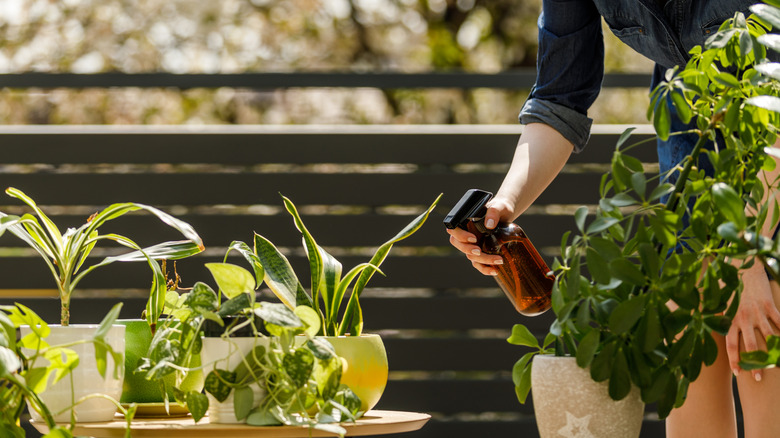
We may receive a commission on purchases made from links.
When it comes to protecting your garden from pests, there are a multitude of things you can try, but if you prefer a more natural and non-toxic solution, you'll most likely turn to homeopathic remedies in the hope that they will do the trick. While some home remedies are a bit dubious, to say the least, there is one product that has proven to be quite effective in repelling a range of insects and other pests, and that is peppermint oil.
If you're familiar with the oil derived from the peppermint plant (Mentha x piperita), you'll know that it has quite a powerful scent thanks to the menthol it contains. There are plenty of ways you can use peppermint essential oil in your home, one of which is to repel insects with its strong aroma. Not only do they dislike the scent, but it can also mask the smell of the plants that they're drawn to with its potency, disrupting their ability to find food and keeping them away from your treasured plants.
In addition to this, the minty scent will send rabbits hopping away from your yard and help to deter deer, who also aren't particularly fond of the strong scent. In fact, peppermint oil can be found in common deer and rabbit repellents like Nature's Mace. Therefore, if you're having issues protecting your plants from insect and animal damage, it might be time to consider spraying your planters with a a protective spray containing peppermint oil.
Making and applying your peppermint oil solution
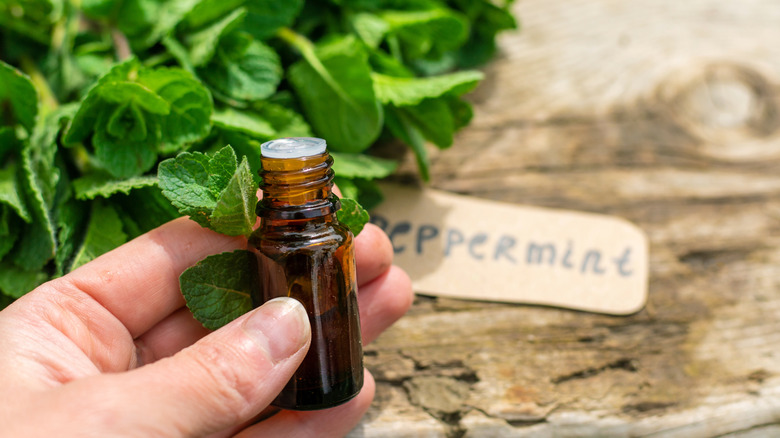
To make your protective spray, you'll need a garden sprayer that can hold at least 1 gallon of water, one tablespoon of Castile soap, and two teaspoons of pure essential peppermint oil, like this one from Viva Doria. It's best to use pure Castile soap, like this liquid version from Webe Naturals, because it contains no harsh chemicals. The soap is necessary to disperse the oil through the water. Fill the sprayer with 1 gallon of water, then add the soap and the peppermint oil. Give the bottle a good shake to mix everything up and start to spray this around the edges of your planter boxes, pots, and raised garden beds. Start with a small amount at first to test how your plants react before increasing the dose.
As you apply a coating of this to all your planters, make sure you shake the sprayer periodically to keep mixing the oil with the water. You should find that the whole area will now exude that pleasant peppermint aroma. However, the scent will dissipate gradually (especially outdoors), so you'll want to repeat the process around once a week, or whenever you notice the absence of the aroma. As well as working quite effectively at repelling pests, you'll appreciate that this solution is non-toxic to humans, though it can be toxic to pets if a high enough concentration is ingested. Plus, you'll also find that this useful essential oil could keep your home free of mice, making it a very versatile product to have around.