

How To Get Rid Of Vine Weevils In The Fall Without Pesticides

We may receive a commission on purchases made from links.
If you've noticed something "bugging" your rhododendrons, azaleas, hollies, and other prized plants, it could well be the dreaded black vine weevil. The pest can be hard to identify at first, because it does its damage underground while in the larval stage, feeding on the roots of your prized plants. That below-ground advantage also makes them hard to target, unless you fight fire with fire. That's where another soil-dweller, the beneficial nematode, comes in, especially when you're establishing new plants in the fall. The tiny worms known as beneficial nematodes represent an eco-friendly way to keep predatory bugs out of your garden.
Black vine weevils often get introduced to your yard's soil by the very plants you're buying. Larvae get transported in nursery material, and they continue to feed on plants after they're put in containers or garden beds. As they mature, they go above ground to feed on leaves. But it's the youngsters who can hurt or kill young plants while feeding on their tender roots. As few as three larvae, in fact, can destroy a young rhododendron! Along with these shrubs, the 200 species that black vine weevils feed upon include geraniums, hostas, cyclamens, and begonias.
You may have heard of destructive nematodes and have wondered whether these tiny worms are garden pests or gardeners' secret weapons. That's because the wonderful world of nematodes contains both good guys and bad guys, at least from the human perspective. Some of the good guys prey specifically on black vine weevil larvae and pose no harm to plants themselves, keeping your garden safe. Summer through fall is the best time to apply these helpful creatures to the soil in order to fight weevil larvae.
Choose nematode species that target weevils
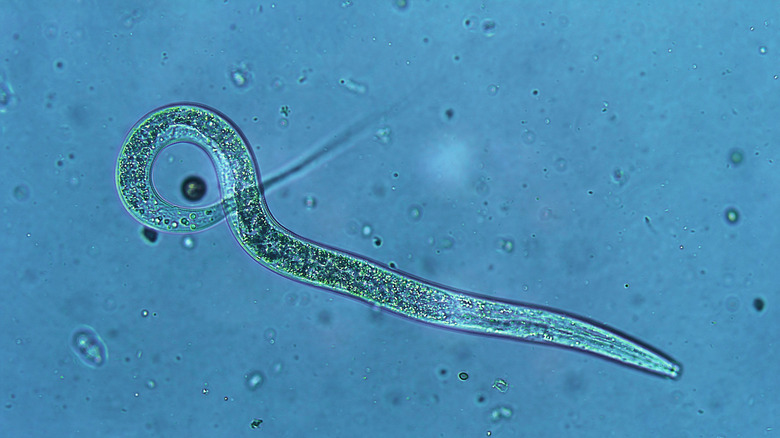
Prepackaged products full of live nematodes are one of the easiest ways to bring these good guys into your garden. But there are various kinds of beneficial nematodes that attack different types of pests, so it's important to choose a product that incorporates the right nematodes for your goals. For black vine weevil infestations, look for products that mention black vine weevils as one of the target pests, or that contain either a Heterorhabditis or Steinernema species of nematode. These are two types of parasitic nematodes (also known as entomopathogenic nematodes) that prey on black vine weevils.
You can usually find prepackaged beneficial nematodes at garden centers or online, such as these NaturesGoodGuys Beneficial Nematodes, which are a Steinernema species. Choose a time during the fall in which the long-term forecast is for warm weather. Follow the package directions for the specific amount of the product you'll need to mix with distilled, cold water. Then, water the live nematode product into damp soil around your plants.
The soil temperature should remain at least 60 degrees Fahrenheit during this period. Keep the soil moist after application for about two weeks. That's because the nematodes themselves need to stay damp in order to do their work. While your instinct might be to follow up with other organic products, hold off on them for now. Neem oil, for example, actually acts as a repellent for the beneficial nematodes, which is the opposite of what your weevil-ridden roots need.