

Every Kitchen Had Them In The '60s — Now These Appliances Are Thrift Store Gems To Hunt For

We may receive a commission on purchases made from links.
I have a real soft spot for thrifting vintage kitchen dishware, gadgets, and appliances, particularly mid-century ones. They utilize such an interesting combination of practical function and decorative form. The 1960s produced some really fantastic examples, too. There were heavy-duty stand mixers, ingenious automatic toasters, electric skillets, and all kinds of other appliances designed to make cooking quicker and easier while still maintaining the attractive appearance that the consumers of the decade demanded. Some of these appliances were pretty ambitious for the time while others were remarkably simple. The best ones were so well made that plenty are still working perfectly well more than 60 years later, which is rather impressive.
I've spent decades hunting for vintage kitchenware, and I think some of these older appliances are well worth seeking out. Many have substantial metal components, relatively straightforward mechanisms, and available replacement parts. If you like the vintage look there's nothing better than finding the real deal at thrift store prices. They're not all equally practical of course. Some mid-century appliances are rather bulky, and finding replacement accessories can be a nuisance. But quite a few still do their original jobs just as well as they did all of those years ago. If you're putting together a charming vintage-inspired kitchen, these are lovely functional additions. You do need to exercise some caution with old electrical appliances though. Make sure you check for recalls and damage and have the electrical components inspected by a qualified professional before putting your thrifted treasure to work in your kitchen.
Sunbeam Mixmaster stand mixers
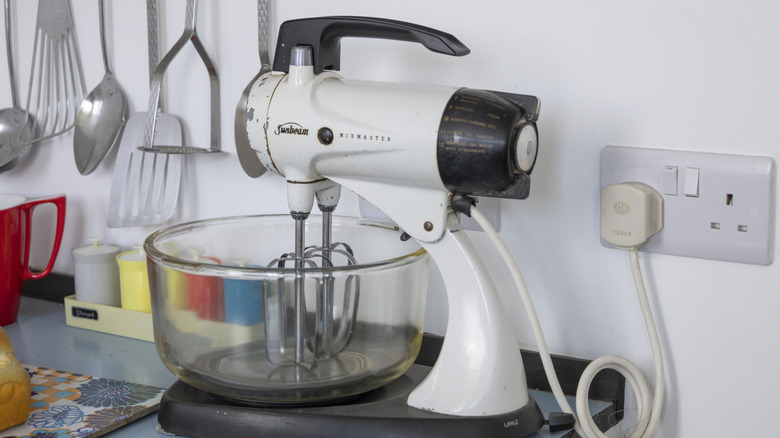
Before KitchenAid stand mixers became the must-have countertop appliances, Sunbeam's Mixmaster was doing a perfectly good job of mixing cake batter, whipping cream, and beating mashed potatoes. Sunbeam has been making Mixmasters since the 1930s, but its Model 12, produced between 1957 and 1967, is a particularly nice example of the company's mid-century engineering. It was quite a beast and had 12 speeds, a tilting motor head, removable beaters, and a rotating bowl platform that helped the machine work its way through the ingredients without someone having to stand there moving the bowl around.
The Mixmaster Model 12 also came in lovely colors, including turquoise, yellow, and pink, alongside the more conventional white and chrome finishes. These were substantial machines and that's part of their appeal and why many of them still work. A well-maintained Mixmaster can still handle many everyday mixing jobs, although I wouldn't necessarily expect a 60-year-old motor to knead heavy bread dough like a modern heavy-duty stand mixer. If you're lucky enough to encounter one while thrifting, inspect the beaters first. You need the correct pair for the particular model and they should fit securely without wobbling. Check that the motor head tilts properly, the bowl platform turns freely, and that the speed selector moves smoothly. Ideally, you want one with both original mixing bowls still present. Some versions also had juicing attachments, which are lovely extras if they're complete. One without a bowl is still a potentially useful buy, but tracking down a compatible replacement can be more hassle than you bargained for.
Chrome Osterizer blenders
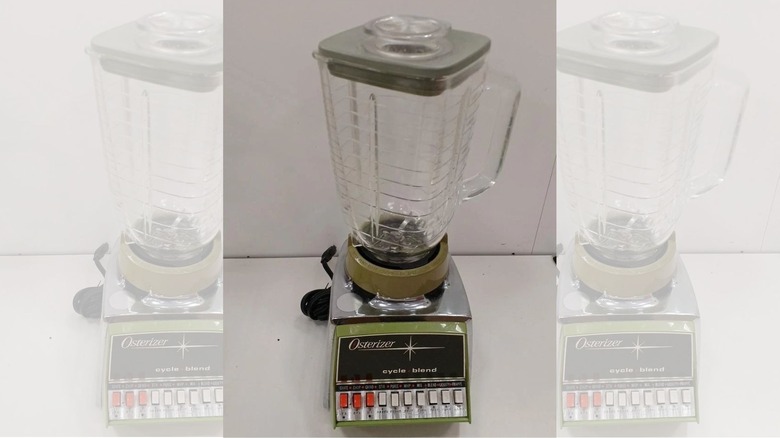
Chrome Osterizer blenders are fantastic. They are big, heavy, and wonderfully straightforward, with proper glass pitchers and motors designed to tackle everything from milkshakes and smoothies to sauces and pancake batter. They are a brilliant bit of engineering and they look amazing. Oster's two-speed Super De Luxe Model 452 is a particularly handsome example, with its chunky chrome base, simple rotary control, and a glass jar that is the epitome of a mid-century kitchen.
One of the reasons I like these older Osterizers is that they're relatively straightforward to maintain. The glass pitcher separates from the blade assembly, which is held in place by a threaded base and sealing ring. That means you can get into the awkward areas around the blades for proper cleaning, rather than trying to dislodge dried-on food with a bottle brush. It does mean, though, that you need to pay attention when you're thrifting one. Beyond just making sure the glass jar isn't chipped or cracked, check the blade bearings for excessive movement and inspect the rubber gasket, which may have perished over time, but can be replaced.
Automatic electric coffee percolators
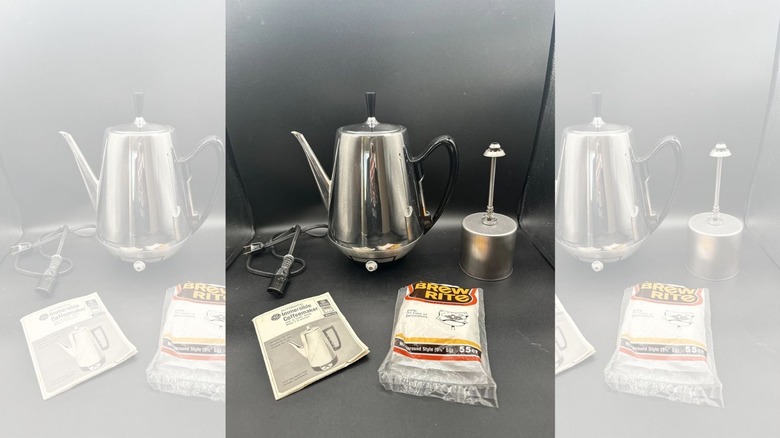
While automatic electric coffee percolators seem old-fashioned today, in the 1960s they were wonderfully futuristic and revolutionary. Especially the ones with the little glass knob on top that lets you watch the coffee bubbling away in the pot. These percolators work by heating water at the bottom of the pot and sending it up a hollow central stem. From there the heated water falls into a basket of ground coffee before circulating through the pot again. It's a simple process that made making fresh ground coffee much more convenient for houses across America, although these percolators were notorious for making the coffee bitter if they were left to percolate for too long.
During the 1960s, manufacturers like Presto and Faberware offered automatic electric models that took some of the guesswork out of brewing the perfect cup. Faberware's Superfast electric percolators, for example, are particularly sought after, with their polished stainless steel bodies, black handles, and detachable electric cords. While we have simple drip coffee machines and fancy barista-style countertop coffee makers and simple French presses, adding an automatic electric coffee percolator to your kitchen is a fantastic way to bring a little bit of functional kitsch mid-century decor, even if you never intend to use it. And if you do find a working model, they are still useful, as you don't need disposable paper filters and you can brew several cups at once.
Sunbeam Radiant Control toasters
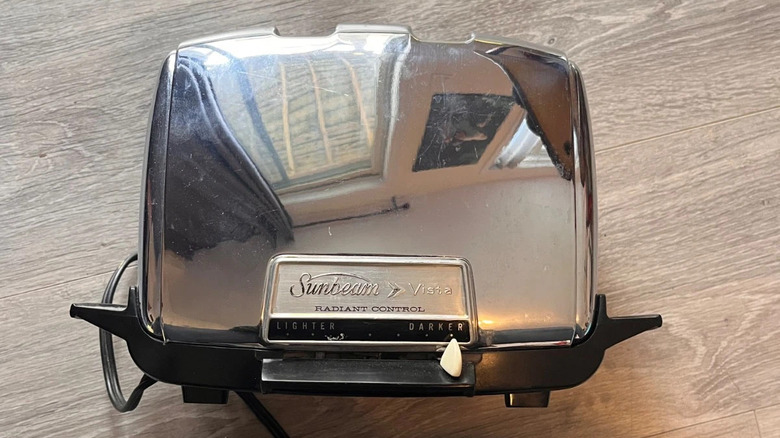
I'm a little bit obsessed with Sunbeam Radiant Control toasters. I've been looking out for a really nice mid-century example for ages, but so far I've had no luck. Unlike conventional pop-up toasters, these genuinely simple but remarkably clever machines automatically lower the bread into the slots when you insert it. You don't even need to press a lever. Once it draws the bread into the machine, it's got a mechanism inside that responds to the heat radiating from the bread so it doesn't rely on a fixed timer like most modern toasters. That means the machine can accommodate differences in bread without the same amount of manual adjustment. I can't reiterate enough just how clever these toasters are. Once it detects the toast is sufficiently toasted, the sunbeam raises the bread again and stops the heating process.
The one that most people want is the Radiant Control T35 model, as these are chrome-bodied and beautifully rounded, with minimal controls. Because they are so simple, there's very little to go wrong and so many examples from the 1960s will still work perfectly well. One thing to note with mid-century models, though, is the electrical cord and its insulation, as some some older toasters from this era may contain asbestos in their electrical cords. If you're concerned, your best option is taking the toaster to a professional to have it checked out before you put it into use in the kitchen.
Reversible waffle irons and sandwich grills
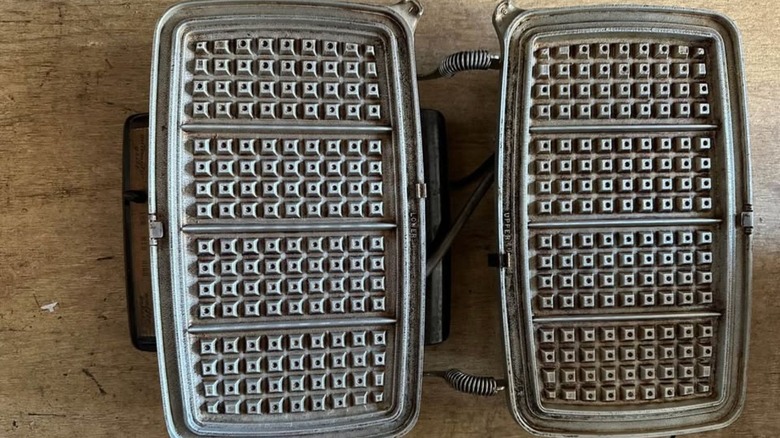
The General Electric combination waffle irons and sandwich grills from the 1960s were a lot more versatile than you'd expect. These multifunctional appliances meant that you didn't need to buy separate machines for making waffles and toasted sandwiches because of the reversible cooking plates. One side had the familiar waffle pattern while the other provided a flat grilling surface that was suitable for more than just sandwiches. You could also make pancakes, bacon, and eggs on the flat grilling surface. GE introduced their waffle combination grills in the mid-20th century, and they were immediately popular with families. Models like the GE G48 grill and waffle baker remain particularly collectible. These appliances have substantial metal construction and reversible cooking surfaces, letting you prepare all kinds of meals.
When you're looking at a secondhand example and deciding whether to buy, look at the plates closely. They should sit properly in the machine and turn over without having to be wedged in and without any obvious warping. If the cooking surfaces are worn, pitted, or otherwise damaged, then skip it as it'll make waffles difficult to remove. Next check the hinges, handles, and electrical connections and if the machine is one with removable plates rather than reversible, make sure both plates are present.
I quite like the idea of having a single appliance for waffles, grilled cheese, and pancakes. It's certainly more useful than some of the single-purpose kitchen gadgets manufacturers were busy inventing during the same decade. They took up a lot of counter space and were more novelty than long-term useful kitchen additions.
Sunbeam electric frying pans
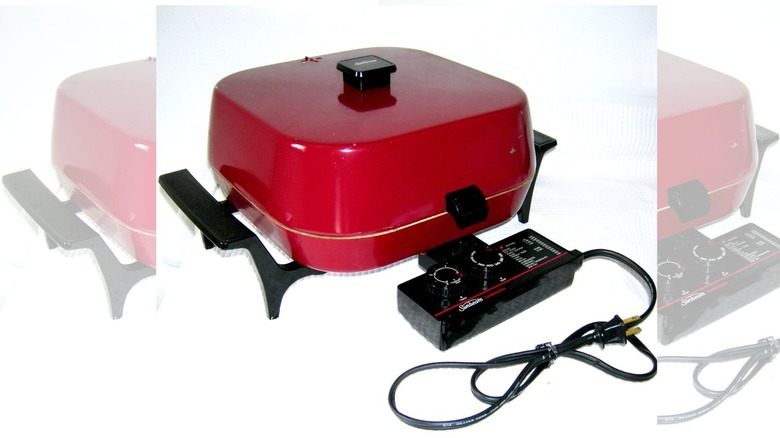
You can understand the appeal of electric frying pans, particularly for anyone cooking for a large family or dealing with limited stovetop space. Sunbeam's Cookmaster was one of the more popular models during the 1960s, but many other brands also produced these convenient plug-in appliances. Unlike a conventional frying pan, these electric models had their own heating element inside as well as temperature control so you could fry, simmer, and prepare complete meals without having to use your stove. Some like the Cookmaster were large enough to cook a substantial breakfast, make a casserole, or use it to keep food warm while preparing the rest of the dinner. Some models also had domed lids so there was plenty of room above the cooking surface, which made them useful for dishes that needed a little extra height.
Some of Sunbeam's Cookmaster models had a detachable temperature control probe, while others had a somewhat ingenious auxiliary leg that made it so the whole cooking surface tilted slightly, making it easy to drain fat and juices away from food. The square Cookmaster electric skillets offered more room for food than conventional round skillets. Take a good look at the pan's cooking surface, particularly if it's a non-stick version. Deep scratches, flaking coatings, or substantial pitting or corrosion would put me off buying one. As if you're going to put it to use in your kitchen, it needs a safe, reliable cooking surface.
Wall-mounted electric can openers
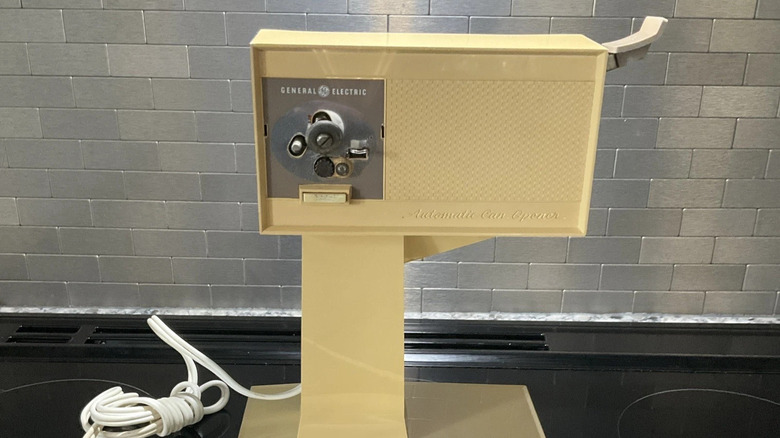
For most of us, finding a really good can opener seems next to impossible. It doesn't seem to matter whether you drop a couple of dollars at Walmart or get something higher-end. Most modern can openers, particularly handheld ones, just suck. If you need to open several cans of tomatoes, veggies, or soup for a family dinner, it's tiresome when the can opener skips and slides and makes what should be a simple task very frustrating. In the 1960s, electric models offered home cooks a welcome shortcut. The General Electric automatic can opener, for example, was released in 1961, and it could be mounted on a wall or used with an optional countertop stand. It worked by gripping the can and rotating it against a cutting wheel while a magnet held onto the lid. Mounting it on the wall was a clever way of keeping the countertop clear, especially in smaller kitchens.
Dazey was another popular manufacturer of electric can openers during the mid-century period. Its combination models also offered knife sharpening and some had removable cutting levers, designed to make cleaning them easier. If you're looking at a secondhand one with removable parts, make sure they're all present. Check the cutting wheel for damage, make sure the drive mechanism isn't too worn, and confirm that the magnet is still attached. If a can opener slips or struggles to grip a can, it's not going to be much use, but if you find one in good condition, they are well worth buying.
Electric carving knives
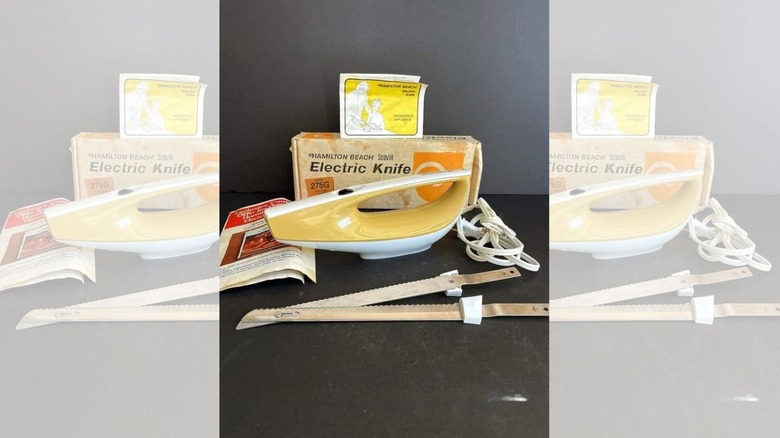
When they were released in the '60s, electric carving knives seemed unbelievably futuristic. Instead of wrestling with a traditional carving knife and a large Sunday roast, you could let the bulky plastic-handled knife do most of the hard work. These vintage kitchen appliances had two serrated blades that moved back and forth against one another so they would slice through cooked meat with very little effort. Hamilton Beach was selling electric carving knives by the mid 1960s, offering a variety of models, including a rather ingenious Switchblade model that allowed you to rotate the blade instead of awkwardly repositioning the whole knife. The 1967 version even came with a detachable cord and its own storage tray
For me, the electric carving knife is more of a novelty than anything else. Although some people genuinely still use them for carving large roasts, I prefer a well-sharpened manual knife. Having said that, some vintage models, especially those that came with fitted storage cases or wall-mounted versions that kept the knife blades neatly together, would be a lovely find. Even though for me it would be a display item rather than something that's of so much use. Just make sure both blades are present and they match. Examine the teeth for bends, chips, or excessive wear and corrosion. Don't buy anything with a damaged handle or unreliable switch. Remember that the blades are extremely sharp even when the motor isn't running.
Salton Hotray warming trays
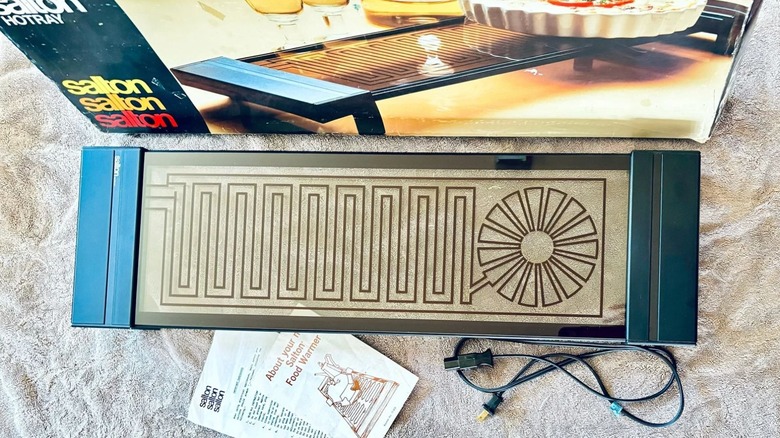
One thing that hasn't changed since the '60s is the problem of feeding a large family and keeping all the food hot so it's all ready to serve at the same time. The vegetables get cooked but the roast needs another 15 minutes or suddenly somebody tells you they're going to be late for dinner. Salton's Hotray was the solution to this problem. It provided a way to keep food warm without continuing the cooking process, by providing a controlled heated surface. Released in the 1950s and incredibly popular by the '60s, Salton Hotrays feature a thermostatically controlled glass panel that keeps food warm. They were really useful if you were cooking a large amount of food and had limited oven and stove space. It allowed you to finish one dish, set it on the warming tray, and then cook the next thing.
The Hotray range included different sizes and finishes too, with some models designed to sit directly on the dining table, such as the H-110 Elite, with its textured glass surface and wood effect trim. These warming trays are still useful for parties, buffets, and general entertaining when large quantities of food need preparing. Do bear in mind, though, that the food needs to be hot when it goes on to the warming trays, as they don't reach a high enough temperature to reheat food that's already gone cold. For reheating, electric casserole warmers were popular during this era.
Oster electric meat grinders
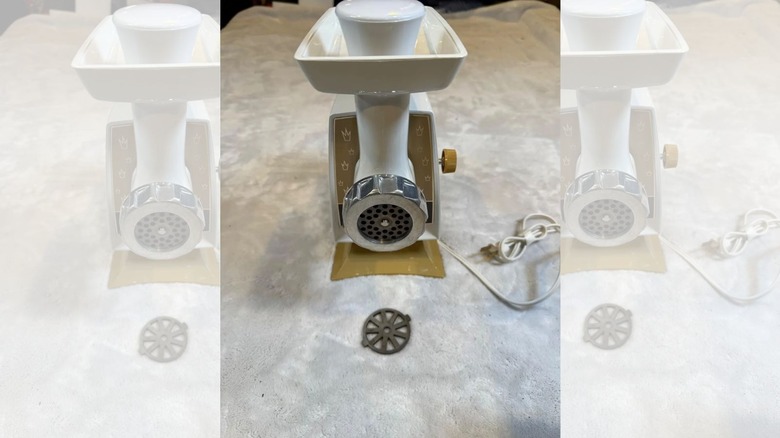
I grind my own meat for burgers and sausages, among other things, with the grinder attachment for my KitchenAid. Partly because you know exactly what's going into the mixture and partly because it saves me money and allows me to buy and process meat in bulk. While much of my kitchenware is vintage (I have some stellar 1980s kitchen gadgets as well as some fab stuff from the mid-century), my meat grinder and the KitchenAid are more modern. However, Oster's electric meat grinders revolutionized the laborious task of grinding meat with the old-fashioned hand-crank machines. They brought out the Model 505 in the late 1950s but they remained popular right the way through the 1960s and the 1970s.
You could chop cooked meat, fish, vegetables, nuts, and other ingredients as well as just grinding raw meat, so the Oster electric grinders were surprisingly versatile. They also had several optional attachments that you could purchase to turn your basic meat grinder into a miniature food preparation center. There was an ice-crushing head, an electric can opener attachment, and even a sausage stuffing tube so one appliance could serve a whole range of purposes.
General Electric countertop rotisserie ovens
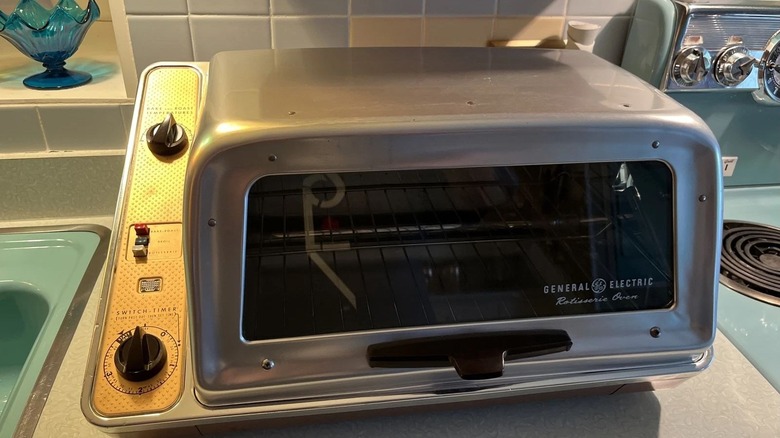
General Electric's countertop rotisserie ovens were a remarkable piece of 1960s kitchen engineering. These were versatile machines that could roast meat on a roasting spit, broil food using infrared heat, or function as small conventional ovens. When it was released in 1960, GE claimed that their combination rotisserie oven could handle a turkey weighing up to 16 pounds. It also featured a clever tilt-top lid that lifted out of the way to give you access to the cooking chamber without having to wrestle a hot roast through a narrow opening. Obviously a machine that can cook a 16-pound bird is not small and compact, so it'll take up a substantial amount of countertop space and probably isn't a good choice if you have a small kitchen. But if you have the space and regularly roast chickens or larger cuts of meat, the roasting spit will likely be useful to you. The constant turning helps the meat cook and brown more evenly while the drippings collect below, in theory, meaning that you get a nice, crispy exterior.
However it's not that easy to find one of these in good condition with all of its parts. And the parts can be almost impossible to replace. If you're considering buying one, make sure that everything's there, including the little mechanism that actually holds the food in place. Pay particular attention to the heating controls and the integrity of the cooking chamber. If it's been well looked after and properly serviced, then a countertop rotisserie oven can be a fantastic addition to a working kitchen.