

Put Down The WD-40: 12 Substitutes To Use Instead
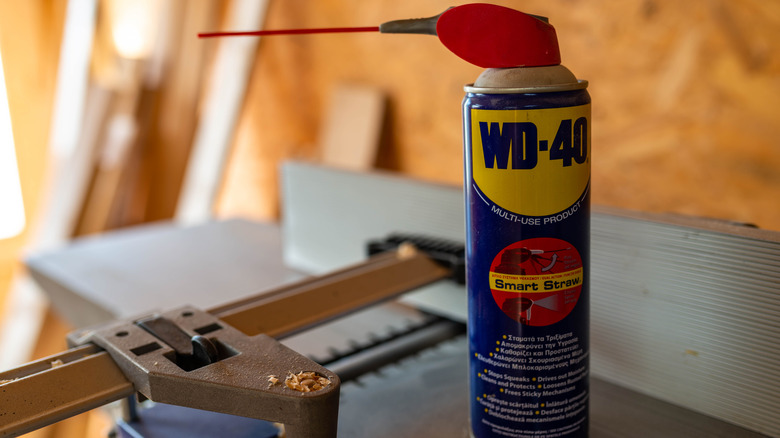
The trusted blue-and-yellow can of WD-40 has earned a reputation as a panacea for many household problems. Whether you're struggling with rusted bolts, stuck with stiff zippers, annoyed by grime buildup, or in a pinch during a tire change, you can reach for the can to tide you over. That's not all. You can even spray your planters with WD-40 to refurbish them.
But what do you do when you run out of this aerosol spray? Or when you're working in a poorly ventilated area and abhor its odor? Just FYI, you shouldn't be breathing in its vapors anyway, since they're toxic. In such instances, reach for its substitutes, of course. From cooking spray, petroleum jelly, and beeswax to various kinds of oils and grease, you can substitute WD-40 with many products. However, they all come with their own pros and cons and may not be easily swapped in for every task where WD-40 comes in handy. After all, WD-40 is truly multi-faceted and may be used to lubricate, unstick, and unfreeze, and to protect rust-prone items. All these uses might not be up the alley for every replacement, so exercise caution and be aware of the caveats before making the switch.
Use cooking spray to silence squeaky doors
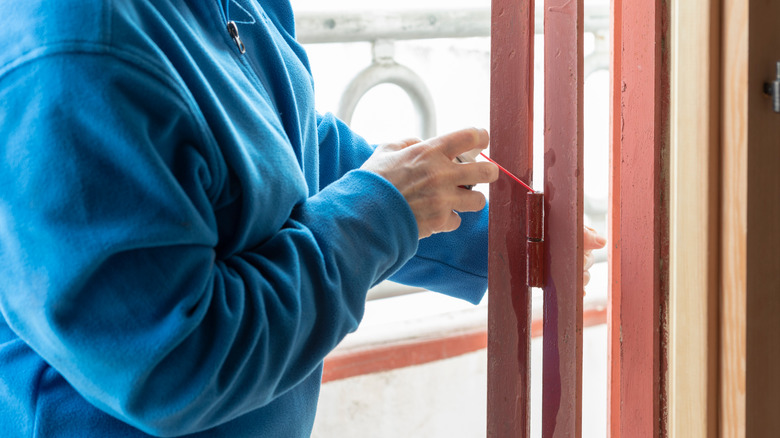
Tired of your doors announcing out loud to your dogs that you're leaving? Well, you could dim that squeaky death knell with cooking spray. Non-stick cooking sprays are mostly oils in aerosol form — for instance, your PAM includes canola oil and is odorless to boot — which helps lubricate the mechanical bits. Besides cutting grease, it helps prevent stuff from sticking, not only to your baking trays, but also on the underside of snow shovels and lawn mowers. You can also use this kitchen staple to loosen a stiff lock. But be mindful of residue buildup, as it may collect dust over time.
Scrub away stickers with vegetable oil
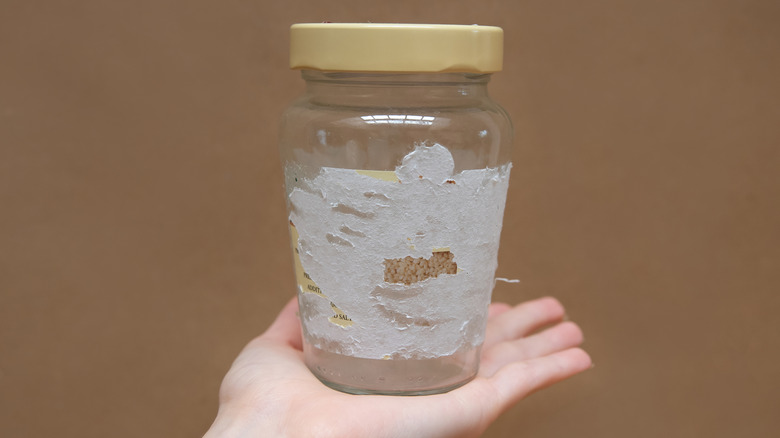
It can be annoying when stickers are reduced to illegible scraps and still refuse to come off fully. Compared to WD-40, vegetable oil is cheaper, and even an expired or old product would work. Besides, it's food-safe and is less likely to destroy rubber lids should you misapply it. Other genius ways to use vegetable oil around your house involve applying it to sticky door hinges and locks. In these cases, we recommend using it only as a temporary fix, since it can gum up and draw in pests and debris, which may be harder to deal with later on.
De-stain vehicles with rubbing alcohol
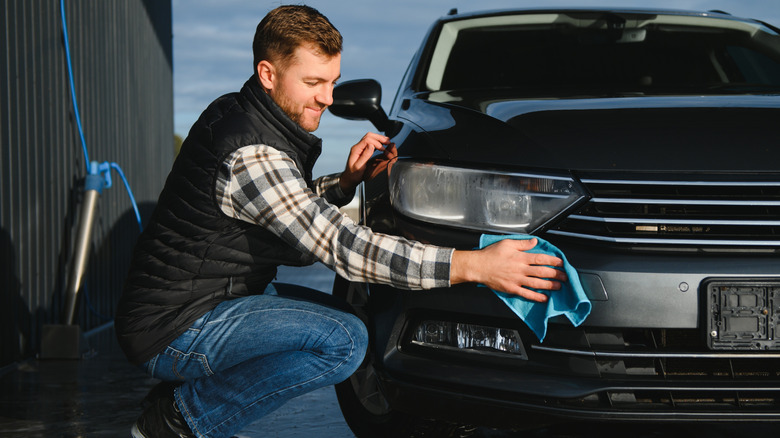
Do you live in an area where trees frequently deposit resinous gum on your cars or deal with garden pests like scales that cover your vehicles liberally with the very sticky substance known as "honeydew"? When out of WD-40, you can use rubbing alcohol to make the surface squeaky clean and disinfect it. In addition, and especially if you don't enjoy how vegetable oils create a gooey mess, you may use rubbing alcohol to remove stubborn sticker residue.
Petroleum jelly makes a great lubricant
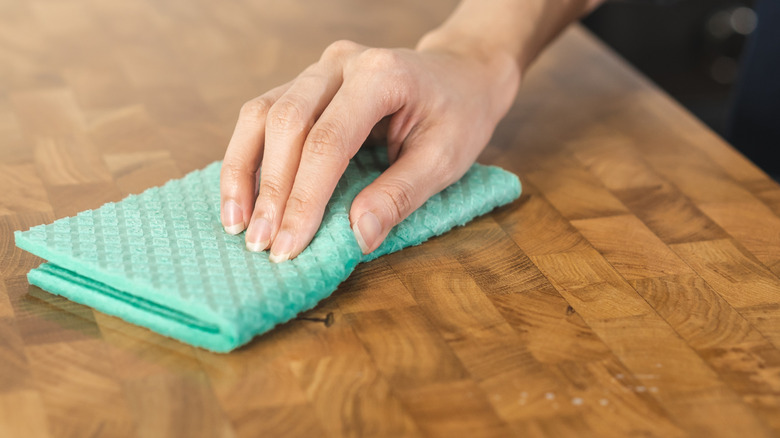
Often equated with Vaseline, petroleum jelly is a semi-solid, waxy, mineral-oil-based substance that likely enjoys a cherished role in your skincare routine. However, besides saving you from cracked heels and chapped lips, it can serve as a nifty replacement for WD-40 in sticky situations. It's greasy enough to loosen door or window hinges without the stink, though be sure to scoop up excess with a dry cloth before it dries. You could also use it to buff out stains on wooden surfaces and polish up leather furniture.
Condition garden tools with coconut oil
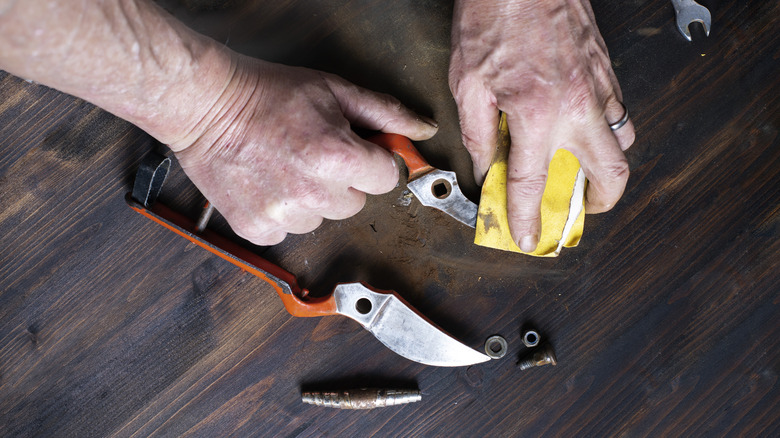
WD-40 or motor oil, for that matter, are the typical go-to when your garden tools require conditioning. While they work just fine, you don't have to go the petroleum distillate route. Instead, break out a bottle of coconut oil — it's not just for your hair or food and will do a wonderful job of lubricating and creating a temporary barrier against rust on your outdoor equipment. Use a spare rag to apply. It will work just fine even if it solidifies in winter.
Lubricate or waterproof with beeswax
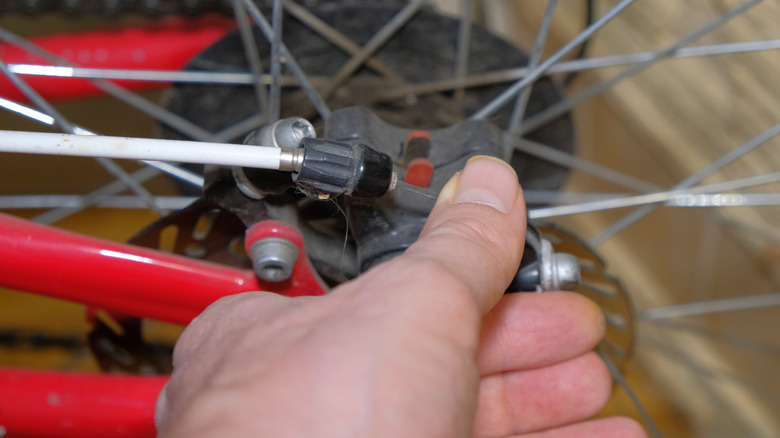
Like WD-40, beeswax is incredibly resourceful. Given its texture, it's unsurprising it can unstick obstinate parts and get stuck things, like bolts and nuts, moving, without being as toxic. You can also substitute it in place of WD-40 to waterproof your canvas shoes before heading out in winter. The one downside is that it can be difficult to apply since it's solid. But you can try melting it with a hairdryer. While also suitable for leather shoes, it may harden the material temporarily and leave a dark sheen.
Use soap to eliminate pests

When you see a roach, spider, ant, or any other household pest scurrying on your ground or plants, it can be tempting to start a "who's faster" fight with your WD-40. But the aftermath can be terrible if you stink up your entire house. Not to mention, it isn't a pest exterminator. A better solution, for an occasional intruder, is to dilute soap in water and spritz it liberally until its entire body is coated and it suffocates to death. This works equally well for garden pests. For larger infestations, seek professional assistance.
Tap hydrogen peroxide to rescue caffeine stains
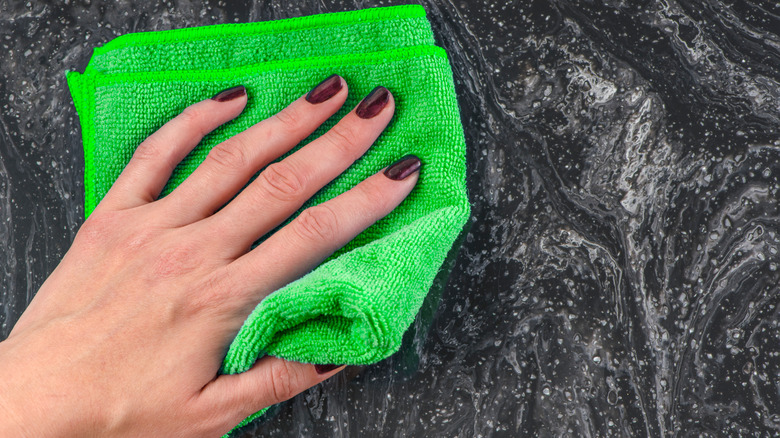
Some homeowners have taken to WD-40 to remove tough tea stains from their countertops, wiping it off afterward with detergent and a dry cloth. However, if you're into coloring your hair, you may have a bottle of hydrogen peroxide lying around. Tissues drenched in it can help clear off tea and coffee stains from marble and laminate countertops, though if they're particularly persistent, you may have to follow up with baking soda. Considering there are several genius hydrogen peroxide hacks that'll leave your kitchen dazzling clean, it sure is a nice-to-have.
Lubricate locks with graphite powder
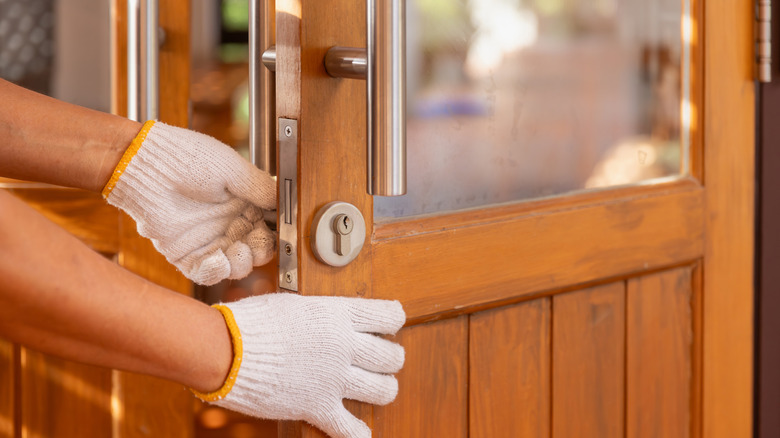
Although a relatively specialized item, graphite powder is another useful substitute to have on hand to reset inaccessible security locks, padlocks, or euro cylinders. Unlike WD-40, it can be used inside the keyhole. It's also superior to vegetable oils in the sense that it doesn't leave any wet film, which could later collect dust and debris, nor does it thicken in cold temperatures. Along with reducing abrasion, it may also offer some rust resistance, allowing the locks to last longer.
Protect against corrosion with plumber's grease
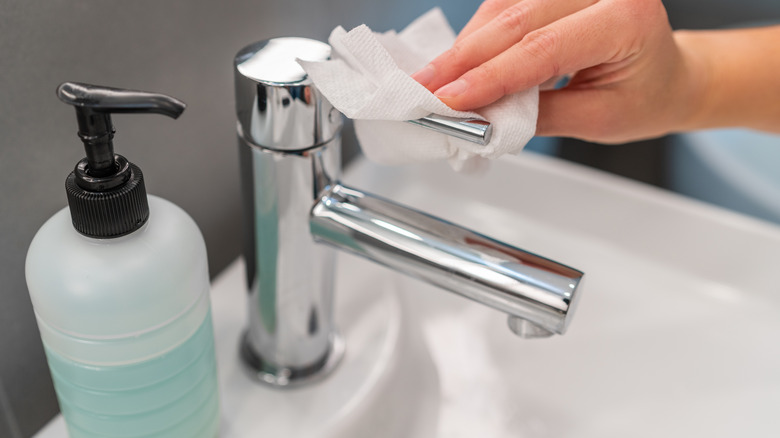
If you enjoy taking care of your house all on your own, you likely own a tub of plumber's grease. Typically petroleum- or silicone-based, this substance is a nifty lubricant you apply to plumbing fixtures to minimize wear and tear, enhance lubrication, and create a soft barrier against moisture to keep rusting at bay. Considering such attributes, it's no surprise that it works wonderfully as a stand-in for WD-40. As a bonus, silicone grease can be used around rubber, plastic, and electricals without inviting damage, unlike WD-40. Now unsticking your hard-moving faucets will be a breeze.
Switch to food-grade mineral oil for polishing
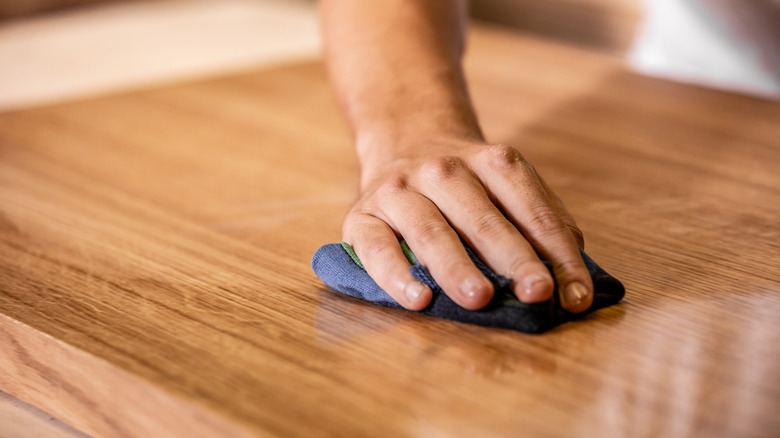
If you're hesitant about using WD-40 because of its odor and have dispensed with the idea of vegetable oils since they go rancid, don't fret just yet. Instead, look around for food-grade mineral oil, an unscented wood finish. It sits on top of wooden furniture, protecting it from minor humidity changes, while simultaneously bringing out the beauty of its grain. Considering it's food-grade, you can also spritz this kind of oil around your food counters and to refinish your wooden chopping boards, where WD-40 wouldn't be useful.
All-purpose machine oil works great on hinges and metal drawers
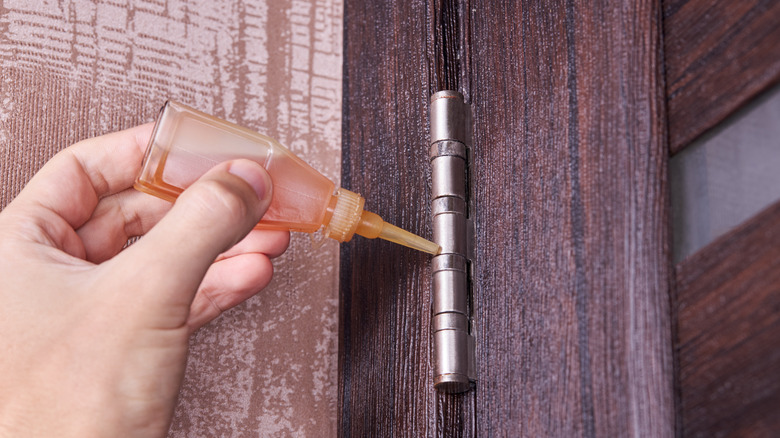
Last but not least by any means, if you're into sewing, you likely keep a bottle of machine oil handy to keep the equipment lubricated. Like WD-40, machine oil can be used to lubricate, smooth operations, and quieten the galling sounds from jammed-up hinges and metal drawers. In fact, you could also use it on bike gears for a quick refresh and get back on the road. The best part, though? It won't reek.