

Can You Use WD-40 To Keep Spiders Away From Doorways?
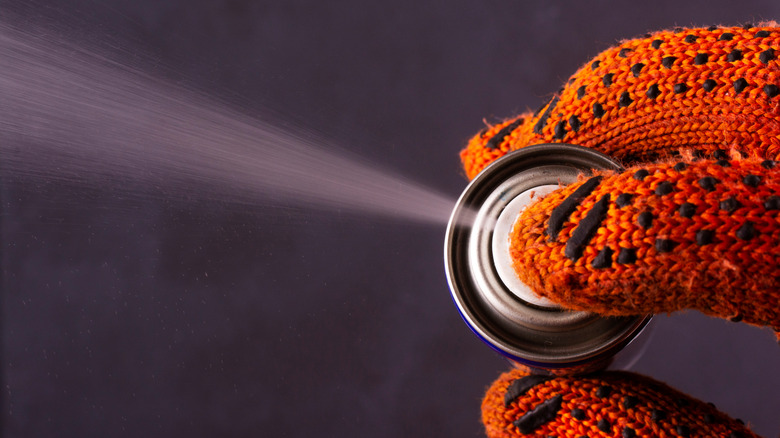
If you've ever cleaned up pesky cobwebs only to wake up the next morning with more spiders in your house then you understand how frustrating it can be — even if there are certain spiders you may not want to kill in your home. The doorways of your home are like busy highways leading spiders to warmth and safety. When pest sprays run low, you might reach for a DIY home alternative, and since online hacks often claim WD-40 can help keep your home bug-free, you might be tempted to give it a shot to keep the spiders away.
This viral hack has been making its rounds on social media lately, and the theory behind it is pretty simple. Homeowners who swear by it claim coating doorjambs and thresholds with WD-40 creates an ultra-slick surface that spiders can't climb, while the strong chemical smell supposedly drives them away. Plenty of online commenters insist it works wonders, but the truth is there's zero scientific research or entomological testing to back the claim up. So, does this actually work, and is it even safe?
The short answer is no, you should not use WD-40 to keep spiders away from doorways. According to pest control expert Caleb Fabry, when speaking to Homes and Gardens, "WD-40 is not an effective way to kill spiders and it will not repel or keep them away either. It is a lubricant and solvent, not a pesticide." Spraying a little around external door frames and along threshold trim may create a temporary layer of lubricating oil that can make it difficult for spiders to grip onto or anchor webs, but it's not really solving the spider problem — once the spray evaporates and the oil layer gets dirty, it won't be slick anymore; making it useless as a barrier.
Why WD-40 isn't the best spider solution
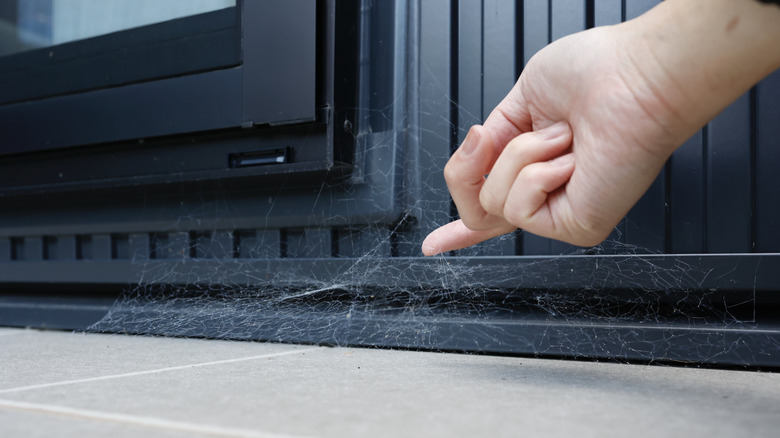
Although it may appear to be a cunning MacGyver solution to use WD-40 in place of spider spray, it can cause some issues. WD-40 is an oil-based product, meaning it will attract dirt and dust. If not cleaned off quickly, you might wind up with permanent staining to wood trim or degraded rubber seals. This is especially frustrating since in order to keep this hack working at all you'd need to reapply it constantly.
Doorways are a high-traffic area: Young children will often place their hands on doors and pets will place their noses against the trim when trying to go out. Pets will also rub against the door frame as they try to squeeze past you, causing them to spread the oily substance onto their fur where it will be ingested when grooming. Along the same lines, children are known for putting their hands in their mouths, which can also lead to accidental ingestion. WD-40 isn't acutely toxic in trace amounts, but its Safety Data Sheet notes the petroleum distillates can irritate skin and eyes, and cause stomach upset if swallowed. Having a thick layer of petroleum oil in the house simply creates an unnecessary safety risk for the whole family.
To make matters worse, WD-40 is not designed to act as a long-term outdoor barrier. Because it's a lightweight, water-displacing solvent rather than a weatherproof coating, sun exposure causes the solvents to evaporate quickly and rain easily washes the remaining oil away. Although there are plenty of unexpected ways you can use WD-40 around the house, using it to control pests in your home quickly loses its appeal when you consider the extra hassle and the minimal benefit.