

11 Window Treatment Looks Trending In 2026
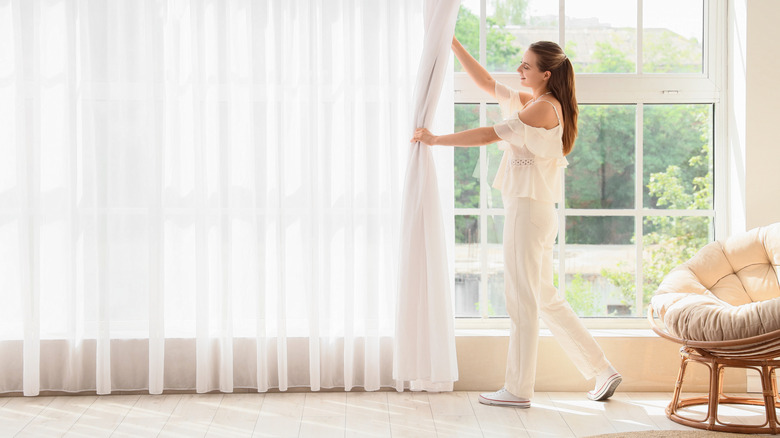
Deciding which blinds or curtains to add to your windows may feel like a minor decision in the grand scheme of your home decor. However, if you make the wrong choice, it's a very visible mistake to have to live with. Not only that, but in most rooms, you'll have to interact with those poorly-dressed windows each morning and evening, thus rubbing your own mistake in your face on a daily basis. Instead, it can pay to work out what's trending — and just as importantly, which window treatments are out — and use that to inform your decision. Don't worry, though. There's no need to hire an interior designer, nor do you need to spend hours online trying to figure out what's hot. Instead, you may just find the inspiration you need in the dedicated guide below.
To help style-savvy homemakers like you dress your windows like a pro, we've taken the time to find and explore some of the trendiest looks circulating the design world. There are treatment ideas for small windows, to ensure you don't accidentally suffocate your space, as well as tips to help layer your window dressings and ensure a seamless, stylish look. You'll also find advice on matching your curtains to your walls, if that's your thing, and if you have a penchant for bold patterns, there are some ideas to help there, too. Whether you have a preference for pleats or prefer to block out the light with blinds, if you want to avoid the woes of poor window design, then this guide is here to help.
Desire for sustainability puts natural materials on the front foot
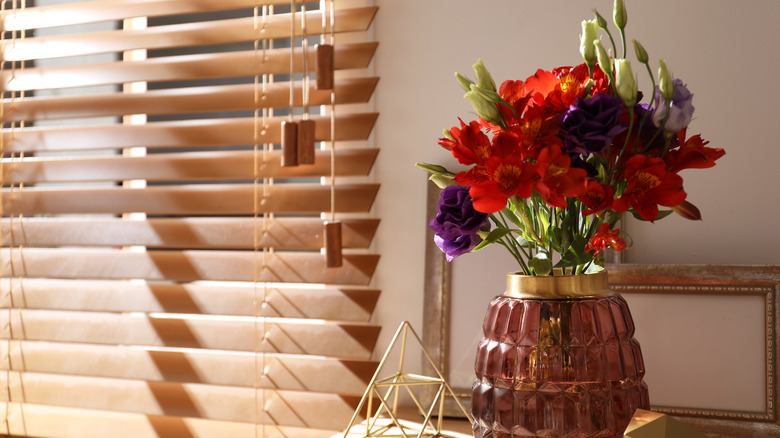
To understand this trend, we should first zoom out and examine a wider trend permeating the world of design as a whole. We're talking about sustainability, and the growing desire among homeowners to infuse their homes with better, more eco-conscious choices. This can come in the guise of regenerative wood flooring, like bamboo, or buying items at the thrift store instead of paying full price for new home decor. In the case of window treatments, regenerative materials, like wood and bamboo blinds, are an excellent choice. Not only are they sustainable, but they contribute nicely to increasingly popular biophilic design modes — those in which materials, tones, and textures work to ground a space in nature.
So, how might you go about adopting this trend? Well, as mentioned, you could opt for wooden or bamboo Venetian blinds, which would immediately lend a sense of earthy warmth to your space. Alternatively, if you need window treatments for privacy, a well-fitted set of wooden shutters would work just as hard for warmth, while providing maximum control over light and privacy levels. As for sustainability, aim to ensure that your window treatments will stand the test of time. In other words, while they should look great, they should also perform the way you need them to. If they don't provide enough privacy, or shut out enough light, you'll be tempted to replace them in just a couple of years' time. The goal is to buy once, and buy well, thus reducing your household's contribution to local landfill.
Textured fabrics are proving popular
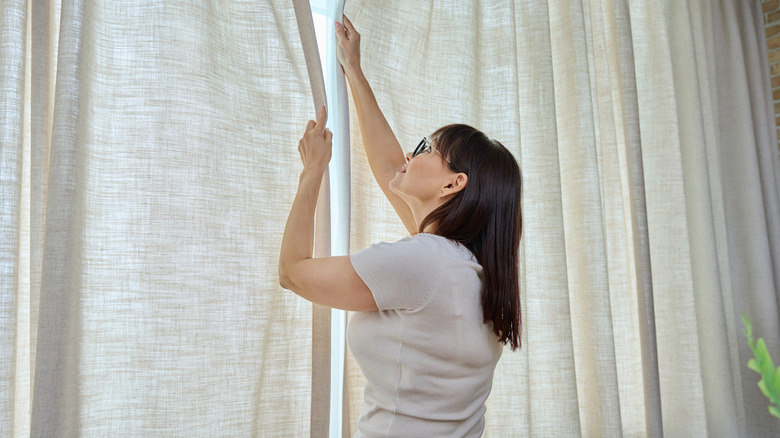
Not so long ago, pared back, sleek, and polished interiors were the go-to for design-minded homemakers. However, as interior trends move inexorably away from ultra-modes of minimalism and towards a more inviting, layered, and even sculptural approach, designers are once again reserving a place for texture. This can come in many forms, from the pile of the carpet to the type of upholstery on your furniture. However, given that windows are often a focal point in a room — particularly those with a view — textured window treatments can have a profound effect on your overall design.
This should come as reassuring news to those who felt stifled by the trends of recent years. It opens up a world of possibilities for window dressing, including both blinds and curtains in an array of fabrics. Woven finishes, for example, bring a handmade level of texture to a space, adding instant interest to a window recess even without the use of bold patterns or colors. Alternatively, linen-like textures, while subtle, add a tactile touch that's far more soothing and sensory than the flat-and-matte uniformity of decades past.
Curtains layered with blinds have lots to offer style-savvy home designers
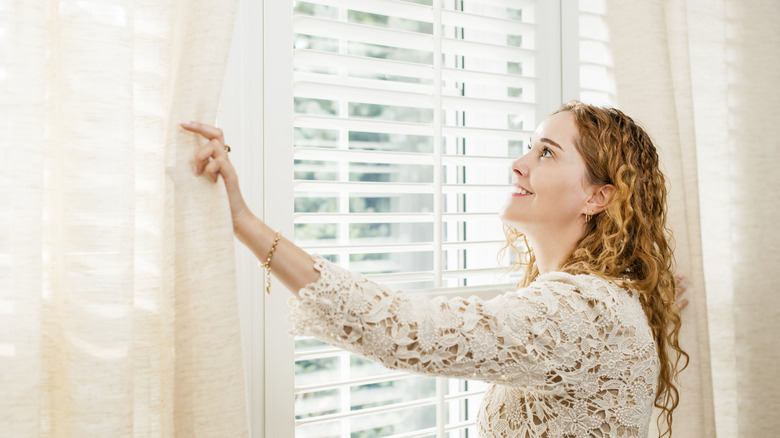
There are various window treatment ideas to brighten the rooms in your home, but one of the most creative — and, indeed, on-trend — is adopting a layered approach. For example, you might take a plush pair of curtains to achieve your desired cozy "look," and pair them with blackout or thermal blinds. This way, there's less of a "sacrifice" to be made when specifying your window treatment, effectively giving you the best of both form and function. Blackout blinds are a great choice behind your curtains in the bedroom, where light control is key to easy Sunday mornings. Alternatively, a thermal blind can help to regulate temperature control while maximizing your room's energy efficiency.
The reason this layered approach is so on trend is because the alternative — dressing your windows for looks alone — is decidedly out of style. Speaking with Ideal Home, Debbie Leigh, design manager at ILIV, said, "One of the biggest modern shifts is that our curtains are expected to enhance comfort as well as style." The only problem is that curtains can struggle to tick every functional box. But by pairing curtains with blinds, or even shutters, you truly get the best of both worlds. And it needn't cost a fortune to do, either. Even a basic set of behind-the-curtain blinds could help maximize light or temperature control, freeing your budget to invest more meaningfully in your curtains.
Curtain walls prove that dressings aren't just for windows
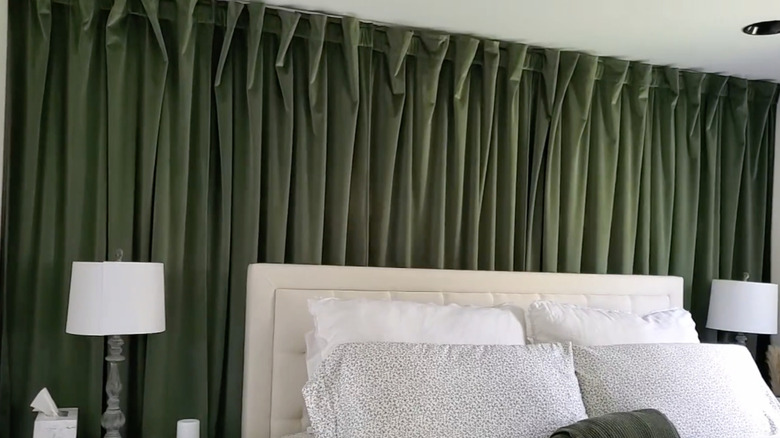
This is an interesting idea, and we have to be honest: We're there for it. The benefits of adding a curtain wall are many, not least its ability to help dampen sounds and soften acoustics inside a room. It could also help to thermally regulate your space, thus making it more comfortable to spend time in. And that's before you consider the look, which is very much on trend right now according to some designers. They include Jessica Davis, principal and creative director of Nest Studio. Speaking to Livingetc, she explained how wall-to-wall curtains "soften a space and add a uniformity that traditional drapes don't have."
So, what does that mean exactly? Take a room with multiple windows as an example. If each has different dressings, Davis points out that the space could easily look disjointed and busy. Even with matching curtains or blinds, those design choices may feel like "islands" in the context of your wider space. By running curtains over your windows, and then extending them across your walls, the entire scheme matches, thus alleviating the problem. Of course, it's not for everybody, and it may not be suitable for every room. But in the bedroom, it could provide the enveloping, cozy oasis that we crave in our restful spaces.
Even shorter windows now benefit from floor-length curtains
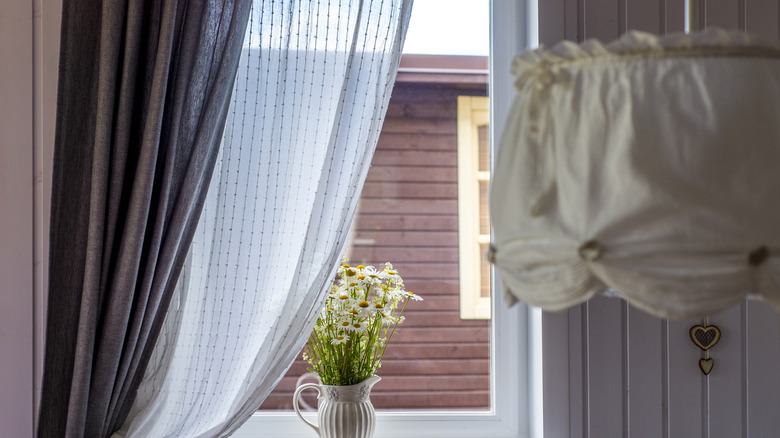
When faced with a short window, you may be tempted to pop a blind inside the recess or hang a short curtain and call it a job well done. Now, as we'll discover later, there is still very much a place for short curtains — depending on the look you're shooting for. However, if you want a luxurious, refined aesthetic in your space, then having your curtains hang long enough that they "kiss" the floor is key. So said Kunal Trehan, interior designer and founder of Touched Interiors. As he explained to Ideal Home, "Wherever possible, curtains should run from ceiling to floor, even if the window itself is much smaller."
There are several advantages to hanging your curtains this way. Firstly, long curtains can help to keep your home feeling warmer — both figuratively and literally. Those long drapes help to keep the cool air that gathers inside the window recess away from the rest of the room, thus improving temperature regulation. From an aesthetic point of view, having your curtains softly puddle on the floor feels slightly more casual and relaxed. It's a nice touch in laid-back living spaces and bedrooms, where a more formal look can work against the functional goal of the space.
It's absolutely okay to contrast your furniture with your window treatments
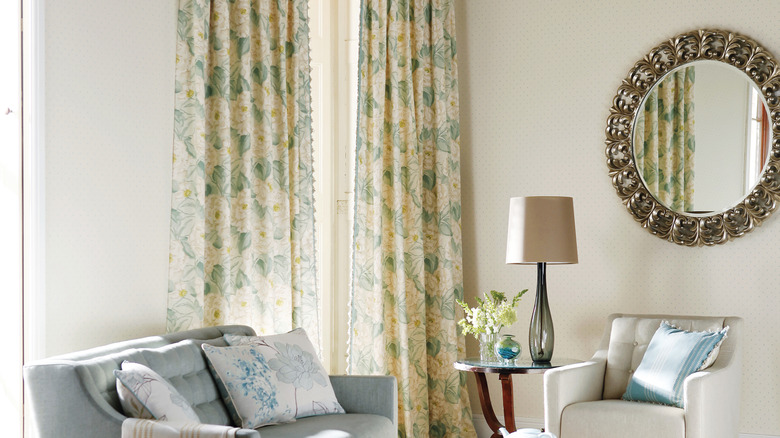
If you're desperately trying to match your curtains to your room and furniture choices, then don't fret. While it has long been considered good practice to do so, it's no longer a home-decor deal breaker to have everything sing in perfect harmony. To understand why, let us first examine another trend that's hot in the wider world of design. Rather than shooting for minimalism at the cost of character, designers are now seeking ways to layer their spaces with depth and interest. To do this, it's necessary for each design choice to feel intentional, and for each piece to feel collected — rather than bought as a complementary package from Wayfair or Home Depot. In other words, it's okay to stop matching your curtains to your cushions!
To put it another way, each piece — including your blinds or curtains — should add its own chapter to the story of your room's design. As Katerina Tchevytchalova, founder of K'Arte Design, told Ideal Home, you should "Let them relate to one another rather than replicate each other." Don't be afraid to vary things like tone and texture, and if a patterned fabric jumps out at you at the store — and it complements your wider scheme — then don't worry if it doesn't precisely match your furniture. A room that's layered with choices that you love will feel far more unique and personal than a matchy-matchy scheme that replicates what you saw on social media.
Maximalist curtains make just enough noise without disturbing more minimal spaces
For those who have long-since tired of sleek, pared-back minimalism, the renewed rise of maximalism among savvy home stylers will come as long-overdue good news. It's not for everybody, and even for those who are happy to give it a chance, it may not be suited to every space in the house. In the bedroom, for example, all-out maximalism may feel a touch too chaotic in what's meant to be a restful space. But that's not to say that calmer spaces can't benefit. The issue with too much neutrality in the bedroom is that it comes at the cost of character. By being slightly more playful with your window treatments, you can add just enough visual "noise" without being labeled a disturber of the peace.
That's according to David Ries, co-founder of Ries Studio, who explained to Livingetc that the window is a fantastic place to get creative. "Statement curtains allow you to introduce visual interest at the perimeter of the room while keeping the primary experience — your bed, bedding, lighting, and circulation — serene and uncluttered." In other words, instead of thinking about your room as either minimal or maximal, approach it as a hybrid of the two. And to prevent your window treatment choices from accidentally overpowering the rest of the space, simply employ some restraint. A boldly-patterned set of curtains, for example, can work well if the color palette remains restrained. Alternatively, you could look for a pattern that, while bold, is naturally "softer" to look at. Ries highlighted botanicals as an example, saying, "In bedrooms especially, I gravitate toward motifs inspired by nature."
Matching walls and drapes make a space feel calm and immersive
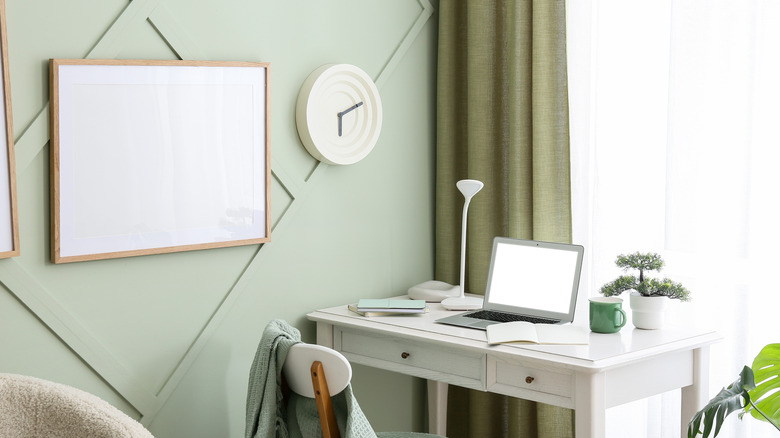
We've talked about covering your walls with curtains, which can soften the look of your space while making things feel cozy. We've also explored how it's no longer paramount to match your curtains to your furniture. This next trend sits somewhere between the two. It's about matching your window treatment color to your walls — a sophisticated, quieter approach versus contrasting colors. It ties nicely with the idea of color drenching — another growing trend that helps homeowners be more adventurous with their space by saturating it with color.
So, how does it work, how do you do it, and what are the advantages of matching your curtains to your walls? Speaking with Good Housekeeping, interior designer Marie Flanigan explained, "Rather than creating contrast, the fabric blends into the architecture." This, she says, helps to create an enveloping, drenched space that's at once sophisticated and soft. It also brings a subtle but pleasing sense of layering, especially with textured fabrics that add interest without confusing the eye with different colors.
Cafe curtains are back, but not just for style
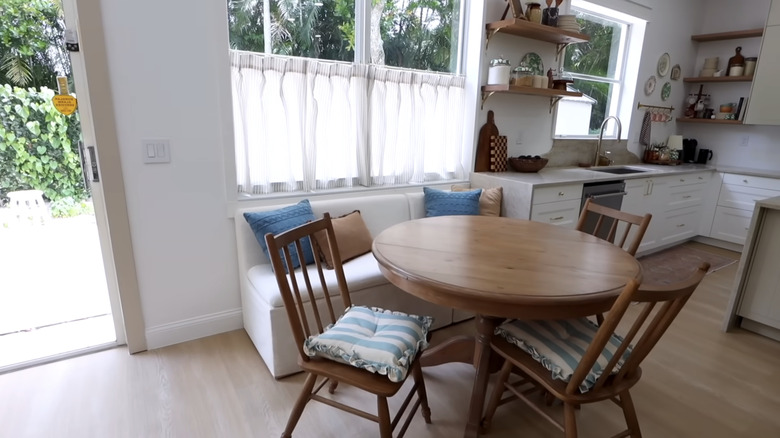
Café curtains are a useful way to dress smaller windows. Unlike a full set of drapes, they don't stifle a space, and unlike made-to-measure blinds, they dress the window while allowing plenty of light to spill in. Instead, they provide just a touch of privacy for windows that look onto the outside world.
This particular window treatment is often considered one of the best window dressings for kitchens, and it's widely associated with European interiors. However, said Marie Flanigan, they're also "an easy way to introduce softness and privacy without covering an entire window." She added that they can be made to feel "especially fresh" if they're made from linen — remember what we said earlier about the current importance of texture? Alternatively, you could look for café curtains with subtle stripes or small scale patterns to add interest while keeping the dressings subtle.
Apparently, valances are totally trending
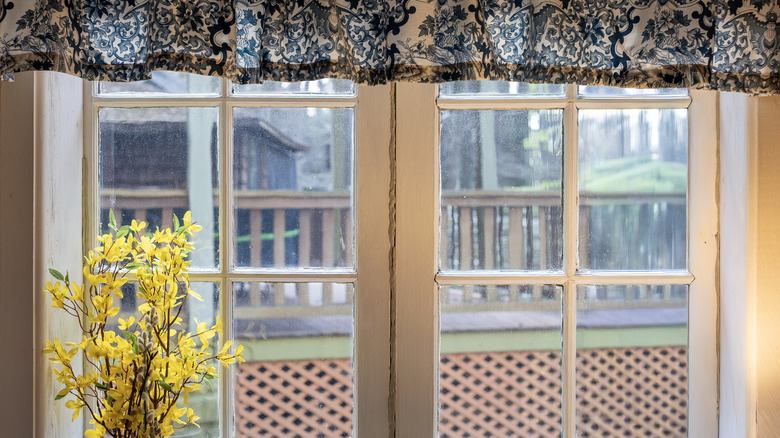
You may have learned to avoid this window treatment that can make a room feel cramped. However, if approached carefully, valances can actually form part of a beautiful — and very much on-trend — room design. So said Diane Luna, founder of Diane Luna Interior Design, who explained to Good Housekeeping that they are, right now, "totally trending." She specifically highlighted valances with contrast banding, which lend them a clean, but textured look. As she put it, "A valance draws your eye upward, making the room seem larger and fuller, and provides real interest up top."
With that being said, there are some other tricks worth keeping up your sleeve if you hope for your room to vibe with a valance. For example, they can be highly effective when used with shorter windows. That's according to Debbie Mathews LeRoy, who, speaking with House Beautiful, said this approach "creates the appearance of the window extending up and under the valance." Another tip is to incorporate valances with small-scale patterns, such as florals or geometrics. Sticking to smaller patterns helps lend the dressings visual impact, but without the overbearing "look" of fabrics with larger-scale motifs. Finally, don't forget to think about texture. Natural fibers like cotton, wool, silk, and linen can all help to layer your window with warmth, which is currently key to trend-based home design.
For a retro look, you may actually want to shorten your curtains
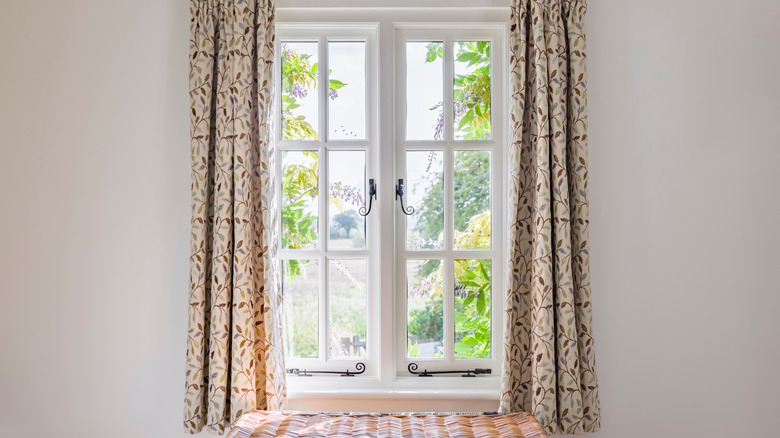
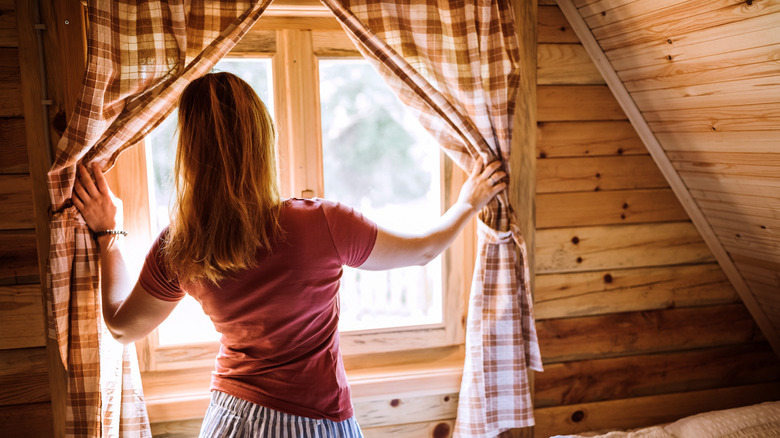
We know, we specifically said earlier that floor-length curtains were one of the leading window-treatment trends for 2026. However, interior design is — or, at least, should be — deeply personal. In turn, this means that what's trendy doesn't always jibe with the look you crave the most. Well, luckily, if you favor a slightly retro window reveal, it's actually okay to shorten them. Shorter curtains feel more casual, for a start. Not only that, but if you favor a bold, retro pattern, shortening them to just cover the window will dominate your space less compared to bold drapes that hang from ceiling to floor. As interior designer Heather Peterson put it to Livingetc, "The odd length keeps the curtains from getting too sweet."
As for how to go about dressing your window this way, aim to hang your shorter curtains so that there's near-equal space above and below the window. This lends the look of an intentional fit. You should also try to use curtains in fabrics that can hold their shape. As Peterson explained, "Something too soft or sheer is going to feel saggy, and suddenly the treatment is something out of a dated model."