

He Made Old Deck Chairs Look Brand New With Paracord
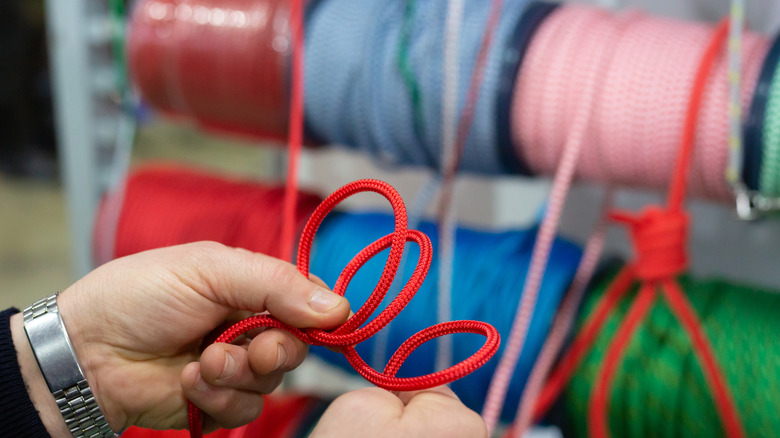
You know those old deck chairs that are just sitting around, not being used because you can't trust them to hold anyone who sits in them? Maybe they're years past their prime or have finally just succumbed to all the wear and tear. You can probably just get rid of them, but what if you could restore your outdoor furniture with a fun DIY instead? Thanks to Paracord Planet, we have a DIY that will not only save your old deck chairs, but elevate them into a stronger, cooler version of themselves, using paracord.
This deck chair improvement project works best with chairs that still have a sturdy frame, especially metal ones. We're simply going to remove the seat and back material and weave paracord panels in its place. Paracord is made of nylon and is a great choice for outdoor furniture because it can hold up to the elements well, though long sun exposure can fade it over time, so store or cover your chairs in the off-season. Its combination of strength and flexibility allows it to be fashioned into a woven seat that can hold the weight of someone sitting on it, which is pretty important when crafting a chair.
For a successful paracord deck chair DIY, you'll need the frame of the chair and paracord (550 paracord is the standard type). The amount you need will depend on how tightly you weave. A looser weave will require about 400 feet, while a closer weave can use up to 1,000 feet of paracord. You'll also need a lighter, a yardstick, and a pair of scissors.
How to upgrade your worn-out old deck chairs with paracord
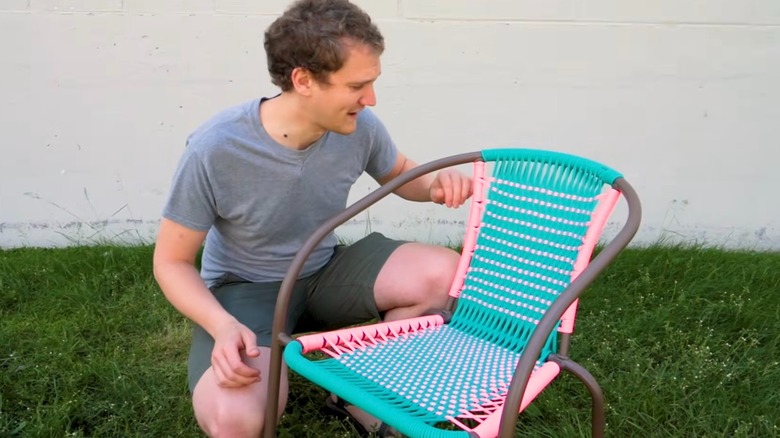
To create a stylish patio space, Paracord Planet uses two different colors of paracord. Beginning with the blue paracord, tie two pieces onto one end of the front left corner of the metal frame with a constrictor knot and use the flame of your lighter to seal the cut end. Then begin weaving the double cord under the bottom back bar, up to the top bar where you'll loop it twice. Then take it back down, looping it twice in the opposite direction, before bringing it all the way forward where you began. Repeat this process, alternating looping the cord over and under the bars in opposite directions. Finish with another constrictor knot, and seal the cut end with your lighter.
To weave the second pink cord, fold the cord in half, tying the loose ends on one back corner of the frame. Use the looped end to weave the cord through the two layers of blue cord across the seat. Slide a yardstick between the blue cords to give yourself more space and make weaving easier. Once the pink cord is all the way across, use the end of the yardstick to push it back and make the lines taut. Wrap the pink cord around the bar twice before weaving it back the other direction. Repeat the process until the whole seat is done, then repeat both steps on the seat back.
Tips & hacks for a successful paracord deck chair upgrade
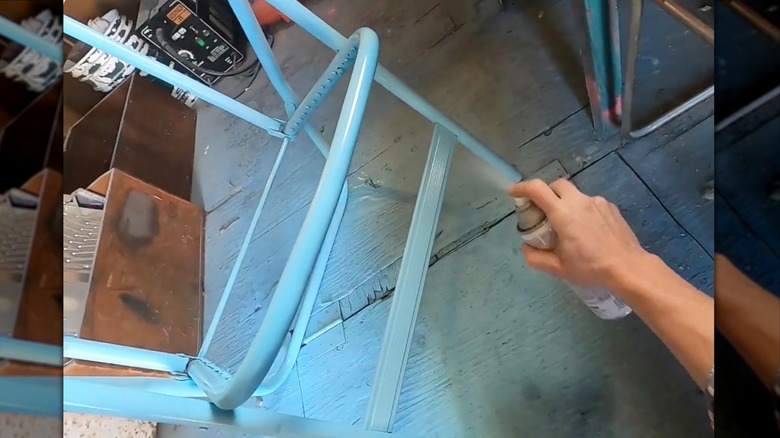
As with many DIYs, there are ways to make it your own, as well as tips for making the process a bit easier. One fun idea is to spray paint the frame of your old deck chair to match the color of the paracord you choose. First, clean the frame and sand off any rust, then use a spray paint made for metal so the finish holds up outdoors. Be sure to paint outdoors or in a very well-ventilated area, and allow it to fully dry before you add the paracord. You can select a matching color paracord or opt for multiple colors that complement each other.
There are also many DIYers in the comment section of Paracord Planet's video with tips and tricks of their own. One suggestion is to add a bit of glue to each knot as you tie the paracord, to reinforce for stability. Multiple commenters recommend a Tunisian crochet hook as a tool to help weave the second layer of paracord through the first, claiming greater ease of use than the yardstick approach. And instead of using the yardstick to push the weave back, grab a wide tooth comb to push back larger sections at a time.
While Paracord Planet used this paracord weave specifically for outdoor chairs, don't throw out old chairs from inside either. This DIY can also be done for indoor seating. Use the same method for an old dining chair or other wood-framed seat with open rails to weave around.