

The Big Mistake Everyone Makes With Their Glass Stovetop
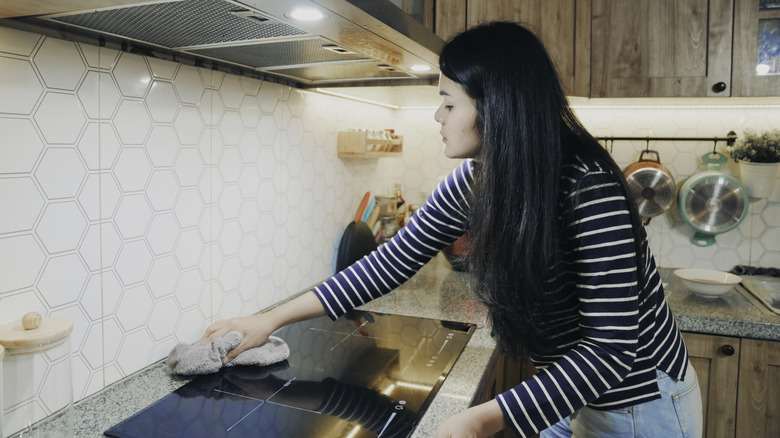
Glass stovetops, whether they're induction or electric, have a smooth surface that looks sleek in your kitchen, but they can require a bit more TLC than other types of ranges. Specifically, it's important to avoid scratching the glass surface. At first, that might sound pretty straightforward — you probably don't use your glass stovetop as a substitute cutting board, for example. But actually, there's another mistake you might be making that could damage your glass stovetop, and only using a certain type of pan isn't the only thing you need to watch out for. Dragging burnt or sticky cookware over the range can also cause damage.
As you're cooking, food residue can build up on the outside of your pots and pans. Then, if you slide them across the glass-ceramic, the hardened residue can scratch the delicate surface. So, how do you prevent this problem? It's simple. When you need to move your cookware to a different burner, it's safer to pick it up and place it where it needs to go instead of dragging it there. That said, if you're distracted, cooking multiple dishes at once, or following a complicated recipe, you could forget this advice. For that reason, it's also a good idea to clean the bottoms of your dishes thoroughly to get rid of any leftover food. If necessary, use a plastic scraper and warm, soapy water or a mixture of baking soda and hydrogen peroxide to clean burnt pots with the help of one affordable hack.
Choose the right cookware and cleaning methods for glass stovetops

Your cookware's material and design can also affect the condition of your appliance. Always pick pots and pans with flat, smooth bases — cookware made from stainless steel or ceramic typically performs well. It's also best to buy cooking vessels that are durable but light enough to lift easily from the stovetop when full. That way, you won't be tempted to drag them across the glass.
Likewise, you should think twice before using cast iron on a glass stovetop. Don't worry, you don't have to throw away your beloved pots and pans just yet. But there are some precautions you'll want to take. In addition to carefully cleaning the base of the pan and avoiding sliding it across the stovetop, always preheat cast iron cookware for 10 to 15 minutes. Turning the temperature up too high can quickly heat the pan to temperatures that might damage your glass stovetop, as can letting the pan run dry or placing a hot lid directly on the glass surface. When you're done cooking, remove the cast iron vessel from the stovetop immediately and place it on a trivet or cooling rack to avoid leaving burn marks.
In addition to removing stuck-on food promptly and using the right cookware, keeping your glass stovetop clean can also prevent scratches and other damage. There are several glass stovetop cleaning dos and don'ts you need to know before your next kitchen cleanup. For starters, you should always let the cooktop cool completely before removing any residue from the surface. You won't burn yourself, and the cleaning products won't boil or get baked onto the glass. And don't forget to use the right cleaning products, including soft microfiber cloths and dedicated glass stove cleaners, when you get to work.