

Can You Use Diatomaceous Earth To Get Rid Of Pill Bugs?
We may receive a commission on purchases made from links.
It's absolutely gut-wrenching when your thriving ornamental and vegetable beds are reduced to tatters overnight. While many garden pests have a penchant for plant materials, if they happen to have a tough, seven-scaled, oval body, colored slate gray or black, that's a clear indication that pill bugs are to blame. Better known as rollie pollies for their ability to roll up into the shape of a tiny pill, pill bugs are generally treated as beneficial insects because they break down decaying matter. However, when there isn't enough plant detritus to support their ever-increasing population, pill bugs can become a garden menace. So, to protect your plants with proven methods against pill bugs, you can use diatomaceous earth (DE), especially if you're seeking a non-chemical or organic approach.
Expanding on this approach during his exclusive interview with House Digest, Destin Noak, the creator behind @TexasGardenGuy, acknowledges, "Food-grade DE can be effective as long as it is dry." Available as dusts, pressurized liquids, or wettable powders, diatomaceous earth is a silica-containing insecticide composed of fossilized single-celled phytoplankton called diatoms. Unlike most insecticides and baits, it doesn't require pests to ingest it for elimination. Instead, it works mechanically on direct contact. DE has an abrasive texture that cuts into the bug's exoskeleton while simultaneously absorbing its body oils, until it's killed. Around edibles and pets, it's best to use food-grade, OMRI-approved variants, like the Harris Diatomaceous Earth.
How to use diatomaceous earth to get rid of pill bugs
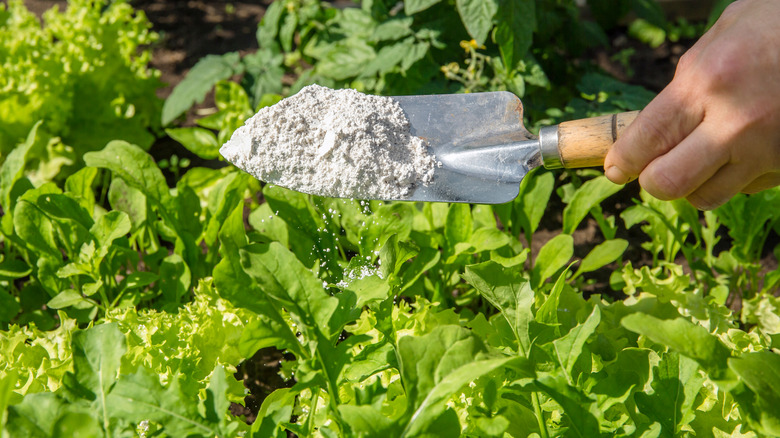
Applying diatomaceous earth to ward off roly-poly bugs is easy. "You would apply the powder on a still day with no wind on a dry surface of the plant," explains Noak. Aim to spread it thin around the base where bugs are sure to contact it unless stated otherwise on the label. Remember, pill bugs can only chew tender plants, as their mouthparts are unable to bite into tougher bits. In other words, young starts, transplants, or seedlings are most vulnerable, though they may play favorites, going for zinnias, pansies, cardinal flowers, hostas, or blue lobelia, regardless. Coming to the garden vegetables and fruits, they may select plants whose produce touches the soil, like strawberries, cucumber, and radish, as they're easier to access.
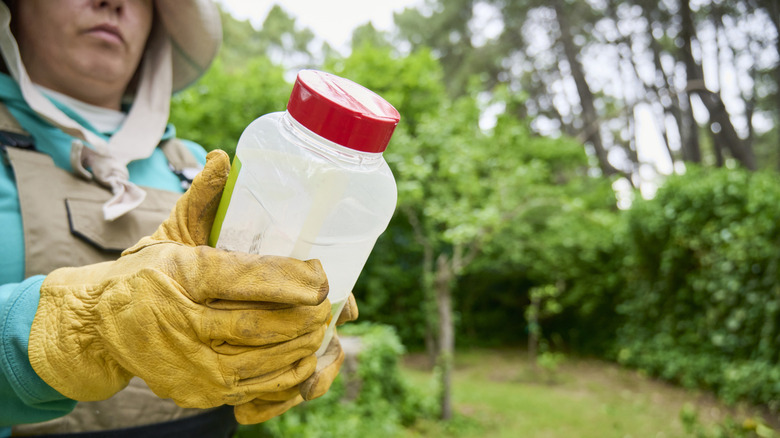
However, there are a few caveats. Noak notably advises against applying it in wet conditions, as it would become ineffective. In fact, he feels it loses its effect in humid conditions, too, as even morning dew can wet it, thus requiring reapplication. In addition, you must reapply DE once it becomes wet after rainfall or irrigation. "It has to be reapplied after a rain," he says. Exercise precaution and follow safety instructions stated on the label. DE is harmful if inhaled and can irritate eyes and skin, so you'll need adequate protection during the application.
Should you eliminate pill bugs?
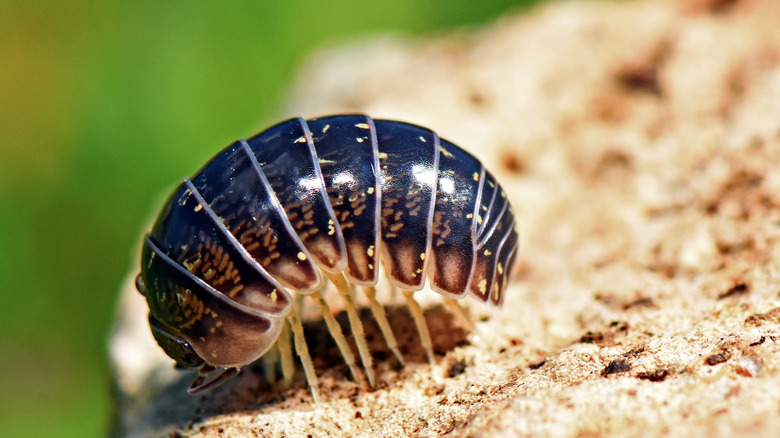
As noted, pill bugs scavenge on decaying matter and can be valuable for recycling nutrients and eliminating metals from soil. However, a roly-poly infestation could mean a bigger problem for your home. While escaping from a heavy downpour or hunting for overwintering sites during fall, they may stray indoors. Even though they don't bite nor are disease carriers, most homeowners deem their mere presence an annoyance.
If you share such sentiments, like our expert, you can use DE on plants you overwinter indoors. "I use it when bringing plants into my garage before the winter to get bugs out of the pots," says Noak. Sealing cracks and moving mulch, stones, and compost piles away from the foundation should further reduce their access. Interestingly, there are many other ways to use diatomaceous earth around your home and garden, including eliminating bed bugs, ticks, roaches, spiders, and other indoor pests. Unfortunately, this also means that DE is non-discriminatory and may harm beneficial insects and pollinators, including bees and ladybugs. For this reason, you may want to avoid it on actively flowering plants unless necessary.
Noak takes a more cautious approach outdoors. "I am typically not getting rid of pill bugs unless there's just an excessive amount. They rarely do damage to mature plants," he explains. He considers their presence a sign of a good soil biome and feels control is essential only until your plants mature. "If needed, I will use a product called Sluggo, and that helps." Like DE, Monterey's Sluggo is OMRI-listed and is safe when applied as directed.