

Not Shovels: Remove Compacted Snow From Walkways With A More Effective Tool
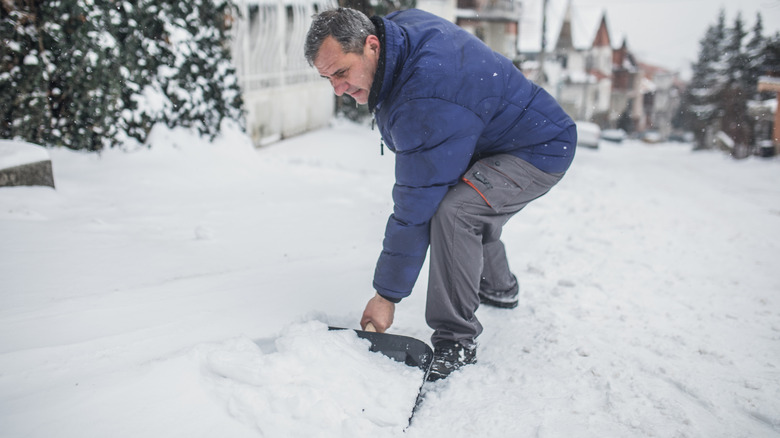
Winter storms can bring the most beautiful winter wonderland, especially around the holidays. As beautiful as it can be, winter weather can also be a homeowner's headache if you wait a little too long to clear the driveway. What starts as a light dusting can easily turn into multiple inches of compacted snow, ice, and slush, and waiting too long to clear it makes the job exponentially harder. While your handy shovel might seem like the best way to clear this stubborn mess, this type of snow can lead to a bent shovel and a sore lower back, which is why avoiding shoveling mistakes is so important from the start.
It's incredibly frustrating, but trying to use a shovel to clear a mass of compacted snow is going to be a losing battle from the start. A standard shovel is made to lift and throw loose snow. When that loose snow gets pushed down by footsteps and tire tracks, it packs into a dense, stubborn layer. Knowing a good snow-shoveling trick can make clearing your driveway easier and help you prevent this problem before it starts. Even worse, fluctuating daytime and nighttime temperatures cause melting and refreezing cycles, turning that packed snow into solid ice. The result is trying to wedge the curved blade of a shovel into a flat sheet of solid ice that won't budge an inch.
Instead of trying to use a shovel for hours on end with no progress or reaching for a larger shovel, try using an ice chisel to break up your compacted snow. Rather than relying on brute upper-body strength, this heavy-duty, long-handled tool is designed to break the stubborn seal between frozen snow and your concrete, making winter cleanup significantly faster and far easier on your back.
How to use an ice chisel to your advantage
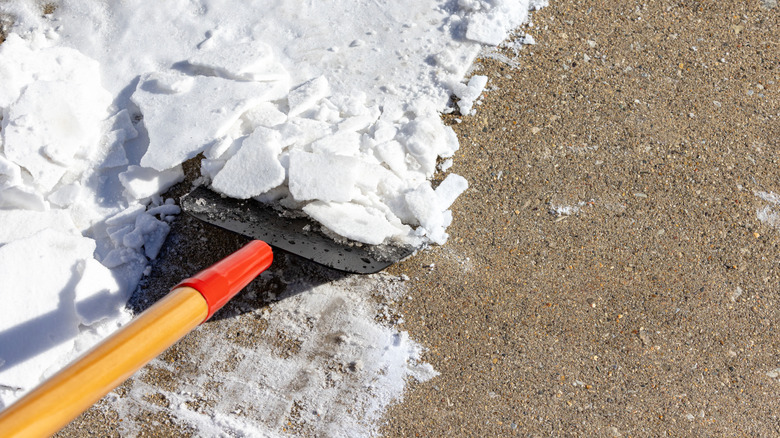
When a shovel fails at clearing your driveway or sidewalk, an ice chisel is your best friend — especially when you need tools to help remove ice when you don't have salt on hand. The chisel, which is sometimes called an ice scraper, features a long handle and a flat, sharp steel blade aligned straight with the shaft, kind of like a heavy-duty flat spade or floor scraper. An ice chisel relies on its heavy, narrow steel head to concentrate your downward force on a tiny surface area. Unlike a shovel, which spreads your effort across a wide, curved scoop, the chisel uses its weight to break through ice with less brute force.
When you drop the chisel onto compacted snow and ice, it doesn't try to lift the mass; it drives a wedge underneath it, shattering the bond holding the ice to your sidewalk. Using it effectively is an art form. You want to hold the handle with both hands, letting the weight of the steel do the heavy lifting. Instead of hacking wildly — which can chip your concrete or send sharp ice shards flying — use controlled, downward chopping motions at a shallow angle. Aim for the edges of compacted snow patches or existing cracks in the ice. With a few steady strikes, you'll hear a satisfying crunch as large sheets of stubborn ice pop right off the surface. Once the chisel has done the hard work of breaking everything up, grab your standard shovel and use it to sweep and toss the loosened chunks into the yard. From there, tossing down a light layer of ice melt or sand can help address the remaining slick spots. Ice melt can help reduce refreezing, while sand provides traction.