

Spraying Leather Shoes With WD-40: What It Does And Why It's Warned Against
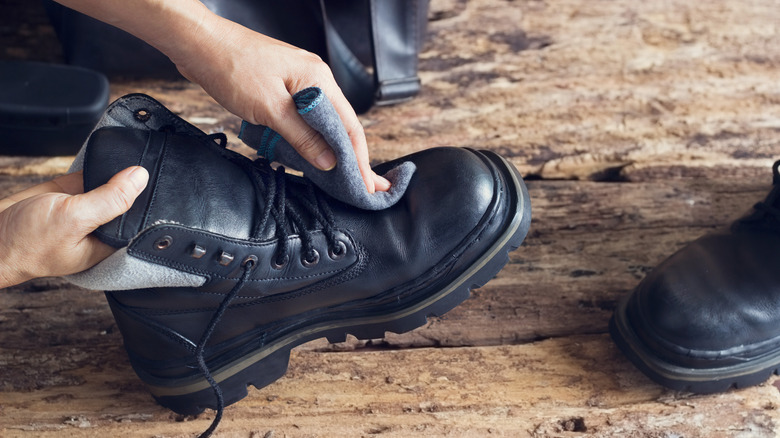
If you've ever rummaged through your garage and grabbed that trusty can of blue and yellow WD-40 to help solve a squeaky hinge or a sticking bolt, you'll know how easy it is to get carried away with this magic can. Many homeowners have had a go at spritzing their home with WD-40 to solve any number of strange issues, relying on genius tips for using WD-40 at home for everyday fixes. With its amazing ability to solve anything from rusty garden shears to clunky sliding glass doors, it was only a matter of time before people started to wonder if it could solve a whole host of other issues, including ones found in the mud room. Now, there are several online claims that WD-40 is the secret to solving leather shoe woes like salt stains and waterproofing, though it actually creates a temporary shine and slick film while drying out and damaging natural leather.
At first glance, the idea behind this makes sense. You've got some favorite leather shoes that you need to waterproof for your messy winter commute, and you want a quick and cheap solution. Why spend money on specialist conditioners and sprays when your handy home product will not only repel moisture but leave them looking shiny? However, while the shine may last a little while, shoe care and leather experts strongly recommend against spraying leather shoes with WD-40. In fact, footwear is one of the top places that WD-40 should not be used. This is because the very ingredients that help break down grime and provide a slick lubricant to metal parts can damage natural leather, causing it to break down, lose its protective finish, and wear out much faster.
Why you should think again before spraying
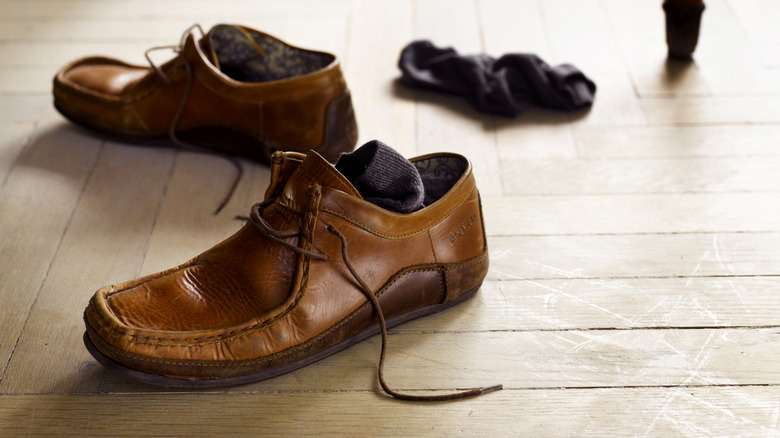
The reason people are tempted to grab their can of WD-40 when cleaning their shoes is that it gives an instant shine. Once you lightly spray your dry, scuffed leather shoes, they darken slightly and take on a rich, glossy finish. Those white salty lines from winter seem to disappear, and any small scratches are no longer noticeable. Because this product is designed as a water displacer, you'll notice a slick, oily feel on your shoes. If you step outside in a light rain immediately after, you'll notice the water beads and rolls right off, making them appear waterproof — yet along with giving an instant shine and acting as a strong solvent that loosens stubborn surface dirt, grime, and sticky buildup or quiets squeaky soles and tongues, it can cause issues beneath the surface. Leather is a natural, breathable skin made up of sensitive fibers and oils, and while you may think you're conditioning or softening your leather, you are actually applying a petroleum-based solvent that dries out the hide, triggering a reaction that natural leather simply wasn't designed to handle.
Because the oily residue traps dust and dirt, the outside of your shoes will soon look even duller than before. Applying an artificial petroleum-based solution to breathable leather also clogs the pores, trapping sweat and moisture inside and leading to odor and interior breakdown. Treating delicate surfaces like hide with a harsh solvent is one of the common mistakes everyone makes when using WD-40 around the house. To clean and waterproof your shoes without damaging them, skip the can from your garage and instead use saddle soap, a dedicated leather conditioner, or a beeswax-based balm designed for natural leather.