

The Best Way To Prep A Garden Path For Winter To Make Shoveling Easier
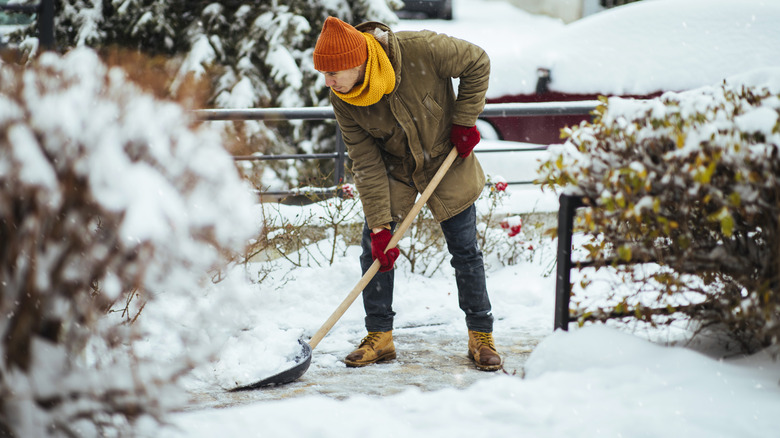
If you spent part of the summer researching DIY garden path ideas and then installing your favorite, you might feel a sense of pride every time you see or use it. You may also know that performing a few maintenance tasks is necessary to keep everything looking pristine. As winter approaches, performing prep work on the pathways now can make it easier to remove snow and keep them functional all year long. You may want to check for cracked materials, raised stones, or loose mortar, for example.
Another key maintenance tip is to trim back plants that are now hanging over the path after the growing season. By cutting back perennials, grass, or ground cover hanging over the edge of the path, you'll make it easier (and safer) to shovel any snow that falls. If you're worried about the health of more delicate plants, carefully prune them by hand or consider replanting them farther from the path. Furthermore, if you have a low-growing hedge or bush covering part of the garden path, use pruners to cut it back.
Safest methods of trimming plants growing over a garden path
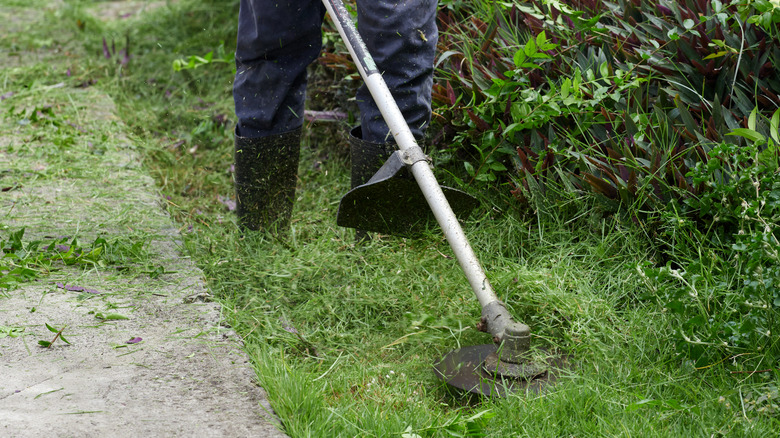
When trimming these overhanging plants, it's important to follow the right technique for each plant to keep it healthy heading into the spring. If you have grass growing over the edge, use a string trimmer, which is the same tool you'd use to quickly edge the lawn. The string trimmer can also manage many types of ground cover and other small plants that are growing outside the garden border. The handy way to use the weed whacker in this area is to tilt the trimming tool and follow the edge of the garden path. Start spinning the spool above the grass that you want to cut and then slowly lower it in place. Then walk slowly along the edge, keeping it at a steady height to create the cleanest cut.
If you have ground cover that is infringing on the garden path, cut it back by hand or with the trimmer. You'll have to hand prune it if it has woody stems that the string trimmer can't cut. Try to avoid removing more than ⅓ of any individual plant when trimming ground cover, or you'll risk its health. If you have older stems where the growth seems stagnant, you can prune more than ⅓ of them. Always remove diseased ground cover branches, too.
Broadleaf plants infringing on a garden path need trimming as well. If you have a low-growing plant, such as a hosta, over the path, do not cut a leaf in half to clear the path. Instead, cut the overhanging leaves at the base and close to ground level. If you have brown stems or leaves, you may be able to simply pinch them away because they're weak.
Why shoveling snow with plants overhanging the path is tough
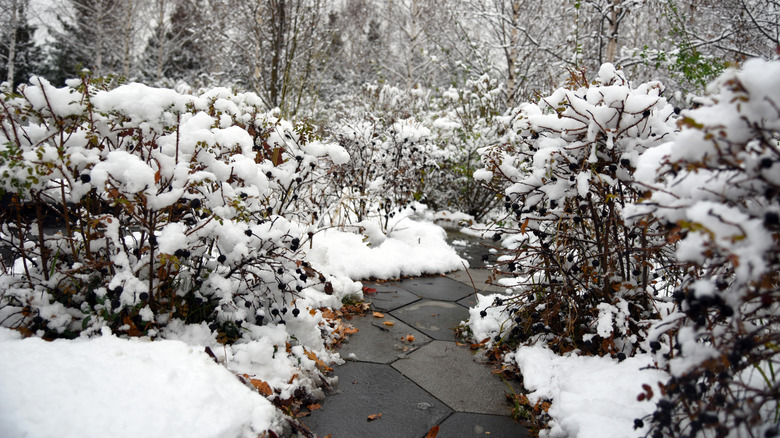
If plants are hanging over the edge of the garden path, you might not be able to see the leaves or grass blades underneath the snow. If you're using a shovel or snowblower on the garden path after a winter storm, these hidden leaves hanging over the concrete or pavers could catch. This means a shovel blade could tear out a plant that's hiding under the blanket of white stuff. A snowblower could suffer damage if plants or sticks become entangled in the auger. Violently ripping plants while removing snow can cause damage that won't fix itself in the spring.
After removing any plants hanging over the pavers or concrete, you may want to install posts or tall flags along the edges of the garden path. This lets you visualize the edges when deep snow is covering everything, helping you keep the shovel blade on the path instead of drifting inside the landscaped area. You may also want to consider using an all-plastic shovel (instead of one with a metal edge) to reduce the risk of causing damage to plants near the path.