

Spraying Garden Light Solar Panels With WD-40: The Purpose It Serves And Why It's Recommended
We may receive a commission on purchases made from links.
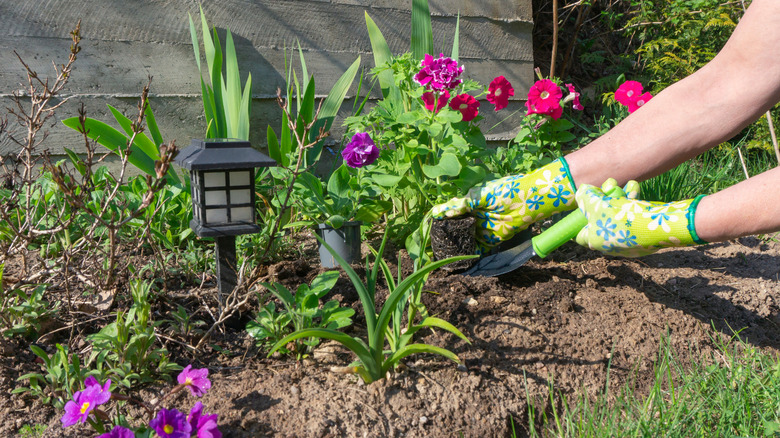
When the sun goes down, it's great to have well-placed outdoor lighting to illuminate your home's exterior. The right walkway lighting adds ambiance and makes your yard safe, ensuring sure footing along pathways and stairs. It also has security benefits, as thieves don't want to cause mischief where there's a spotlight on them. If you've got solar yard lighting, it's vital to keep the panels clean. Believe it or not, WD-40 is an ideal solution for keeping those panels clear of dirt and debris so they can continue soaking up the rays and brightening your yard.
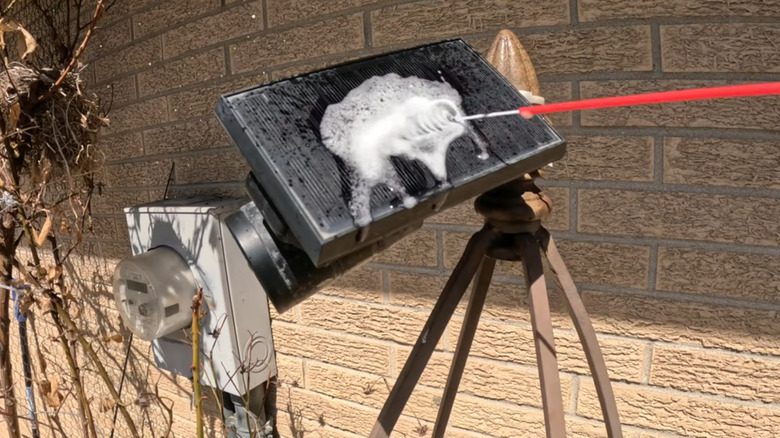
YouTube creator My Lucky Bamboo demonstrated his process for using the common household product to clean LED solar sensor lights in his yard (and give their outer casings a shine, too). Outdoor lighting can be expensive if it's hard-wired, so many people opt for solar lanterns, which can be less expensive and easier to place wherever you see fit. Choosing the right outdoor solar lights for your needs will determine that style, price, and placement.
Years of exposure can cloud the panels of these lights, rendering them fairly useless. In fact, any amount of debris puts a strain on the batteries, reducing how much they can charge and how much light they emit, as well as damaging their long-term capacity. But before you make any purchases on a new set of solar lights, grab that can of WD-40, a soft cloth or paper towels, and a soft bristle brush and give this solution a shot.
Spray, swipe, and bring back the light to your solar-powered fixtures
Dim or inoperable exterior solar lights are a warning sign that shouldn't be ignored for long. The panels on your lights might look simple, but they conceal complex mechanisms that are sensitive to surrounding factors. Photons from sunlight trigger the photovoltaic effect that generates electricity, and anything that interrupts those photons will harm that generation.
On top of the usual debris and dirt, shade can be very harmful to a solar panel's electricity, even if you don't notice that shade from a distance. Failing to keep an eye on what's blocking the panels can dim the output of your lights by as much as 70%. So, start with a brush to rid the panel and casing of exterior dust, dirt, bird droppings, and cobwebs. If something is stuck on, lay a damp cloth over the area for half a minute and then try again. Doing this is better than scrubbing too hard and damaging the panel. Also make sure to trim any surrounding foliage so the panels are getting maximum sun exposure during the day.
Use the WD-40's small straw attachment to concentrate the spray onto the panel itself, using the towel to spread the solution. Wipe the entire panel in a circular motion. You should eventually see any cloudiness on the panel clear up. While you're at it, apply the spray to any joints or hinges. The ingredients in the spray can actually help displace moisture that could cause short-circuiting or rust. (If you've ever wondered, the "WD" stands for water displacement.)
Why and how often to clean solar panels, and what to do about dust
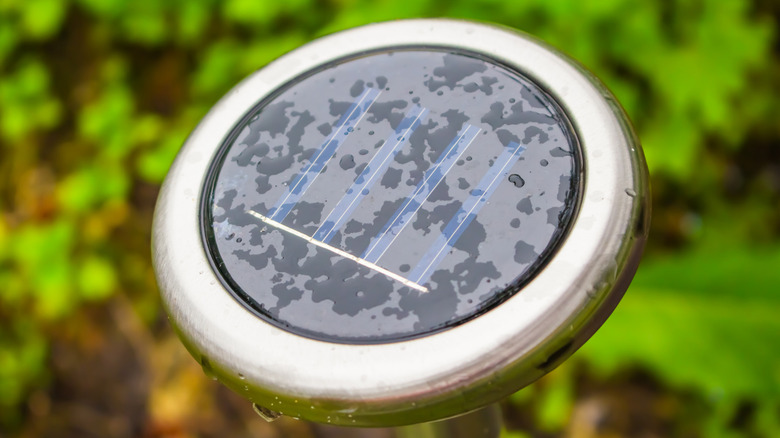
The moisture protection should last well after your cleaning session, which should be carried out every couple of months. Dustier climates and coastal regions require more frequent cleaning. After storms and during pollen season, keep an eye on those panels and clean them before they get too dirty. Inspect the battery compartments of your lights, as well. If you see any residue, remove the batteries and clean the terminals with a cotton swab dipped in vinegar, followed by a dry cotton swab. Once the compartment is fully dry, replace the batteries.
You can follow up with a warm water and mild soap solution, then thoroughly dry the unit for a streak-free shine. It's really important to fully wipe away any remaining WD-40 residue and moisture. Some would even argue against using it entirely, as sticky remnants of the standard product can actually attract dust and dirt over time. To combat this, you might want to try using WD-40 Specialist Dry Lube, which is specifically formulated to resist dirt and dust.
Your clean, bright solar lanterns will help you avoid the outdoor lighting mistakes that many people make, including allowing dim or non-working lights to leave gaps in illumination. Your evenings will be brighter, your home will be safer, and your yard will maintain its curb appeal long after the sun goes down.