

Spraying Your Carpet With WD-40: When You Should Try It
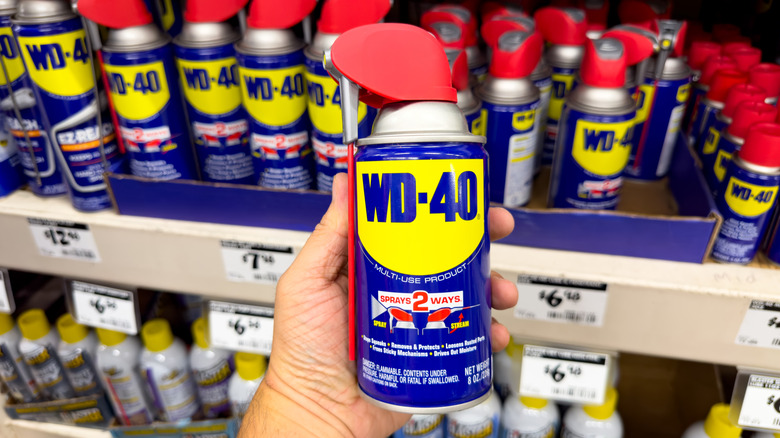
Grabbing a can of WD-40 for your favorite living room rug is probably pretty backward and almost like a cardinal sin. Most people keep WD-40 tucked away in their toolbox for fixing problems like squeaky door hinges or rusted bolts — even if there are plenty of genius tips for using WD-40 at home — so even considering it for your carpet could seem downright reckless. If you end up with gum in your carpet that has been dragged across the floor and firmly embedded in the pile, common cleaning products may make matters worse. In this situation, you can try using WD-40 to loosen the stubborn mess from some synthetic carpets, such as nylon, polyester, or olefin.
The petroleum-based solvents in WD-40 can help loosen the gum's grip on carpet fibers, making it easier to remove and leaving you with clean, gum-free carpets. Before spraying the gum, though, be sure to check your rug's material and test the product on an inconspicuous area, like under a piece of furniture, to make sure it won't stain. If your carpet is made from natural fibers like wool, silk, jute, or sisal, it's best to avoid using WD-40, as the formula could discolor or damage delicate fibers. As long as your carpet is synthetic and you plan to wash away the oily residue right afterward, it can be a quick way to save your floors from a stubborn wad of gum (but keep in mind that not all synthetic carpets are compatible with WD-40, so checking the manufacturer's care instructions is always a good idea).
How to safely get gum out of carpet using WD-40
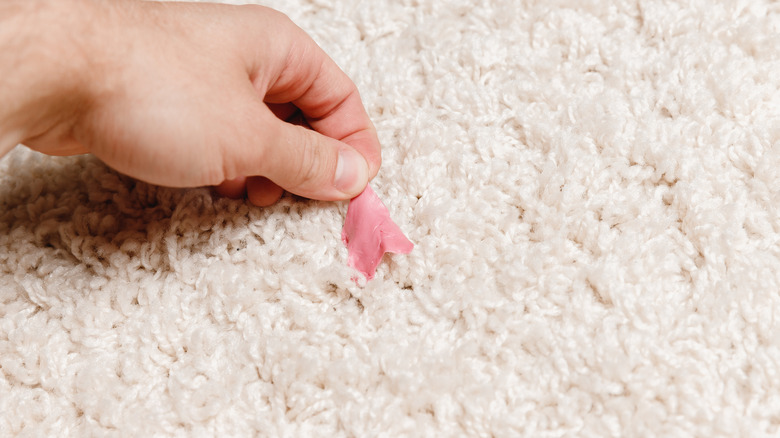
Once you know your carpet can handle a spot treatment of WD-40 without causing more damage, the actual cleanup can take less than five minutes and spare your floors from scissors or aggressive yanking. Pop the little red precision straw onto the nozzle so you don't release a wide mist. Spray the solution directly onto the problem area so it reaches the gum at the base without getting on the rest of the carpet. Wait about one to two minutes to allow the solution to penetrate before attempting to remove it.
As the WD-40 works its magic, grab a spoon to gently work the edge underneath the gum and scrape upward toward the tips of the carpet fibers, wiping the gunk onto a paper towel after every pass. Avoid using anything with a sharp or serrated edge, which could snag or slice the carpet fibers. Because the lubricant helps loosen the gum's grip on the strands, it should be easier to lift without pulling or fraying the pile. If a stubborn little piece is still clinging right at the base of the fibers, hit it with one more tiny burst of spray, wait another minute, and repeat the upward scrape until the fibers are completely clear.
Don't forget to wash out the leftover oil
Getting the gum out of your carpet is a definite win, but leaving WD-40 behind in your carpet fibers can ultimately create a new set of problems if not dealt with promptly. WD-40 leaves an oily residue, so any leftover product can act like a magnet for things like dust and shoe dirt. Eventually, this could turn that gum-free spot into a dark, dingy smudge.
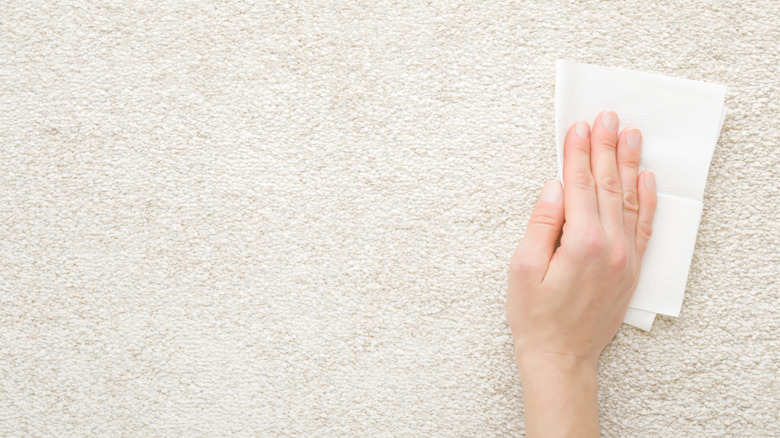
To get that slick residue out, stir a squirt of grease-cutting dish soap (like Dawn) into a bowl of warm water until it gets slightly sudsy. Dunk a clean microfiber cloth in and wring it out well so it's barely damp — if it's dripping wet, you risk soaking straight down into the carpet backing. Blot the treated area gently from the outside of the spot in, being careful not to scrub back and forth, since this can fuzz up the carpet texture. As you remove the oils, move to a clean section of the towel so you don't push the residue right back into the fibers.
Once the carpet fibers don't feel oily anymore, wet another cloth with plain water and blot the spot again to rinse out any soap. Leftover soap can attract dirt, too, and you don't want to make your carpet dirtier than it has to be. Finally, press a dry towel firmly over the area to remove the extra moisture, and run your fingers through the carpet to fluff it up a bit. If you can help it, let it air-dry completely before walking on it to allow the fibers to bounce back without picking up fresh dirt — saving you the hassle of another stubborn stain and reminding you why people are getting rid of carpet flooring in the first place.