

Is It Bad To Leave Batteries In A Lawn Mower When Stored For Winter?
We may receive a commission on purchases made from links.
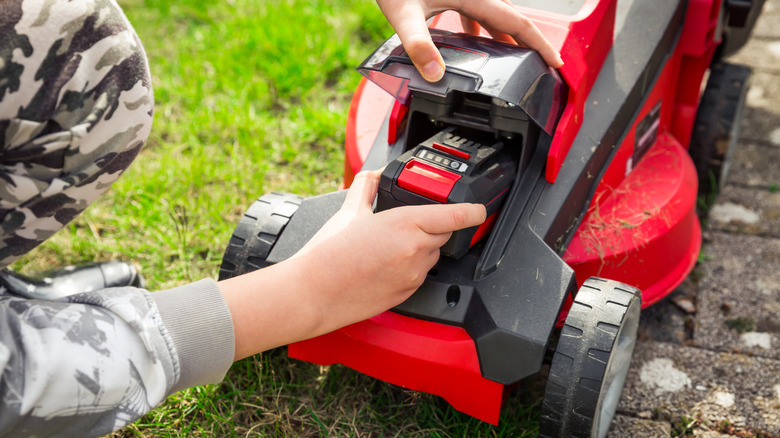
Once the colder months of the year roll around, lawn care equipment maintenance often fades to the back of homeowners' minds, replaced with tips and tricks to make shoveling snow easier or prevent pipes from freezing. While it's true that there's little risk of wear and tear to your lawn mower during this inactive season, there's still potential for damage as it sits in your garden shed or garage. Once weather swings to its extremes, it's wise to store your batteries in a more temperate environment, and that includes both the lead-acid and lithium-ion batteries that work to power your mower.
The ideal temperature range for lead-acid batteries, found in gas-powered lawn mowers, is between 45 and 65 degrees. Lithium-ion batteries, used to energize battery-powered mowers, have similar limits, behaving best when they're stored between 50 and 70 degrees. Exposure to extremely low temperatures can cause short-term issues when it's time to start up your machine, but you might also face permanent damage if your batteries are kept in this environment.
Temperature is one of the biggest reasons you shouldn't leave your batteries in your mower throughout the winter, especially if you're storing the machine in a shed or garage that isn't well-insulated, but it's not the only potential cause of damage to consider. Preventing corrosion, maintaining an ideal level of charge, and reducing the risk of accidental discharge are much easier to do when your batteries aren't tucked away in your mower for several months.
How to properly store your batteries during the winter months
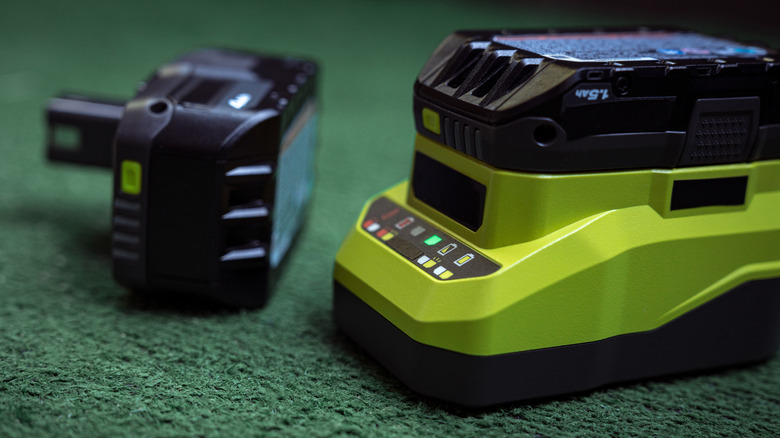
Once you've decided on a cozy, dry spot to keep your batteries over the winter, you should do a couple of extra steps to ensure they stay in good shape. If you're working with a lead-acid battery from a gas-powered mower, clean the terminals and consider spraying on some terminal protection spray to minimize negative impacts from moisture over time. The power level will naturally start to dip as the battery sits unused, so something like this Noco Genius1 Smart Battery Charger and Maintainer can be used periodically to keep the charge up during long periods of storage. Also be sure to follow other steps to winterize your lawn mower and protect it until spring, including adding a fuel stabilizer or completely draining the gas.
Batteries from electric mowers, on the other hand, are actually best stored at a moderate charge. While it might be tempting to keep your lithium-ion batteries on the charger all winter long, over-charging is actually the mistake that's secretly shortening the life of your power tool batteries. Bring them up to around 40 to 60% right after taking them out of the mower, then check in on them every two months or so and top off the charge if needed. The same process should be followed with other battery-operated power tools that won't be getting use during this season.
Of course, these tips should function as a general guide, not hard-and-fast rules. Always be sure to check your lawn mower's manual for winter care tips specific to the device. The manufacturer knows best, and there's always a chance of exceptions.