

Why Do Painters Wear Masks While Tackling Projects?
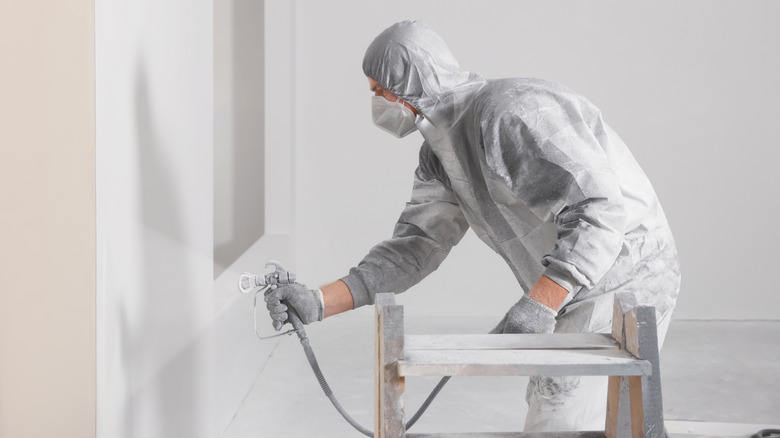
Many professionals have their distinct uniforms — chefs and their hats, construction workers and their hard hats, doctors and their scrubs. If you hire a professional painter, they'll likely show up wearing all-white clothing and a face mask. The most obvious reason that a painter would wear a mask is for protection against harmful fumes, but there's more to it. The masks also keep them safe from airborne paint droplets and harmful dust particles.
Since the pandemic, we've seen a range of face masks that varied in styles and effectiveness — from homemade fabric options to medical masks. However, painters have more stringent work concerns that require high-quality masks, for example, ones with high-efficiency particulate air filters. These can filter 99.97% of extra-fine particles that could slip past ordinary masks. Using paint sprayers or aerosol cans is even more dangerous than painting with a brush since their particles and fumes remain in the air longer, making them easier to inhale.
For extra protection, painters may wear a respirator that fits tightly around the face to more effectively filter out airborne particles and protect their lungs. You might see these more commonly on construction sites where workers are jackhammering, sawing, cleaning, and doing other operations that could expose them to dust, but they are beneficial to painters as well. Disposable respirators are worn to prevent painters from inhaling airborne particles, while reusable respirators with interchangeable pieces can protect against chemicals and particles.
Health risks that masks protect painters from
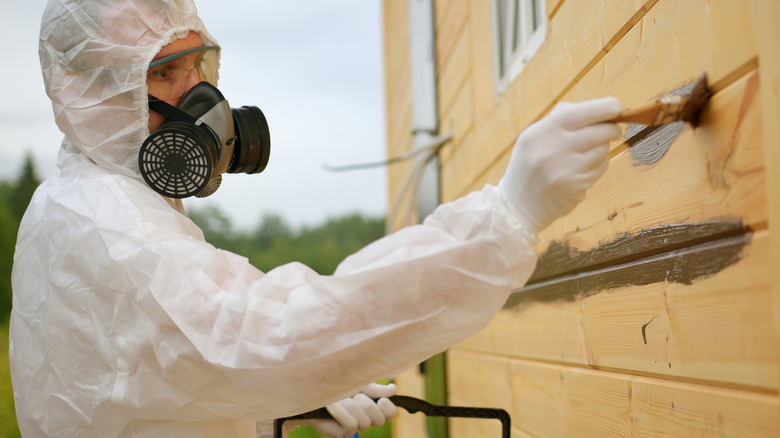
What exactly do painters need protection from? One of the main culprits is volatile organic compounds (VOCs), found in many paints, which can result in harmful short- and long-term health issues. Inhaling VOCs can lead to side effects like headaches, dizziness, or nausea. More severe issues include damage to the liver, kidneys, and nervous system. And with painters being exposed to these chemicals for hours at a time — sometimes in tight spaces — extra precautions are vital.
Painters are also at risk of exposure to silica dust, or crystalline silica, which is the catalyst for why engineered stone is at risk of getting banned in California. Silica dust can be present when workers are mixing, cutting, or demolishing concrete, or when they're cutting ceramic tiles and countertops. Workers can also inhale this dust when cutting drywall. Even if painters aren't performing these tasks, they may be on the job site while other workers are doing them, putting themselves at risk for autoimmune disorders, cardiovascular problems, and even deadly lung diseases.
If you're considering trying to paint your home like a professional, don't neglect protecting yourself the way the professionals do. Always wear protective gear, like a mask or respirator, and paint in a well-ventilated space. Take frequent breaks to get fresh air, and keep windows open for several days until paint fumes have cleared. Keep in mind that these guidelines also apply when you're prepping for painting, since that stage can expose you to dust, lead, mold, or asbestos.