

Winterizing Drafty Windows Isn't Hard: The Best Curtain Material For The Job
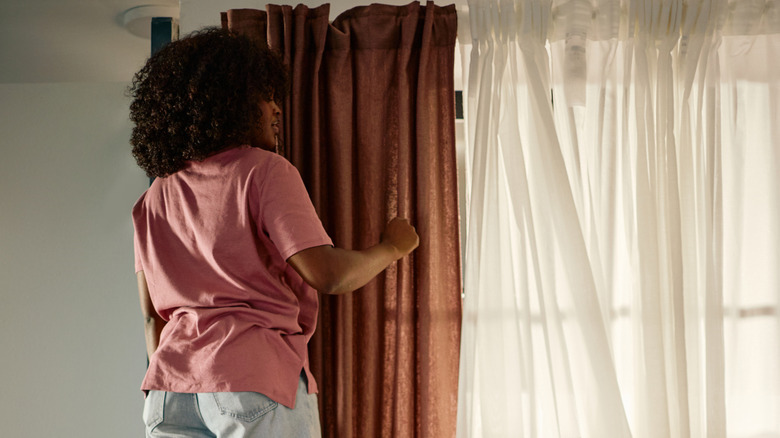
When weather swings to its extremes, your home becomes a safe haven. Whether you're facing off against a powerful snowstorm or an extended heat wave, heating and cooling systems work hard to keep your space a comfortable and safe temperature. Unfortunately, this is often reflected in your electricity bill. According to data from Berkeley Lab, windows actually consume about 30% of heating and cooling energy, and their consistent habit of letting in outdoor air while you're attempting to maintain the temperature inside certainly doesn't help. If you're in need of a quick fix for this problem, thermal-lined curtains could be the simple swap you're looking for.
Thermal-lined curtains are made of thick, multi-layered fabric that helps to stop drafts in their tracks. While replacing your windows with more efficient models or working to fill any gaps in your home will be the best way to lower your utility costs, these curtains provide a fantastic, affordable solution for those who don't have the time or money to undergo a major renovation before the weather becomes more extreme. Essentially, these curtains act as extra insulation for your space by creating a dead air zone, the same strategy that makes double-glazed windows so effective at minimizing heat transfer. Additionally, in hot weather, the thick fabric helps to absorb some of the heat that comes in and block sunlight that could be contributing to higher temperatures in the home. While standard thick or blackout curtains will certainly offer an improvement over a bare window in the temperature regulation department, thermal-lined curtains have been designed with these specific goals in mind and are your best best if you're in need of additional winterization.
What to look for in a high-quality thermal-lined curtain

Thermal-lined curtains you can purchase or make have a multi-layered construction to ensure they create a truly insulative effect. Some designs only rely on two layers — one that's very tightly woven or backed with foam or acrylic and one that's still thick but primarily decorative — while others go for a three-layer approach that incorporates the same decorative cover and insulation, but with an added infrared-blocking layer. The more layers, the more protection, so if you're seeing signs that your windows are causing your heating bill to skyrocket, it's worth investing in the thicker, high-quality option.
While you're shopping around, make sure you're not just settling for thicker blackout curtains. These products are sometimes advertised as energy efficient or insulating, and while they'll still offer a major improvement over a bare window or a sheer fabric, they're not true thermal-lined curtains. Blackout curtains are fantastic if your primary issue is excessive heat from sunlight pouring into your home in the summer, but that insulation layer is incredibly important if you're in need of something that will keep your space warmer in the winter. Real thermal-lined curtains that match your style and provide the protection you need might require some research or come at a premium price point, but overall, it's a much more affordable and simple process than renovating your windows.
How to hang thermal-lined curtains to ensure they're effective
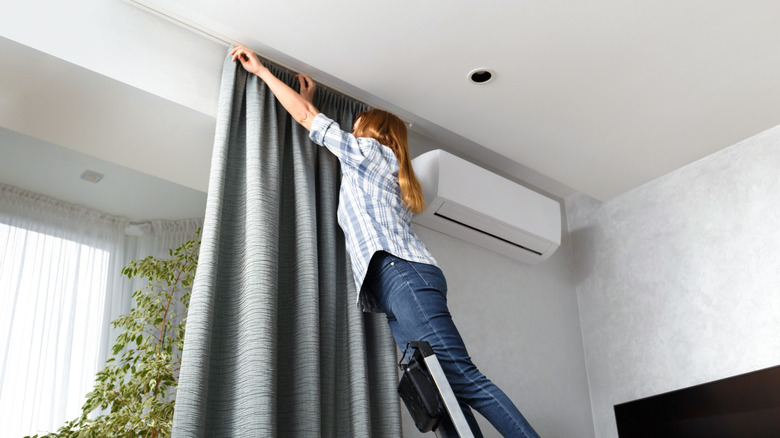
You can purchase the highest-quality thermal-lined curtains on the market, but if they're not hung correctly, you won't get to enjoy the full extent of their effectiveness. As we've discussed, one of the main reasons that thermal-lined curtains work so well to insulate your home is because they create a layer of still air between the window and the rest of the room. If the curtains are too small for the window and allow air and light to seep through the cracks, you'll miss out on many of the benefits. Bigger is better in this case, so don't be afraid to go for a more dramatic, billowy look. Hang your curtain rod at least 4 inches above the window and ensure the fabric skims the floor for the best results.
If you want to take things a step further, look out for curtains that include magnetic strips or fasteners along the edges — you can also, of course, add these on yourself. This little addition allows the curtain to make a more direct seal to the wall, which boosts the protection even further. Minor adjustments like this might not seem like they make much of a difference, but once you take a look at your heating bill, you'll quickly start to realize just how impactful these small changes to your home can be.