

Do This Lawn Mower Task In The Fall Before Storing It Away All Winter
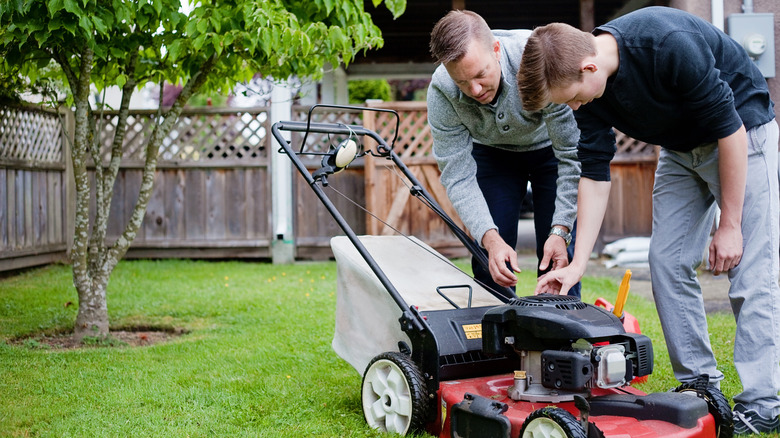
Having a working lawn mower for the warmer months is essential throughout most of the U.S., where the grass grows fast enough to need weekly trims. Before shoving the lawn mower into the back corner of the garage and forgetting about it all winter, though, there's a certain often-overlooked lawn mower maintenance task that will make all the difference in how it behaves when spring rolls back around. Instead of waiting until warmer weather to do basic upkeep, change the engine oil in your gas push mower in the fall — it's one of the smartest moves you can make before putting your machine away for the season.
It might seem counterintuitive to put fresh oil in a machine that is about to sit untouched for four or five months, but over a full summer of cutting grass, your mower's oil collects a nasty mix of things that can turn your slick oil into a thick sludge. When your lawn mower sits all winter, this combination of moisture and contaminants has months to settle and eat away at internal parts, which is just one of the accidental ways you can damage your lawn mower before you pull it back out next year. A fresh oil change will help coat the engine with a clean barrier, protecting vulnerable metal components from rust while temperatures fluctuate over the winter and spring months.
Before starting on this project, though, be sure to check your mower's manual. Some newer push mowers use "never-change" engines that only need occasional top-offs and not full changes, saving you from doing a step your machine doesn't even require. Your brand's specific manual will include maintenance schedules and specific oil change instructions.
How to swap out the oil before winter without making a mess
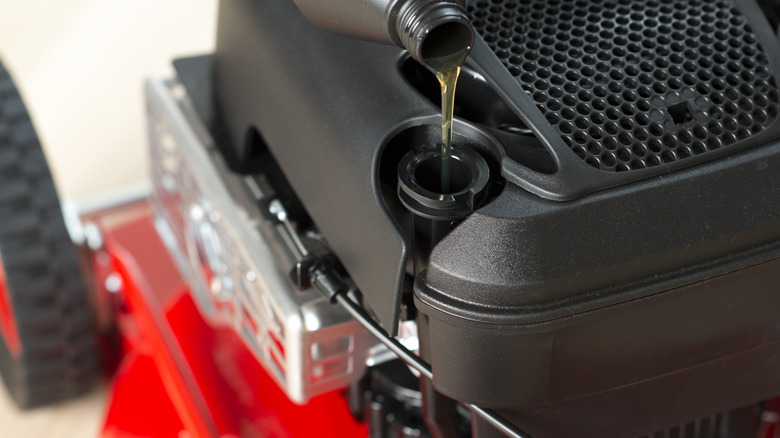
If you want to avoid the top mistakes people make when changing their lawn mower oil, it's important to have the essentials: a drain pan, a funnel, some shop rags, the right replacement oil (usually SAE 30 or SAE 10W-30, but check your manual), and a socket wrench if your model has a drain plug. If your manual advises it, you'll need to run the mower for a few minutes to warm up the engine, then shut it off. Remember that running the engine will cause things like the muffler to be dangerously hot. Wait until the mower cools down so you don't accidentally burn yourself, and then disconnect the spark plug wire.
If your mower has a bottom drain plug, make sure you set the pan underneath the undercarriage before you pop the plug loose. If your mower doesn't have a plug, you will be draining the oil right out of the tube. In this case, some manufacturers recommend making sure your gas tank is as empty as possible so you don't leak fuel everywhere. You'll need to remove the dipstick and carefully tip the mower onto its side, allowing the old oil to flow out of the tube and into your pan.
Once the oil tube stops dripping, set the mower flat again, reinstall the drain plug securely if you removed one, and wipe down any oil drips. Using a funnel, slowly pour the fresh oil into the tube, checking the dipstick a few times to make sure you don't overfill and spill. As your last step, reconnect the spark plug wire and pour the old oil into a sealed container to drop off at a local auto parts store or recycling center.