

13 Things To Check Before Buying A New Toilet For A Bathroom

When it comes to bathroom renovations or upgrades, few fixtures are as important as the toilet. It's one of the most used items in the home, and yet it's often the most overlooked during planning. A poor choice here can lead to years of frustration, whether that means higher water bills, frequent clogs, or an uncomfortable design. On the other hand, a well-chosen toilet can improve comfort, reduce household expenses, and even add value to your property. Since toilets are built to last for at least a couple decades, this is an investment in your home's functionality.
When toilet shopping, it's good to know the different toilet styles, as the best one for your space isn't always the most expensive or stylish model. Instead, it's the one that balances cost, efficiency, durability, and fit for your specific space. From installation complexity to bowl shape, flush technology, and long-term water usage, a lot of factors play into the decision. This guide breaks down 13 key things to check before buying a new toilet, so you avoid common mistakes and get the most value for your money.
Price vs. long-term value
At first glance, the price tag is often the biggest deciding factor when buying a new toilet. But while it's tempting to grab the cheapest option, this approach can backfire. Lower-cost toilets typically lack efficiency features, use more water per flush, and are usually made from materials that wear down faster. These issues not only cause inconvenience, but also cost more money. Since toilets are a fixture you'll use multiple times a day for years, choosing based only on upfront price can lead to greater expenses in the long run.
Instead, focus on overall value, rather than cost alone. For example, a model made from higher-quality components can last longer and require fewer plumber visits. When comparing price options, think about durability and maintenance costs. If your budget allows, aim for the highest quality toilet you can reasonably afford. A smart investment at purchase will pay for itself in lower bills, fewer headaches, and longer service life.
The potential cost and complexity of the installation
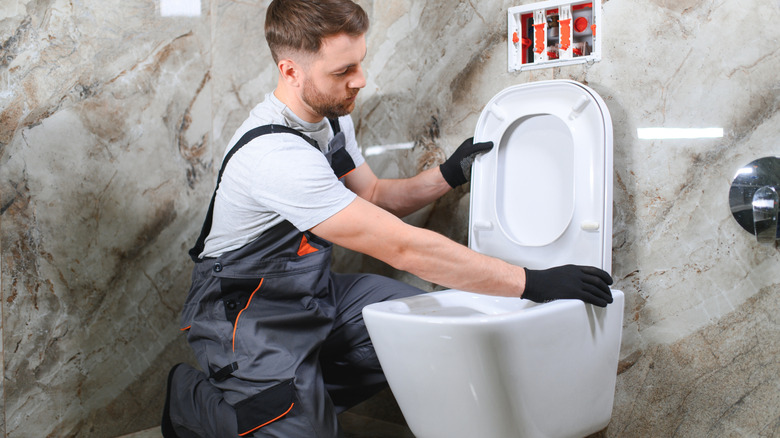
With a new toilet, installation is where many of the hidden costs appear. Installation matters because it's the difference between your toilet being a seamless improvement or a money pit. If your toilet requires rerouting plumbing or your installation process involves a fancy wall-hung method, the installation cost may closely rival the toilet's purchase price.
To avoid surprises, you'll need to decide early on whether you'll be installing or replacing the toilet yourself or hiring a professional. A DIY approach is possible and cost-effective if you stick to simpler two-piece toilets, which are more forgiving for homeowners lacking advanced plumbing experience. On the other hand, one-piece toilets often require specialized tools and knowledge, meaning you should factor in plumber fees before buying. Including installation costs in your budget from the start helps you compare toilets fairly. A cheaper model that demands pricey professional installation may actually cost more in the long run than a slightly higher-end option you can install yourself.
Check the rough-in size before you buy
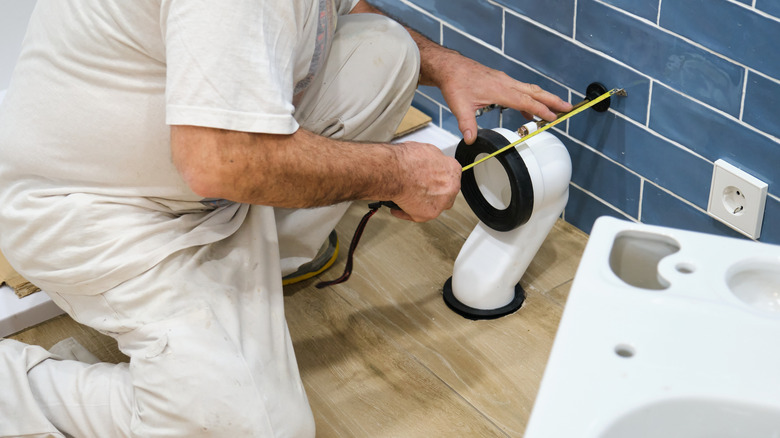
One of the easiest mistakes to make when shopping for a toilet is not taking note of the rough-in size, which is the distance from the wall to the middle of the drainpipe. This single measurement determines whether a toilet will actually fit your bathroom. If the rough-in doesn't match, the toilet simply won't install correctly. Because of this, rough-in size is arguably the most important technical detail to confirm before making a purchase. Fixing the issue of a wrong rough-in size may require costly renovations, like moving the drain or reconfiguring the flooring.
The standard rough-in measurement in most homes is 12 inches, but some bathrooms, especially older or compact layouts, may use 10-inch or 14-inch rough-ins instead. Before shopping, take time to carefully measure from the finished wall (not the baseboard) to the center of the toilet flange or bolts. This ensures accuracy and prevents costly returns. Many manufacturers design models specifically for each rough-in size, so you'll usually be able to find a suitable option without compromise. Getting the rough-in size right from the start guarantees a smooth installation and saves you the headache of realizing too late that your perfect toilet isn't a fit for your bathroom.
Consider bathroom space and layout for comfort
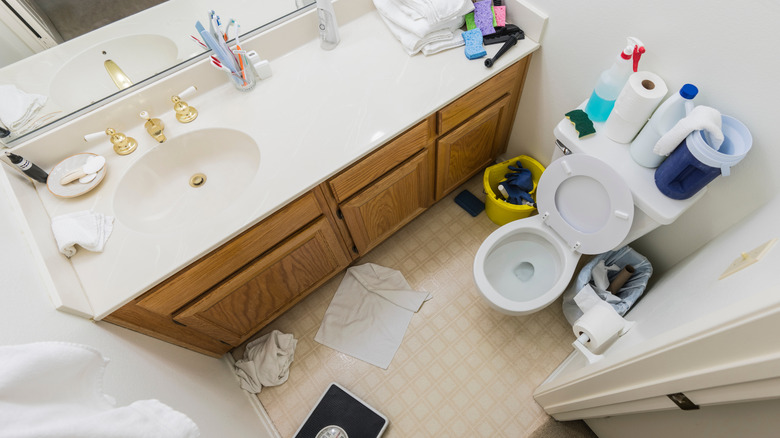
How much space you set aside for your toilet in your bathroom is one necessary, but often overlooked, factor when shopping, as it directly impacts daily comfort and usability. A poorly placed or oversized toilet can make the entire bathroom feel awkward, with limited legroom, tight corners, or blocked pathways. Beyond comfort, a toilet that doesn't suit your bathroom's layout can also affect accessibility, and even safety, if it forces people to move around in tight, unnatural ways.
When planning, measure carefully to ensure there's at least 15 inches of clearance from the toilet's centerline to any side wall or obstruction. You'll also want around 21 inches of free space in front of the toilet for comfortable use. Don't forget to factor in door swings, vanity placement, and storage access. Compact round-bowl models often work best in tight powder rooms or older homes, while elongated bowls, wall-mounted options, or even corner toilets fit larger layouts and provide a more spacious feel. Also, make sure there's enough clearance around the base for easy mopping and maintenance. Planning for space and layout is about creating a bathroom that feels functional and balanced every time you walk in.
Plumbing compatibility is a key consideration
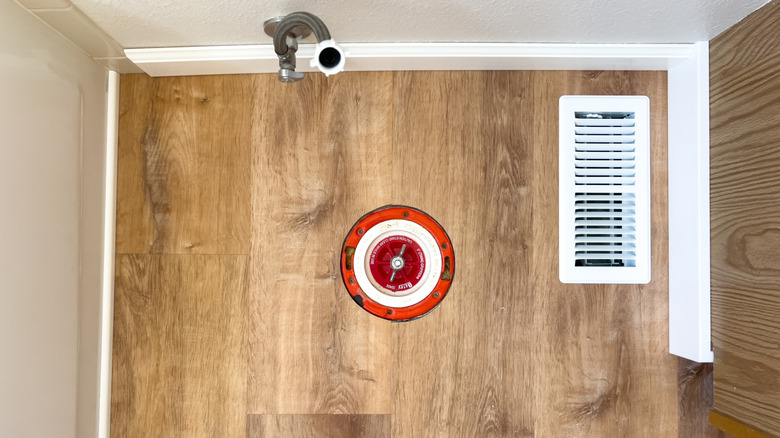
One of the most critical steps in buying a new toilet is making sure it matches your existing plumbing. Even the best toilet won't work properly, or at all, if your home's water supply and drain are incompatible with your choice. Incompatibility can turn what should be a straightforward installation into a costly headache, sometimes requiring extensive modifications to your bathroom's plumbing.
The two main things to check are the water supply line location and the drain alignment. If the water supply pipe sits too close to the toilet's base, it can interfere with installation. Similarly, a mismatch in drain alignment means the toilet won't sit properly or seal correctly, which can lead to leaks. Standard setups are common, but older homes or custom bathrooms may have unique configurations that require extra care. If you're not confident in making these measurements yourself, consult a plumber to confirm compatibility before buying. This small step can help you avoid costly surprises and ensure the model you select will fit seamlessly in your bathroom.
Considering flush system and water efficiency could help cut costs
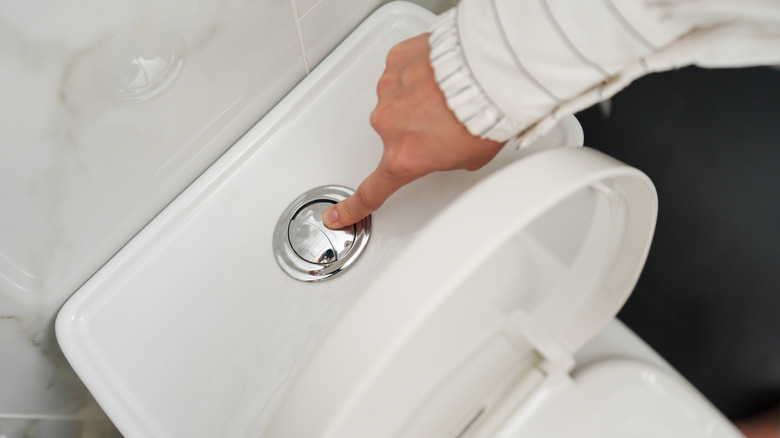
When choosing a toilet, the flushing system is the mechanism that determines how effectively waste is cleared, how often you'll face clogs, and how much water and money you'll use with each flush. Your flushing system also affects water efficiency or flushing power. Some systems use too much water per flush, leading to high water bills. However, a system with a weak flush could leave behind waste and force multiple flushes, which will also increase your water bill over time.
There are several types of flush systems. Gravity-fed flushes are the most common, relying on gravity and water flow to clear the bowl. They're reliable, quiet, and easy to maintain. Pressure-assisted flushes use compressed air for a stronger, more forceful flush. They're ideal for larger households, but tend to be louder. Dual flush toilets combine efficiency and versatility, offering a full flush for solid waste and a reduced flush for liquid waste, helping households save thousands of gallons of water per year.
Different systems also have different water efficiency rates. Standard toilets today use about 1.6 gallons per flush (GPF), while high-efficiency toilets (HETs) use 1.28 GPF or less, without sacrificing performance. If you want to maximize savings, look for WaterSense-certified models, which meet strict EPA guidelines for both flushing power and water conservation.
Bowl shape affects your comfort and bathroom space
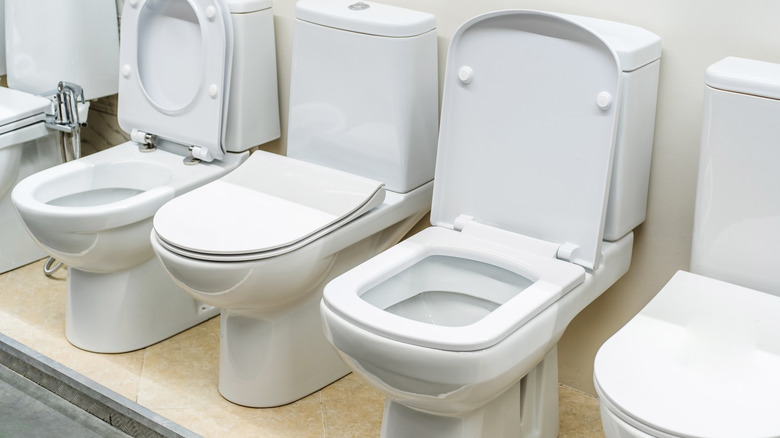
The shape of your toilet bowl might seem like a small detail, but choosing the wrong shape can leave your bathroom feeling cramped or make daily use uncomfortable. The three common types of toilet bowls are round, elongated, and square. Round bowls are the traditional choice, and their compact size makes them ideal for smaller bathrooms where every inch counts. They're usually more affordable, too, making them a practical option for budget-conscious homeowners. However, these bowls are not exactly the most comfortable option, as they don't offer enough thigh support and weight distribution.
Elongated bowls are a step up in comfort. Their oval design gives more sitting space, which is especially beneficial for adults and households prioritizing ease of use. They're also ADA-compliant, making them suitable for accessibility needs. The downside is that they take up a little more room, which can be a challenge in tight spaces. Square bowls, though less common, are chosen primarily for aesthetics. They lend a modern, stylish edge to contemporary bathrooms, though they don't always maximize comfort the way elongated bowls do. If you're stuck between space and comfort, consider compact elongated bowls. These hybrids provide much of the comfort of an elongated bowl, but fit in spaces closer to round-bowl dimensions, giving you the best of both worlds.
Your toilet height determines if it will be the right fit
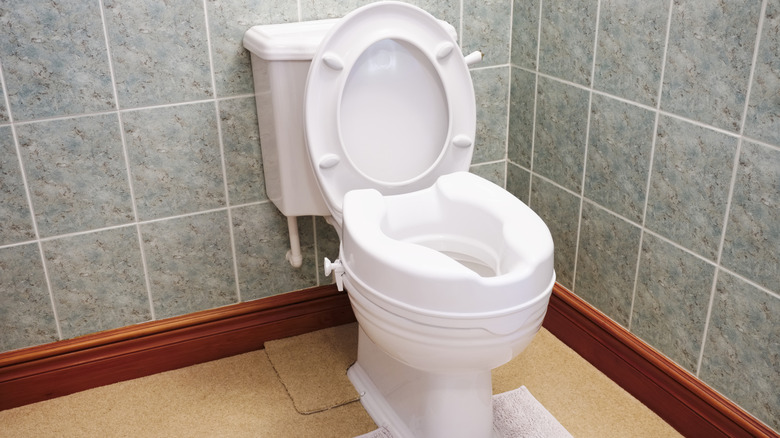
The height of your toilet directly affects how comfortable and accessible your bathroom feels for everyone in the household. A toilet that's too low or too high can cause unnecessary strain or limit use for children, seniors, or those with mobility challenges. Standard toilets are typically about 15 inches from the floor to the seat. This traditional height works well for many people, especially younger adults and children, but it can feel too low for taller users or seniors.
For improved ease of use, many homeowners opt for comfort height or ADA-compliant toilets, which range from 17 to 19 inches tall. These models make it much easier for adults, older individuals, and anyone with mobility concerns to use the toilet without straining their knees or back. On the other hand, lower toilets may be more suitable for households with young children, as they make independent use safer and easier. Some families even install one standard-height and one comfort-height toilet in different bathrooms to accommodate different users. Or, you could get a toilet height extension or riser and install it when needed. Ultimately, the right toilet height should balance the needs of everyone in the home.
Keep the toilet's noise level in mind
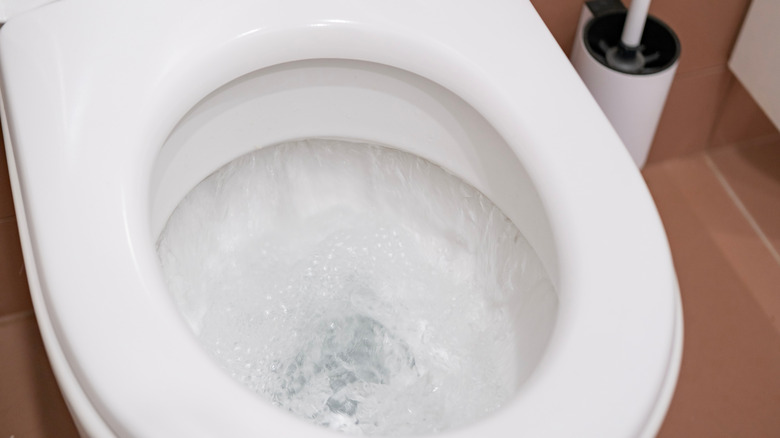
Toilets may not be the first thing you think of when it comes to household noise, but the sound of flushing and the lid closing can quickly become disruptive, especially in small homes, apartments, or bathrooms located close to bedrooms. The flushing system plays the biggest role here. Gravity-fed toilets are typically the quietest option, relying on natural water flow, rather than pressurized air. They're a great choice if you prioritize silence and don't want to wake others up with every flush. On the other hand, pressure-assisted systems provide powerful flushing performance, but are noticeably louder.
If noise is a top concern, look for quiet-flush models, which combine efficiency with reduced noise. Some manufacturers also design tanks with sound insulation, further cutting down on disruptive flushing echoes. Beyond flushing, the toilet seat matters too. Traditional seats can slam loudly if dropped, adding unnecessary noise to the bathroom routine. Upgrading to a soft-close seat eliminates this problem.
Check the toilet style before buying
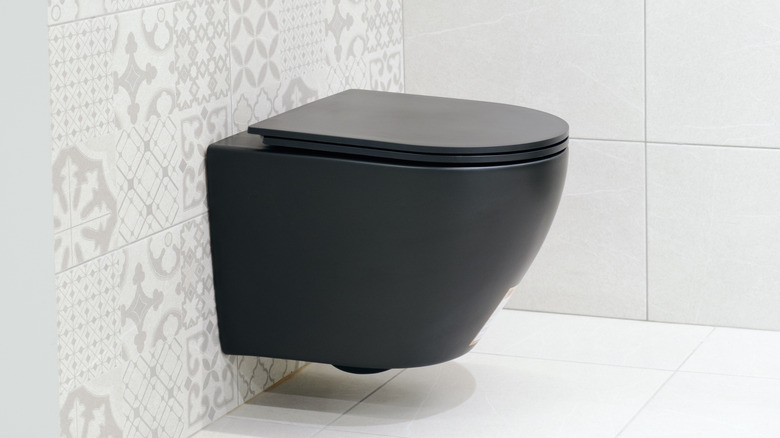
It's important to know which toilet style is right for your space, and often this comes down to choosing between one-piece or two-piece models. Picking the right style can make life easier in the long run, while the wrong one may mean more upkeep or higher installation costs. The popular option is the two-piece toilet, where the tank and bowl are separate. These are generally more affordable and widely available, making them a practical choice for budget-conscious buyers. However, the seam between the tank and bowl can trap dirt and bacteria, making cleaning more time-consuming.
For a sleeker look and easier upkeep, one-piece toilets are an excellent upgrade. With the tank and bowl fused into a single unit, they're easier to clean, more durable, and less prone to leaks. They tend to be heavier, harder to move, and more expensive than two-piece models, though. If you're looking to maximize space and embrace a modern aesthetic, wall-mounted toilets are worth considering. By attaching directly to the wall with the tank concealed inside, they create a floating effect, save floor space, and make cleaning the bathroom floor much easier.
Seat type and features can affect aesthetics and comfort
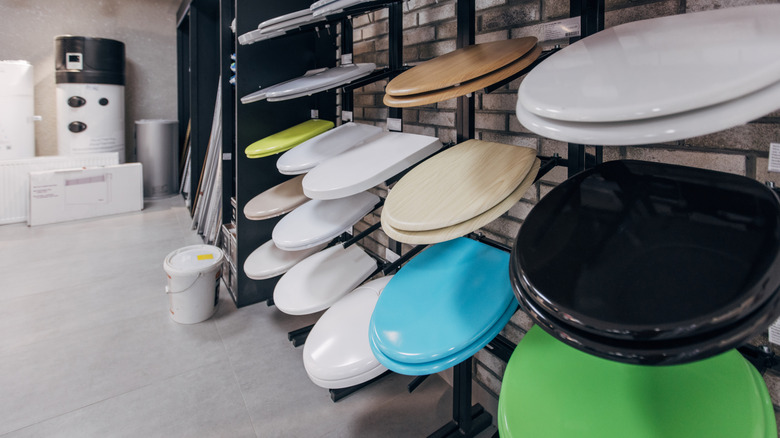
Often, while toilet shopping, many people forget that the seat is where comfort truly matters. Even the most advanced toilet can feel inconvenient if the seat is poorly made or doesn't suit your household's needs. Toilet seats come in a variety of materials. Standard plastic seats, often made of polypropylene, are durable, affordable, and easy to clean, making them a practical choice for most homes. Wooden seats add warmth and sturdiness, but they can be harder to maintain in humid environments. Cushioned or padded seats offer extra comfort, especially for older users or people who spend longer periods seated.
Beyond materials, features can dramatically enhance daily convenience as well. A popular upgrade is the soft-close seat, which prevents the loud slam of a lid and protects the seat from wear and tear. For households that prioritize hygiene, quick-release seats allow the entire seat to be removed easily for deeper cleaning. At the premium end, modern toilet seats can come with advanced features like heated seating for cold mornings, integrated bidet functionality for improved hygiene, nightlights for late-night use, and even built-in deodorizers to keep the bathroom fresh.
Don't forget your maintenance and cleaning requirements
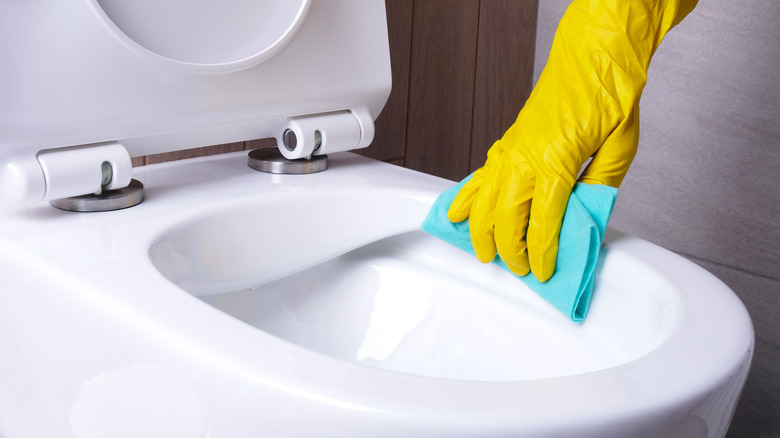
Maintenance and cleaning are what you'll deal with after choosing a toilet. A poorly designed toilet can mean constant scrubbing, frequent clogs, and more frustration than convenience. One of the biggest factors is the toilet trapway or trap. Narrow or poorly designed traps can clog more easily, forcing you to deal with plungers and messy cleanups. On the other hand, a fully glazed trapway helps waste flow more smoothly and reduces buildup.
Design also plays a huge role in how easy your toilet is to clean. Skirted or concealed trapways give the toilet a smooth exterior surface without all the hard-to-reach nooks, making it much faster to wipe down. Similarly, rimless bowl designs eliminate the hidden rim around the top of the bowl where dirt, grime, and bacteria usually collect. Modern innovations also help reduce cleaning effort. Some toilets come with special coatings that prevent stains and keep the surface smooth, so water washes away debris more effectively. Quick-release seats are another simple but powerful feature, allowing you to pop the seat off completely for deep cleaning. Prioritize designs that minimize clogs and make cleaning easier.
Warranty and brand reliability will protect your investment

A toilet is a long-term fixture you'll depend on daily for years to come. That's why warranty coverage and brand reliability should never be overlooked. Not all warranties are created equal. Some budget models may come with only one year of coverage, while more reputable brands often back their toilets with longer warranties of 5 years or more. The length of the warranty often reflects the manufacturer's confidence in their product.
Equally important is brand reputation. Established manufacturers with a track record of quality not only build more durable toilets, but also ensure that replacement parts, accessories, and customer service are easy to access when needed. This is especially critical for smart toilets with advanced features like bidets, heated seats, or sensors, where specialized parts may be required. Choosing an unknown brand might save you money upfront, but it could turn into a headache when you can't find support down the line.