

Why You Should Never Let Falling Leaves In Your Yard Stay Piled Up On Your Car
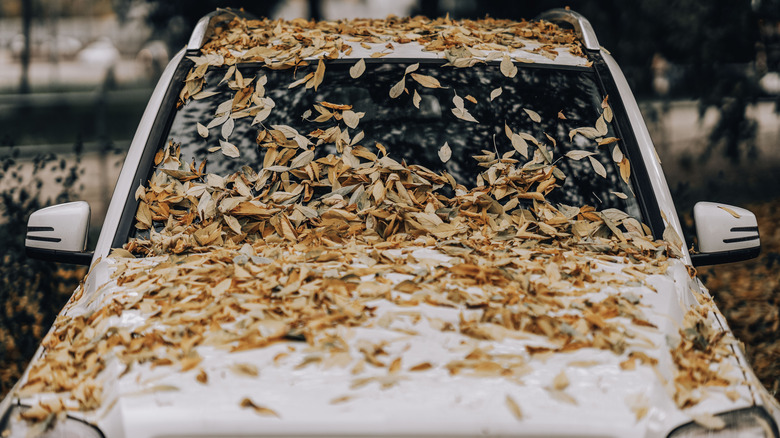
If you're lucky enough to live in a region where leaves change color in the fall, then having trees near your property can offer appealing aesthetics at peak season. This is, of course, on top of the benefit of trees adding value to your property. Depending on where you live, peak leaf color can occur between late September and early November. Unfortunately, this process is pretty short-lived before the leaves start falling off the trees around your property. Not only will you need to contend with removing excess leaves, but you also don't want the dead foliage to cause any issues, either. In fact, leaving fallen leaves piled up on your car can lead to costly — and even permanent — damage.
There are many leaf removal mistakes to avoid around your yard. For example, allowing leaves to pile up against your home is considered a leaf-raking mistake that creates the perfect environment for mold growth. Letting leaves pile up on a car left outside can also lead to its own set of issues. These can include stains, scratches, paint damage, and rust. Removing leaves as often as possible will help to minimize the risk of these types of expensive damage while also keeping your vehicle clean and ready to use.
What happens to your car when you let leaves stay on it
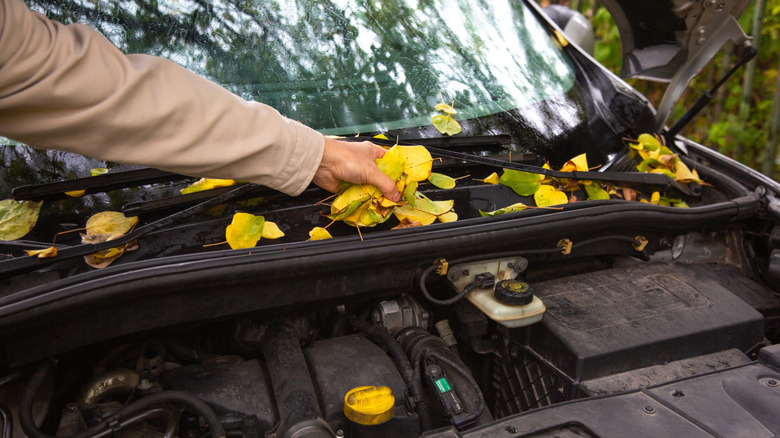
Fallen leaves may seem harmless, but they can cause significant damage to vehicles due to micro-abrasions and marks. The danger of paint damage is even greater if the leaves on your car are wet. When leaves have any type of moisture, they can release tree sap, which can directly damage your vehicle's exterior clear coat due to its acidity. This can happen unbeknownst to you and later cause the paint to degrade. Over time, this may expose the metal underneath to the elements and lead to rust. Falling leaves can also sometimes pile up in the area near the bottom of your windshield. Aside from external damage, it's possible for leaves to get beneath the hood, where they can then clog drains and filters.
You can help combat any of these detrimental effects to your car by removing fallen leaves as soon as possible. Depending on the situation, you might consider doing this every day until the leaf-falling season ends. Use a leaf blower on your car, or carefully remove leaves by hand to prevent scratches. It's also important to look for leaves underneath the hood. Getting your vehicle waxed every season can also protect the paint from leaf damage. If you do see signs of paint damage, consult with an auto body shop before your car rusts. Once you're done with getting all the leaves off your car, you can then tackle your yard. If the process is daunting due to a lot of foliage on the ground, consider using powerful tools that can make cleaning up fallen leaves a breeze.