

The Outdated Cabinets Worth Getting Rid Of
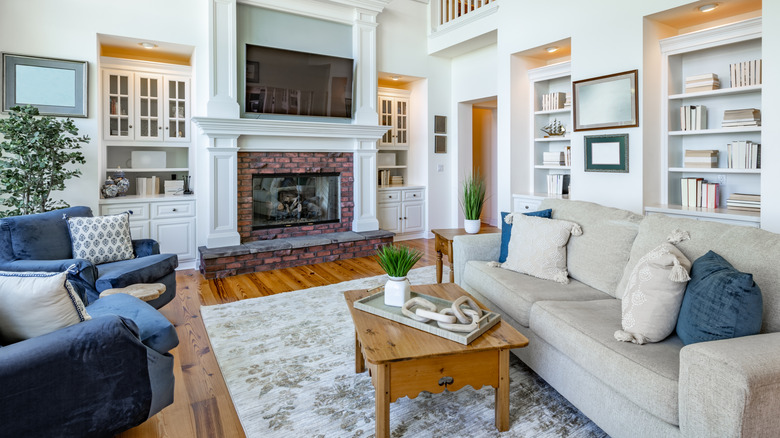
Built-in cabinets have been popular for decades, especially in the living room — where until recently, there was a need for media centers that housed full entertainment setups as well as family storage. Built-in cabinets were once considered a clever way to frame a television and provide that storage. But the bulky cabinetry of the early 2000s — designed to house older, oversized televisions, along with various media consoles like DVD players, cable boxes, and stereos — are now a thing of the past, eating up valuable floor space and making your living room look like something from decades past. If your home still features these once-popular entertainment centers, it might be time for an upgrade, especially if you find that your electronics have outgrown the space.
Modern televisions are not only thinner, they are smarter and more powerful than televisions from previous decades. With more built-in apps and less devices attached, TVs are now designed to be visually subtle. Some even double as digital art when not in use, making it easy to build a gallery wall around your television, rather than having it dominate the room. With innovations like these, the need for chunky media cabinets has practically disappeared. As technology has evolved, electronics have become more integrated into our lifestyles. It only makes sense that our furniture and cabinetry should evolve too — which is why it might be time to get rid of those bulky built-ins and replace them with something more modern.
What's the alternative to bulky built-in cabinets?
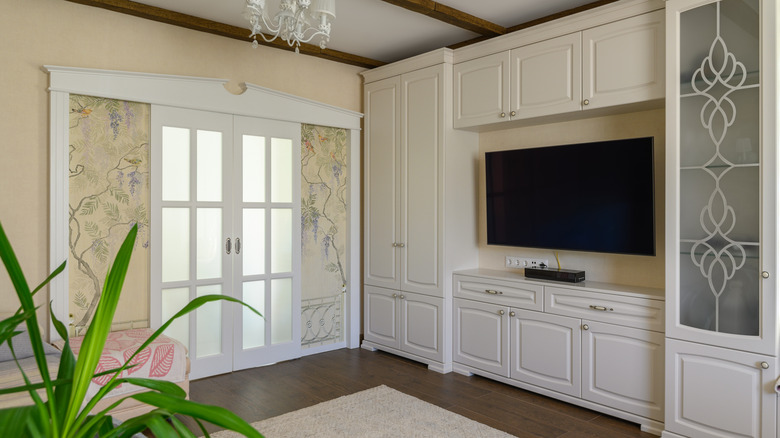
It's easier than ever to flawlessly integrate a TV in your living room by simply hanging it on the wall or using a minimal console that will open up floor space and bring a more modern feel. However, that doesn't necessarily mean that built-ins as a concept have completely disappeared, they have just evolved. Cabinets are becoming much more streamlined to complement a home's existing architecture, especially where entertainment centers are concerned. Designers are ditching bulky built-ins and incorporating lighter, more modular designs that are highly customizable and create a minimal profile, without consuming too much of the room's focus.
Some designers are even opting out of built-ins altogether, letting the room breathe instead. By removing bulky cabinets, it opens up design opportunities and makes it easier to adapt your space to changing trends or personal style over time. Floating shelves, low-profile credenzas, or minimalist media consoles can provide both function and style. And if you're concerned about increasing your living room storage space, there are plenty of smart and discreet ways to incorporate that without built-ins. Modular furniture, hidden cabinets, or integrated wall panels can all provide ample storage without overwhelming the room. Ultimately, removing outdated TV cabinets isn't just about chasing trends, it's about creating a space that works better for modern living. By freeing up visual and physical space, you not only make your home feel larger and more inviting, but also ensure it stays adaptable for the future.