

Skip The Backer Rod-You Can Fill Cracks With These Alternatives
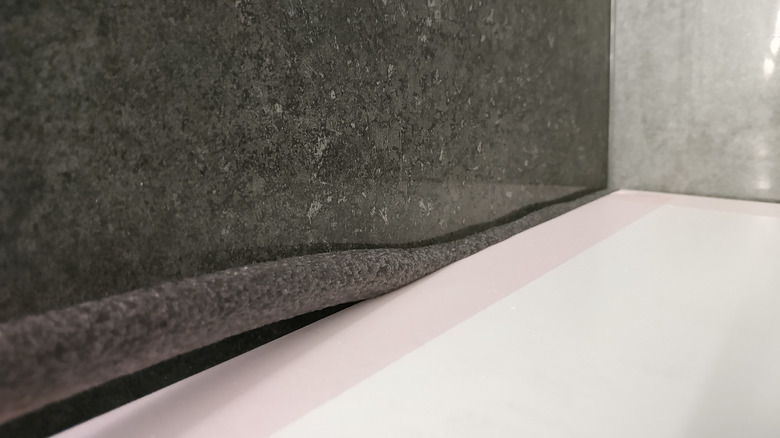
If you've ever filled a large gap with caulk, only to watch it pull away from the edges as it dries, you've experienced one of the primary reasons that backer rod exists. Backer rod does more than just reduce the amount of sealant you need to seal a space; it also acts as a bond breaker, preventing the three-point adhesion that occurs when caulk is pushed all the way to the back of the gap you're filling. With three-point adhesion, too much caulk creates a scenario where the caulk is unable to expand and contract effectively, and it ends up cracking due to the lack of flexibility. If you're ever in a situation where you need backer rod but don't have it, one of the alternatives on this list may work.
Backer rod, sometimes just called back-up or backup rod, can make exterior caulk last longer. It's that round foam stuff that's used to fill large gaps before caulking, whether on your home's exterior, inside around your windows, or in concrete and masonry expansion joints in sidewalks and brickwork. Since backer rods aren't that common, some homeowners might be wondering what else is safe to use in its place.
DIYers sometimes have to make do with what they have on hand, and when sealing gaps, sometimes it's okay to use another material instead of backer rod. While certain situations still call for the real thing, there are plenty of cases where one of these eight other materials will do in a pinch.
Pool noodles

There are a few types of backer rod, including ones made from both open-cell and closed-cell foam. Closed-cell backer rod is used anywhere moisture could be an issue, since it is non-absorptive. Most pool noodles, like this Dollar Tree Colorful Foam Pool Noodle, are also made of closed-cell foam, making it the perfect substitution for backer rod. Now you can add another idea to the growing list of ingenious pool noodle hacks. Because pool noodles are cheap, readily available, and easy to cut, even professional builders sometimes use them to fill extra-large gaps before caulking or sealing.
Foam pipe insulation

When we mention foam pipe insulation as an alternative to backer rod, we're talking about the polyethylene tubes that you slip on pipes. Some of them look just like pool noodles, and just the way pool noodles can work as pipe insulators, you can also use this type of insulation in place of backer rod. Designed to maintain temperatures in pipes, various types of foam pipe insulation are made from different materials, including fiberglass and rubber, which could also be suitable substitutes for backer rod in many projects.
Canned spray foam insulation
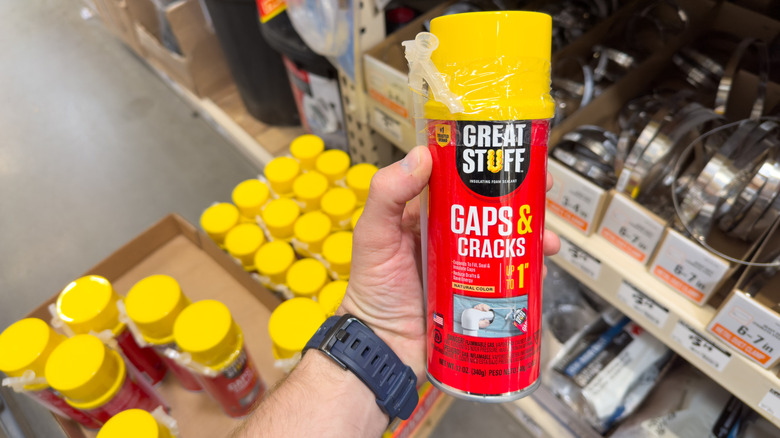
Spray foam insulation can also be used in place of backer rod, especially for large gaps. Depending on the situation, you can even use canned spray foam in place of caulking altogether, since it effectively seals out air and moisture. When choosing a product, consider factors like the size of your gap and how you'll apply the product. The popular 12 oz. Great Stuff comes with a straw for application and can fill gaps up to three inches. If you're working around doors and windows, use the minimal expansion product to avoid putting pressure on them.
Caulk cord
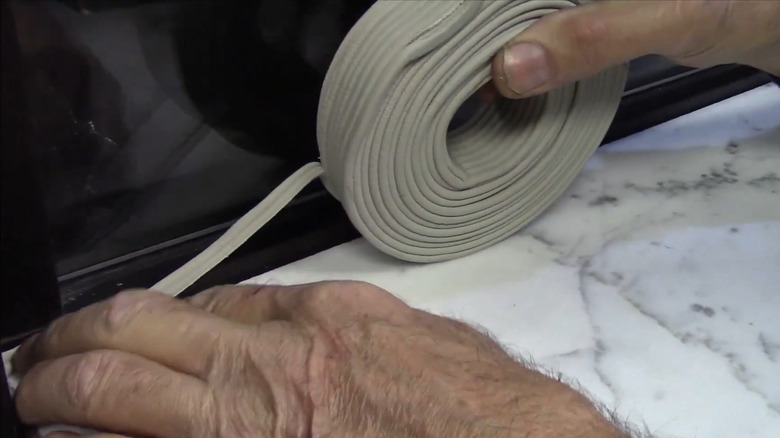
While backer rod performs multiple duties and acts as a bonding agent to control the depth of the caulk, sometimes all you need to do is fill a gap quickly. Products like caulk cord, also called rope caulk, can be used when you're just looking to seal an opening to keep out drafts and pests. Caulk cord is an easy way to caulk if you don't have a caulking gun, and it is available in various lengths, colors, and diameters. It stays pliable, so you can push it into gaps like putty, and remove it easily whenever you want.
Butyl tape

Butyl tape, which is used for flashing, won't work for every situation, but it could allow you to skip both the backer rod and the caulk in some projects. Providing an airtight seal, butyl tape comes in various widths, is extremely tacky, and bonds to many different types of surfaces, including concrete and metal. While it won't fill gaps like backer rod, it's pliable and waterproof, so it could be used to cover them, especially if you have another layer of building materials (such as siding or trim) that will go over the top.
Mineral wool
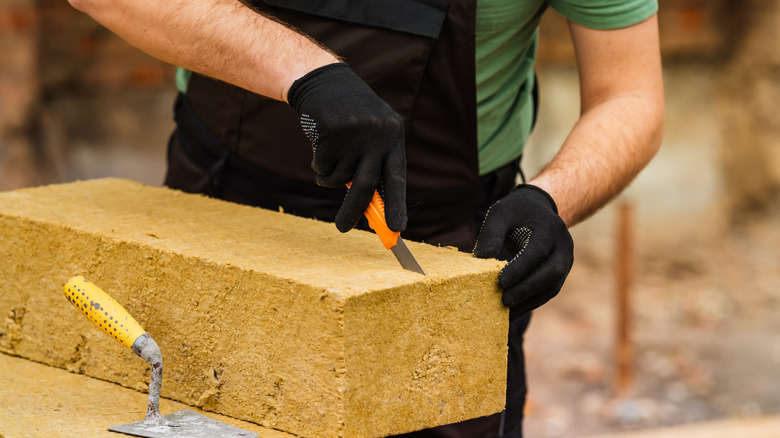
Mineral wool, whether it's made from naturally occurring basalt rocks or recycled industrial slag, is a good insulation because it's fireproof and resistant to mold and mildew. Since it's hydrophobic (meaning it repels water), it can be cut into smaller shapes and stuffed into gaps in place of backer rod wherever moisture could be an issue. The only drawback is that it's not super smooth, so it could be harder to lay down a nice bead of caulk around fluffs of mineral wool insulation.
Fiberglass insulation

While you don't want to go stuffing any old types of rags into the gaps and crevices of your home before you start caulking, using bits of fiberglass insulation could work as an alternative to backer rod in some DIY projects. However, unlike mineral wool, which repels water, fiberglass insulation traps moisture. Since this can lead to mold and mildew damage, fiberglass insulation isn't a good exterior replacement for backer rod. This also wouldn't be as easy to apply as traditional backup material.
Rope
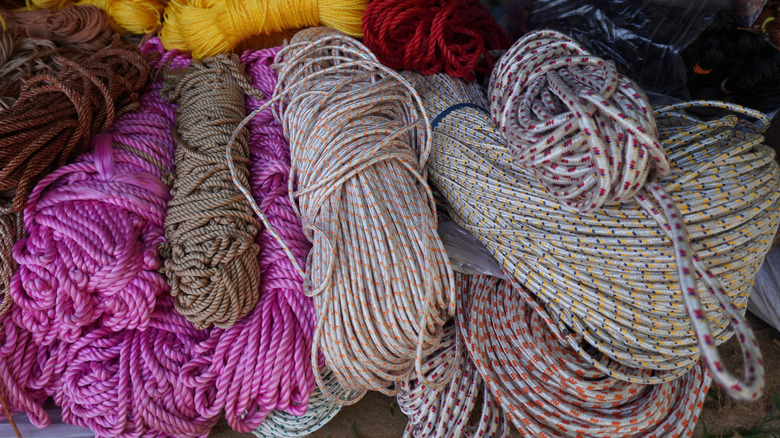
In some situations, you could use rope behind caulking in place of backer rod. Rope could even help you avoid the three-point adhesion problem, but it's important to note that there are many different types. Ropes made with organic materials like sisal and coir, which can support mold and mildew growth if they get wet, should only be used in dry, interior locations. In outdoor applications, it would be better to use rope made from synthetic materials.