

The Common Lion's Tailing Pruning Practice That'll Actually Damage Your Tree
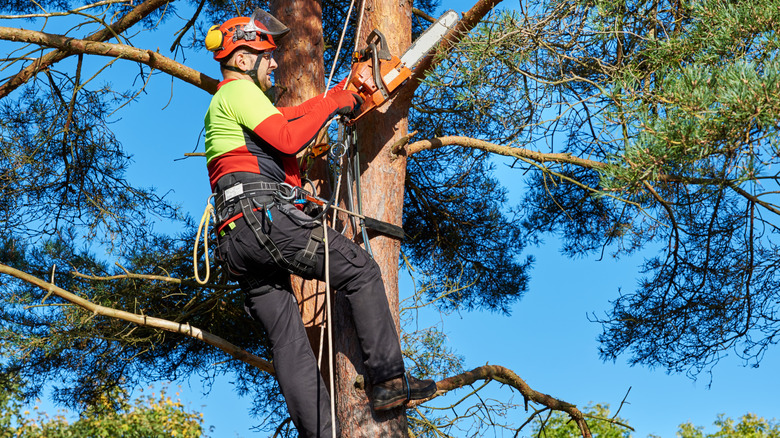
Pruning is an essential practice that should ideally result in increasing the health and longevity of a tree and improving its aesthetics. Selectively removing the right branches, buds, or roots can help maintain a tree and save it from pests and diseases. Pruning can undoubtedly up the aesthetic quotient of your tree, but sometimes, people can go a bit too far. Lion's tailing is a pruning technique, unfortunately on the rise in the urban landscaping, that can severely damage a tree's health and make it prone to breakage and diseases. The process of lion's tailing often ends up removing 50 to 75% of the tree's branches. Such abrupt pruning can cause a response from the tree where it starts sprouting new growth in a cluster of branches. This new growth is not stable, inefficient, and poorly attached to the trunk. New growth can also cause more water stress for the tree.
Lion's tailing involves heavily removing the inner branches of a tree and leaving out leaves only at the end of the remaining branches. This makes the branches resemble the tuft at the end of a lion's tail, hence the name. But why do people resort to this form of pruning? Some homeowners want better visibility for their homes from the streets, so they decide to prune down a tree in their front yard to increase their house's curb appeal. Some may do it to have a more visually striking tree. Others, however, are ill-informed and believe that lion tailing can enhance their tree's resistance to wind. The truth, obviously, is the exact opposite. Whatever the reason for it, lion's tailing is definitely one of the worst pruning mistakes you should avoid.
Lion's tailing can lead to breakage, diseases, and lack of resources for the tree
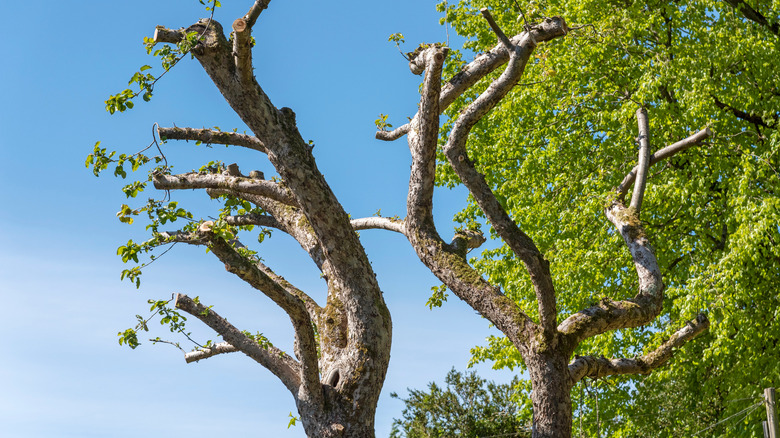
The list of the harmful repercussions of lion tailing your tree is long. To begin, contrary to popular belief, lion's tailing increases the chances of breakage during strong winds or ice because of the poor structure of the branches. When the entire weight of the branch distributes to the ends, it stops the tree from swaying and makes it more vulnerable to wind. Furthermore, lion's tailing also results in a massive shortage of leaves for the tree. Leaves, as you know, perform the essential function of photosynthesis for the tree. Without them, the tree can not use sunlight to make food and may have to rely on its carbohydrate reserves for survival. The leaves that remain at the end of the branches end up getting too hot and become ineffective for photosynthesis.
Pruning in direct sun is, in itself, a huge mistake. Excessive removal of the inner branches can further expose inner sections of the tree to sunlight, leading to sun scald. The tops of the remaining branches as well as the trunk can get scalded, and, in turn, increase the likelihood of decay. Sun scalding can also increase the chances of damage from insects and diseases.
Although you should avoid this pruning technique in the first place, it is possible to save a tree that's been lion tailed. Let the new sprouts grow, and once they reach their full potential, thin them out from the base. Make sure the remaining branches (ones you leave out) are evenly spaced and, ideally, sprouting from the base of the main branch. Thin out the branches at least two to three years after the tree was initially over-pruned.