

Rules And Regulations To Keep In Mind When Hiding The Eyesore Of An Electrical Panel
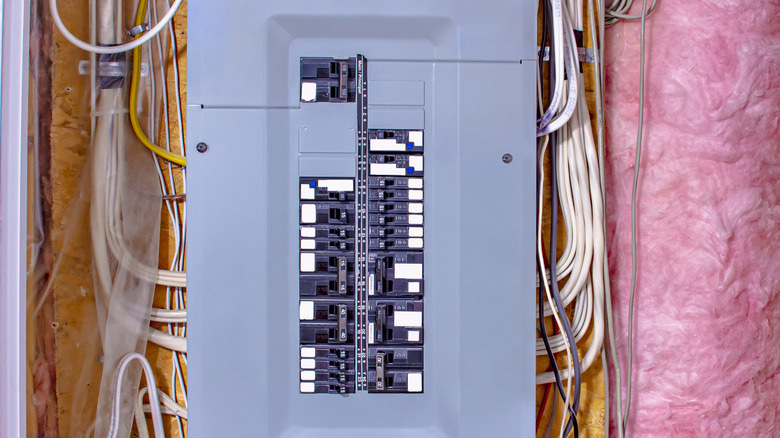
When you move into a home, you get to choose a lot of the design aspects. You can choose whether to start decorating your new home from scratch, simply remodel the decor of an existing house, or make other changes here and there to match your tastes. There are a few things that are extremely difficult to change, though, such as the location of the house's electrical panel, which is a complex job that requires a licensed electrician several hours to do and could cost up to $4,000.
Rather than moving an ugly electrical panel to help your home's look, you can try some DIY hacks to hide it. Before you choose to hide an electrical panel with a clever accent wall, cover it in wallpaper to camouflage it, or hang a framed painting over the top, you should be aware of rules and regulations regarding the panel's appearance. Any covering you place over the electrical panel has to meet regulations set forth by the National Electrical Code (NEC), International Residential Code (IRC), and your local building codes.
The key rules to follow when covering your electrical panel include maintaining a clear workspace in front of the panel, only using decorative elements that are easy to move in an emergency, and ensuring no coverings penetrate the panel's doors, which could create a fire hazard. If you are unsure whether your plans for hiding the eyesore of an electrical panel in your home will meet local codes, you should speak to a local electrician who can provide advice.
Specific rules to watch for when covering electrical panels
The primary concern you should keep in mind when hiding your electrical panel is maintaining accessibility for emergency situations. The panel doors need to be easy to find, reach, and open in case firefighters need to quickly shut off power during an emergency. The NEC requires a certain amount of clearance around electrical panels, which you'd have to adhere to when hiding them. You need at least 30 inches of width, 78 inches of vertical clearance, and 36 inches of depth around the panel. If you build a cabinet over the front to hide it, the cabinets need to be large enough to maintain the required clearance or must use a removable front panel.
You can paint an electrical panel cover to hide scratches or to make it less of an eyesore. You can also place wallpaper over it, but the paper should not penetrate the interior of the door, or it could cause a fire hazard. However, if you have emergency signs or labels on the outside of the panel, you may not paint over these or cover them with wallpaper. This would be a more common setup in a commercial location than a home, but some home panels may have labels on the outside.
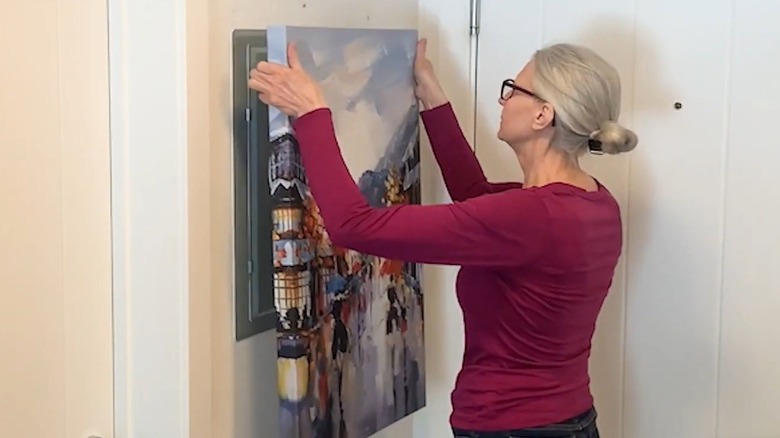
You probably can hide the circuit breaker panel behind a mirror or painting, as long as it is not permanently attached, thus easy to move out of the way. However, some local building codes might prevent you from using this option.
Why clearance around an electrical panel is necessary
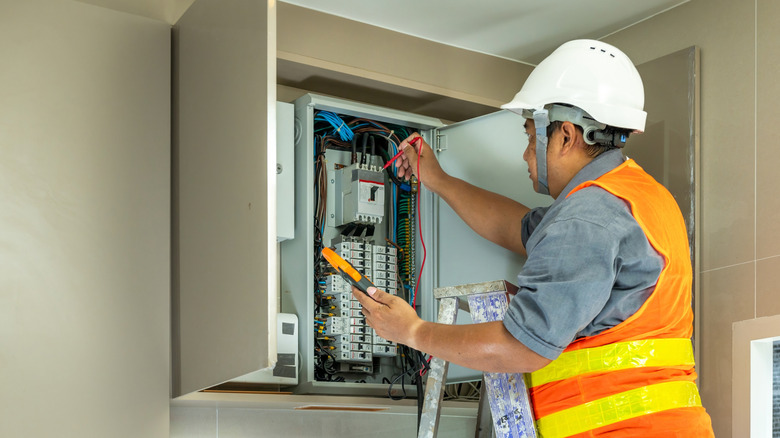
The most important reason to maintain clearance around an electrical panel when covering it is to allow for easy access to the circuit breakers. Workers, inspectors, and first responders need unobstructed access to the breakers and the panel to be able to work safely and efficiently.
Additionally, If you create a cover for the electrical panel that includes flammable materials and they're too close, such items could ignite. An electrical panel can generate heat during normal operation, and placing too many obstructions around it when trying to hide it from sight will restrict airflow and increase the potential overheating problem. In this instance, you could jeopardize your home by increasing the risk of a major electrical fire. Building a cover that is too close to the electrical panel and restricts airflow might not cause immediate overheating issues, but it could shorten the lifespan of the system as the heat builds up over time. You should never remove the metal dead-front cover on the electrical panel when trying to hide the panel because it creates an electrical shock risk.
If you build a new home or move into an existing home and aren't sure whether you have the proper clearance around the circuit breaker panel or whether its current dead-front cover configuration is up to code, ask an electrician for advice. Architects and contractors may not know the regulations for these panels when working on a house, but electricians will know them.