

The Most Common Types Of Air Vents (And The Best Way To Clean Them)
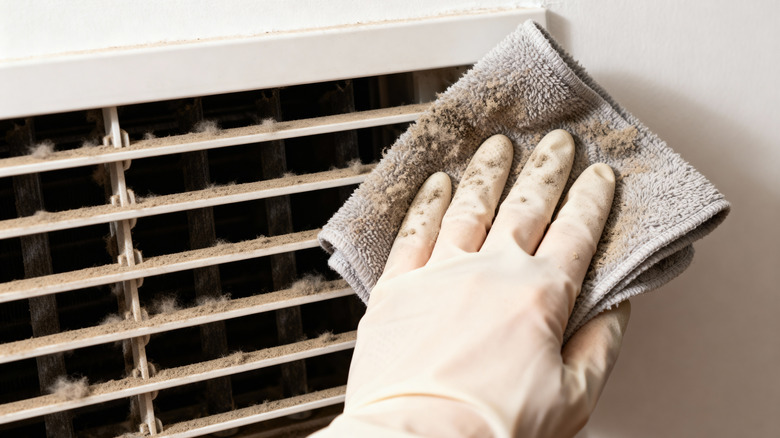
Cleaning your air vents can be an annoying process, but it's important to do so regularly. Buildup of dust and grime obviously has an aesthetic downside, but putting off this chore can also contribute to medical issues for members of the household who have allergies, increased energy costs due to decreased efficiency, and a shorter lifespan of your AC unit or exhaust fans. To ensure you have the best air quality possible, you should do this task at least every few years. If you have pets or notice that dust accumulates in your home very quickly, it's advisable to also clean your air ducts.
Exactly what you'll need to do to clean your vents will depend on the type of vent you're dealing with. Most homes have three kinds: vents for supply air, return air, and exhaust air. Basic cleaning instructions will remain the same for each — after all, your primary goal is just to eliminate built up dust and debris — but specifics might depend on whether or not you can remove the vent, the direction the air flows, and what additional wear and tear the vent is exposed to. Cleaning your kitchen range exhaust hood, for example, is often a greasy job that requires some extra steps. A simple dusting as if it were a supply air vent in the bedroom won't cut it.
Regardless of the type of vent you're cleaning, it's also important to consider whether this is a job for you or a professional. Most regular cleanings are totally fine to do with basic tools you already have around the home, but if you've noticed your ducts also need work, your home is perpetually dusty, or there are spots with mold, it's time to give the pros a call.
Return vents are typically large but easy to clean
The simplest way to determine whether you're looking at a return vent or a supply vent is the direction of the airflow. If you put your hand up next to the vent and feel air blowing outward, it's a supply vent. If you feel the air being sucked inward, it's a return vent. Return vents are often a bit bigger than supply vents, so it's also possible to tell them apart purely based on looks.
If you've ever changed an HVAC filter that isn't near your furnace, you're likely already familiar with what a return vent is — you should change or clean your air filters every couple of months at minimum. These types of filters sit in front of return vents. Not every return vent has a filter, though, so this might not be something you need to consider.
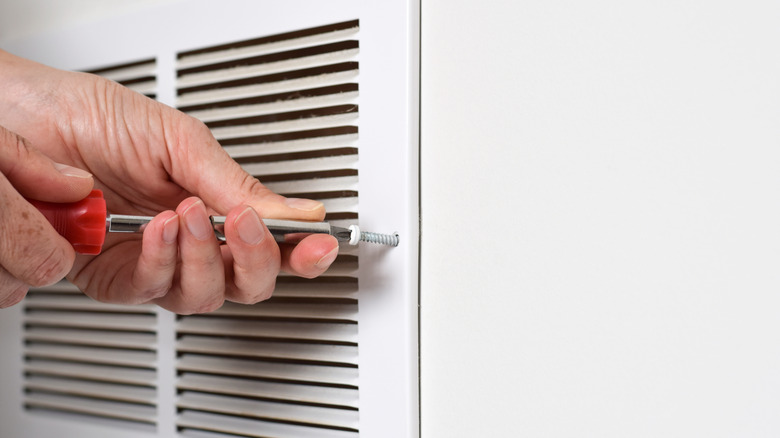
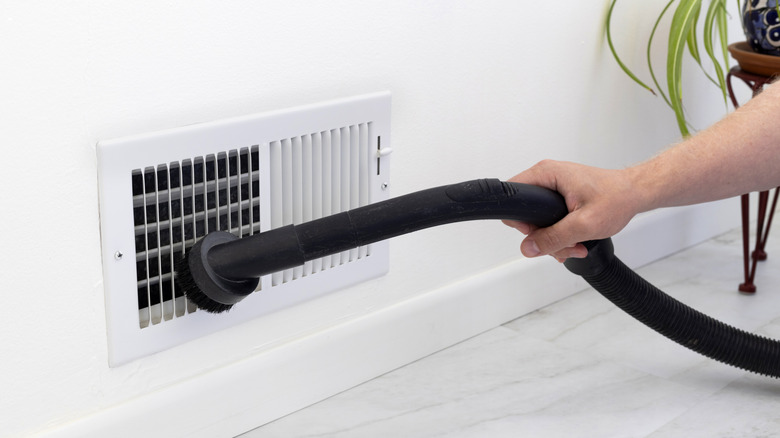
Begin by shutting off your HVAC system, if desired. This isn't completely necessary — it's not dangerous to clean while it's on — but having air blow into your face can be annoying. From there, vacuum the return vent cover to suck up any dust and hair. Once most of the debris is off of the vent, remove the cover and give it a thorough wash with soap and water. Change the filter while the cover is off, if needed, and take a look inside to see if there's any dust or dirt in the ductwork. Now's a good time to vacuum this out, too. Once the vent cover is dry, reattach it to the wall.
Supply vents are common to find throughout the house
When you think about the vents in your home, the first thing that pops into your head is likely a supply vent. These are the most common kind of vent you'll see throughout your house. Typically found on or near the ceiling, on the floor, or along the wall, their job is to pump hot or cold air into each room in your home. Because they're spread throughout the house, they're able to keep the temperature in each space consistent and comfortable. If you're still unsure what kind of vent you're dealing with, hold your hand up to the surface while your HVAC system is on. If air is blowing out, it's a supply vent.
Cleaning supply vents is simple and very similar to cleaning a return vent, but it can be a bit of a hassle, especially if they're on the ceiling or high on the wall. Start by shutting off your AC — again, not necessary for safety, but helpful. Set up a step stool or ladder so you're able to easily access the vent, if needed, and remove the covers for cleaning. You can wipe them down with a cloth if they're just dusty, but if they're still looking a bit dingy, now is the time to take them off and give them a scrub with some soapy water. If you notice the inside of your ducts are also dusty, suck up any debris you can easily reach with a vacuum. Once you're done, screw the vent cover back on, and you're set.
Exhaust vents often take a few extra steps to clean
Exhaust vents are specifically designed to pump air out of your home. It'd be pretty inefficient to constantly have air flowing out of your space rather than being cycled throughout it, so these vents are for very specific uses, like pumping steam out of your bathroom or smoke out of your kitchen. Because of this, they also often take a few additional steps to clean. Rather than simply eliminating dust buildup, you also have to worry about sticky grease stains, lingering moisture, and possibly mold.
To start the cleaning process, cut the power to your exhaust fans. This can be done by flipping a switch on your breaker. From there, remove the cover. This will vary widely depending on what you're dealing with, but the most you should have to do is break out a screwdriver to get it off. For bathroom exhaust fans, wipe everything down to remove dust, making sure to check for any mold or mildew. If there isn't any, you can reinstall the cover without worry.
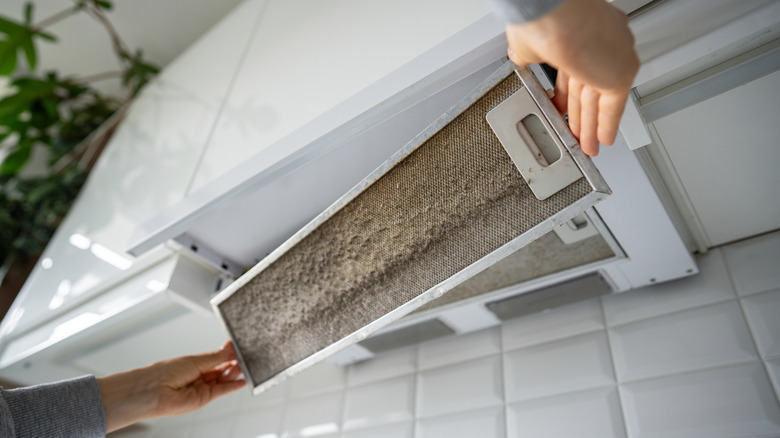
For kitchen exhaust fans, you'll likely have to use a bit more elbow grease. Not all range hoods utilize ducts and vents (some simply circulate air through a filtration system), but those that do should be cleaned like other exhaust vents. Remove the grease filter and determine if it's reusable or not. If it's disposable, your job here is easy — just swap it out for a new filter and trash the old one. If it's not, however, it's time to start scrubbing. Baking soda or dish soap and water will help to cut through grease. Once the filter is clean, reinstall it, and turn the power back on to enjoy stress- and smoke-free cooking.