

The 3-Color Rule That Makes Any Home Exterior Look Thoughtfully Designed
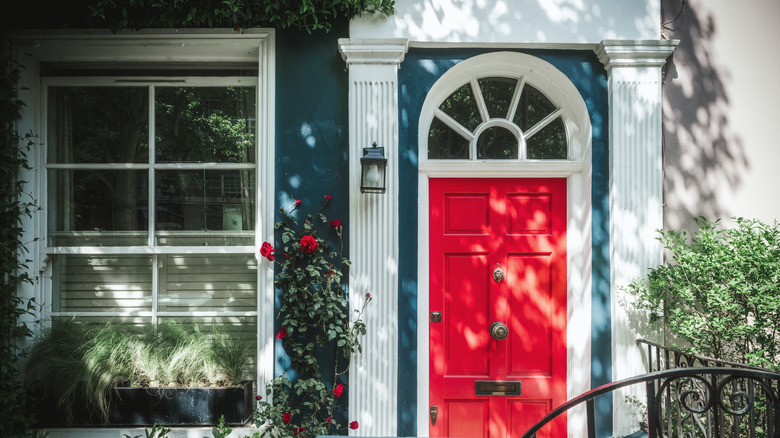
Coming up with a design plan for your home exterior can feel paralyzing. After all, it's not the same as painting an interior wall. The stakes are higher, the scale is much larger, the project is more time-consuming, and the supplies are more expensive. Plus, these outdoor changes should add curb appeal and be something you could live with for years, if not decades. Fortunately, there's an easy-to-follow rule that takes some of the uncertainty out of sprucing up your home's exterior. It's called the three-color rule, and the process couldn't be easier: Choose one base color, one trim color, and one accent color.
What's so great about this rule is that you can customize it to any type of home or color preference, creating an ideal mood and style without becoming too visually busy. For example, you might choose one of several exterior house colors to make your home look more inviting as your base color or opt for something more off-beat and personal. Painting the trim to create some contrast (either a little or a lot) creates sharp definition and prevents the home from looking flat, while a pop of accent color creates an eye-catching focal point. You can also work the natural look of materials already in place, like brick, wood, or metal, into your tri-colored scheme, as long as you follow the rules and don't pick paint colors that clash with them.
Use the three-color rule for a cohesive exterior design
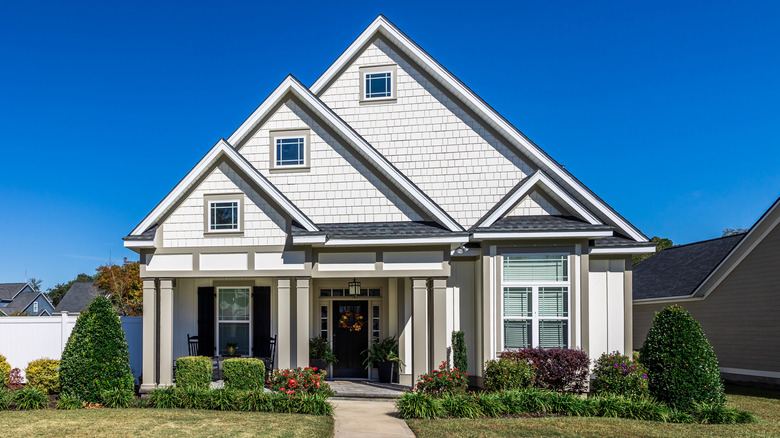
There are many adaptations you can make with the three-color rule, but it's helpful to think of the guidelines in terms of percentages. Your siding or base color will represent about 60% of your home's exterior color scheme. Your trim color, which is applied to windows, fascia, columns, and door frames around the house, represents 30% of the color scheme, and accents, such as front door or shutter colors, will represent the last 10% of it. Choose contrasting colors, such as a deep blue for the siding and a bright white for the trim, or opt for a more subdued, monochromatic scheme that uses various saturations of similar colors. Try to use the color wheel to find your perfect color palette, and test swatches together on your house to see how they'll play together in the outside light.
What if you're not ready to paint your home or purchase new siding? You could still use the three-color rule to elevate what you already have. Start by treating your home's siding as the base color and pick a new color for the porch columns, window trim, shutters, or other architectural details. Painting the front door in an accent color is one of the easiest ways to boost your home's curb appeal and can tie everything together for a balanced but interesting look that doesn't require a full-on renovation.