

11 Fencing Rights You Need To Know Before Your Neighbors Take Advantage

It's important to know your fencing rights because your neighbors might not always have your best interests at heart. Every state has its own rules about fences, but overall, property owners have the right to a safe and legal boundary around their property. They also have the right to keep it safe from unwanted interference or changes they didn't approve. The truth is, most fencing disputes don't start with dramatic conflicts. They start with small mistakes or assumptions about what each person is "allowed" to do, like a neighbor taking it upon themselves to paint your fence in an effort to be helpful.
The most important piece of advice for fencing, no matter your location or the problem you are having, is this: Before you replace, relocate, or fix a fence, make sure you know your exact property lines by checking your property records or maps from the local government. The fastest way to lose a fencing dispute with a hostile neighbor is to build even an inch over the property line. That said, when you understand the rules before anyone starts digging post holes, you avoid surprises and keep control of what happens. Being informed also makes it much easier to spot when a neighbor is overstepping, whether intentionally or not.
Your neighbor may well share responsibility for fence costs and maintenance

If a fence is built exactly on the dividing line between two properties and helps both landowners, California law assumes that both owners will share the benefit, as does the law in Massachusetts and many other states. This means the neighbors can split the costs of building and maintaining the fence, which is good to know when you're wondering what to do about a neighbor's damaged or fallen fence that also impacts your property. To do this legally, you need to follow specific steps, like giving written notice to your neighbors about any plans and meeting all the timing deadlines — in most cases, at least 30 days. This rule is important because if you don't give the proper notice before building or making changes, you might lose the right to get your share of the costs back.
If your neighbor won't voluntarily participate in cost-sharing, and you live in an area with a good neighbor fence law, document every step to protect yourself: keep the written notice you provided, gather photos of the existing fence's condition, and save any bids from vendors or receipts. Many states allow you to recover the other party's share in small claims court if you can show you followed the statutory notice process. And if your neighbor tears down or alters a shared fence without consent, you can often demand they restore it to code at their expense.
If you have livestock to contain, your neighbor typically can't refuse cost-sharing

Texas fence law is heavily shaped by ranching traditions and local "open-range" or "closed-range" rules. If you live somewhere more rural, the same rules might apply to your fencing disputes with your neighbor. In many counties, a neighbor isn't obligated to split the cost of a standard boundary fence unless a partition-fence rule or county-specific requirement applies, or if an interstate runs through the properties. But the rules shift when livestock are involved. Because owners are strictly liable if their animals escape and cause damage, counties often require secure fencing and may treat a boundary fence as a shared responsibility when it's necessary to contain livestock.
If you keep cattle, horses, goats, or other animals, or if you live outside city limits, check your county statutes and agricultural extension guides first to see if you live in a "stock county" or not. They'll clarify whether you can require a neighbor to share costs, what type of fence qualifies as a legal enclosure, and who's responsible if livestock breaks through a poorly maintained shared fence. Stock-fencing law can be very tricky, as it varies extensively by county. Knowing the specific rules for yours ahead of time can save you from having to pay for something you're not actually responsible for because of a disgruntled neighbor.
In Florida, there are multiple rules governing how high a neighbor can build their fence
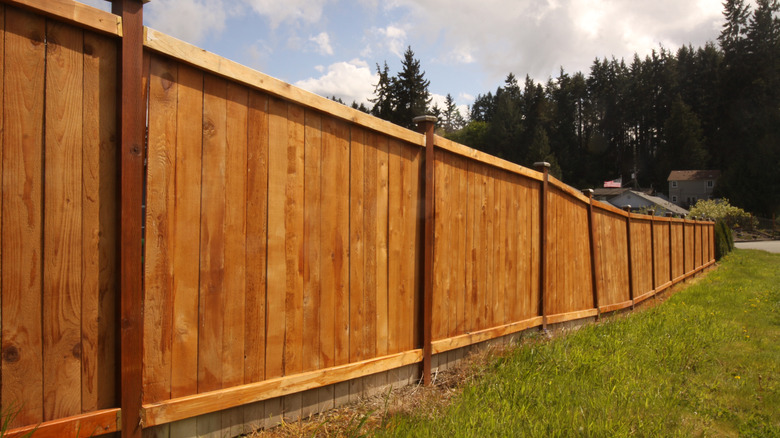
If you feel like your neighbor's fence is just towering above your property, you just might be right. Certain states, like Florida, have multiple rules governing how high someone can build their fence. So you should be familiar with your local ordinances before your neighbor blocks the sun. For example, standards generally cap backyard fences around six feet and front-yard fences closer to four, but cities, counties, and HOAs can enforce stricter limits or unique exceptions.
That dual layer of authority is exactly why so many disputes escalate: If either neighbor skips a permit requirement or HOA review, the other can challenge the fence even after it's built. It's one of the ways your HOA could be affecting your backyard. Even so, there are always exceptions, and in some cases, backyard fences can be up to eight feet high, so always know your local rules! To check whether your neighbor plans to take things too high, or is disputing a height for your fence that you know is perfectly legal, always check your city code, zoning district, and HOA rules so you know the legal height, materials, and placement allowed for your exact location.
In other states, a neighbor's fence height might be capped according to zoning

Zoning laws are local rules that dictate how land and buildings can be used. These rules cover things like how tall buildings can be, where they can be built, and what activities can happen in different areas. They are made and enforced by local officials or planning groups to help organize communities. They can also affect your fence height, so it's important to know the rules before your neighbor takes advantage. In New York City, for example, single-family homes and duplexes typically don't need a permit for a fence up to six feet tall. But "up to six feet" isn't the full story. That is, height limits can vary depending on your lot type, whether your yard faces a street corner, or the specific zoning district you live in. Building code requirements may also apply, particularly if the fence is near a sidewalk or poses safety concerns.
If you live in an area with these height and permitting restrictions, it's important to understand the fine print of what applies to your specific lot and residence type. This way, you can prevent disputes over a neighbor installing a fence that's too tall, blocking your light, or too short, leaving you exposed. If you're the one building the fence, keep a record of your local rules and any approvals you receive, so you have documentation if disagreements arise.
Your neighbor can't block easement access, or you can remove their fence
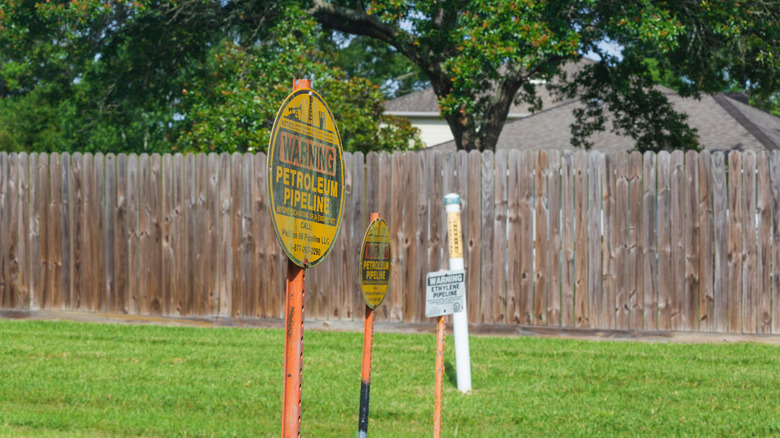
Easements give someone the legal right to use a defined portion of land for things like utilities, drainage, shared driveways, or access paths. Even though fences are sometimes allowed on easements, they can never interfere with the easement holder's ability to reach what they're entitled to. If your neighbor puts a fence across an access or utility easement that you have the right to use, the law says that you can demand that it be taken down.
Knowledge of this area of fencing rights goes both ways. Your vindictive neighbor might watch you put up a fence, knowing that you're going to have to take it right back down because it encroaches on an easement you weren't aware of. You might also find that your neighbors think they can build a fence that blocks your access to your gas meter, for example, since it cuts through their land — when they cannot legally do this. Remember that if a fence blocks someone's equipment or underground lines, they can remove it without waiting for a dispute to be resolved. The property owner may also have to pay for removal and reinstallation. To avoid expensive mistakes, check your recorded easements on your survey, deed, or plat map before building. You can typically find these at the county clerk's office. You should also call the local utility locator service so you know exactly what's buried near your fence line.
Pool safety is a neighbor's issue in some states

Pool safety is a neighbor's issue in many states, especially in places like Arizona, where strict pool-barrier requirements are written directly into local building codes. These rules specify exact fence heights, often at least five feet, required clearances, and the use of self-closing, self-latching gates installed above a certain height to prevent unsupervised access by small children. Because a pool fence is fundamentally a safety device, and because homeowners can be liable if a child enters and is injured, municipalities tend to enforce precise, non-negotiable dimensions for everything from the fence posts to gaps in between them.
Most importantly, the law requires a continuous, non-climbable barrier around every residential pool. That means if your fence or your neighbor's fence forms part of the enclosure but is too low, has gaps, or can be climbed from your side, it can still be considered a violation. The safety standard applies to access from any adjoining yard, not just the street, so both neighbors have a stake in making sure the entire perimeter meets code. It's important to be aware of these laws if your neighbor is building a pool and you have concerns about your children's safety. They might insist they don't need a pool fence, but in some areas, this is incorrect — and more importantly, illegal.
Your neighbor cannot build a spite fence that blocks light, views, or enjoyment of your property

Your neighbor cannot put up a "spite fence" designed to block your light, views, or reasonable enjoyment of your property. If you have a contentious relationship with those who live next door, and all the tips for getting along with difficult neighbors have failed, you do have rights, and you can take action. Fencing disputes like this happen often enough that most states have legislated resolutions.
For example, in California, the civil code defines a spite fence as anything over ten feet high when it doesn't need to be. If it's that tall, the fence can be treated as a private nuisance, and the affected neighbor can seek removal, a court order to lower it, and even damages. Massachusetts has a nearly identical rule, which makes it unlawful to build a fence over six feet tall with the intent to irritate or harass the neighbor next door. While the specifics can differ from state to state, the main idea stays the same: just being tall isn't the issue. The real problem is if someone built the fence with bad intentions, like to bother or block you. If you can prove the fence doesn't have a good reason and was made to mess with your property rights, laws often support you.
The finished' side of the fence must face out, towards their house, not yours
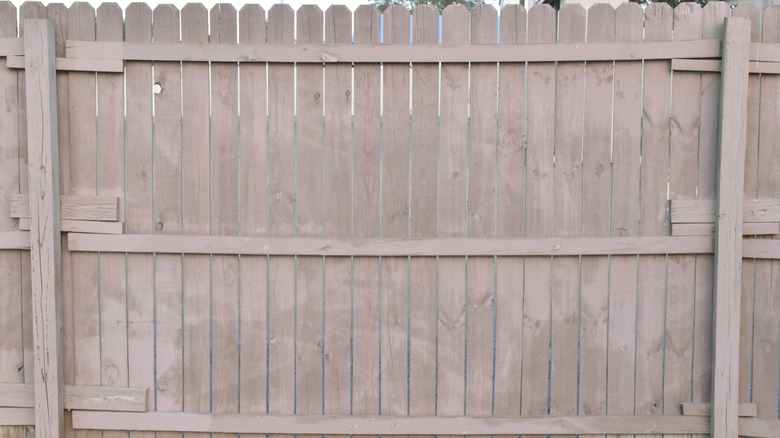
A lot of homeowners don't realize that many cities have rules requiring the good or finished side of a fence to face outward — that is, toward the neighbor or the street — not inward toward the person installing it. This isn't just a courtesy, as it's written directly into many municipal codes to maintain curb appeal and prevent someone from sticking their unfinished structural posts on your side of the property line. It can be frustrating not to have the nice side of the fence to look at from your back door, but with three neighbors, it's possible that at least one side might end up looking your way.
This matters because disputes often start when one neighbor tries to flip the fence to give you the unattractive backside, even though it's their responsibility. If a permit is required, inspectors will check for this orientation, and violating it can trigger corrections or fines. Before anyone starts building, look up your local ordinance or call your permitting office to confirm the rule, then document the property line and any agreements in writing. A quick check now keeps your neighbor from quietly installing a fence that leaves you staring at exposed posts for the next 20 years.
Unpermitted or improperly engineered walls/fences can create criminal or civil liability

Don't let a neighbor convince you that permits are "just paperwork" because they aren't, or that working with a licensed contractor is just a formality, because it isn't. Many cities require permits or engineer-approved plans for certain fences and retaining walls, especially anything tall, load-bearing, or holding back soil. When those structures fail, people face serious civil liability and, in extreme collapse cases, even criminal charges if the accident has killed bystanders.
This is why you should never rely on a neighbor's reassurance that "it's fine" or "nobody checks." Before any work begins, verify whether a permit or engineering review is required and get the approval in writing, especially if it is a load-bearing retaining wall. If your neighbor is building on a shared boundary, ask to see their permit, too. A quick confirmation with your building department can prevent you from being dragged into expensive disputes or blamed for a structure that was never safe to begin with.
In states like Ohio, a neighbor can't claim building costs from you
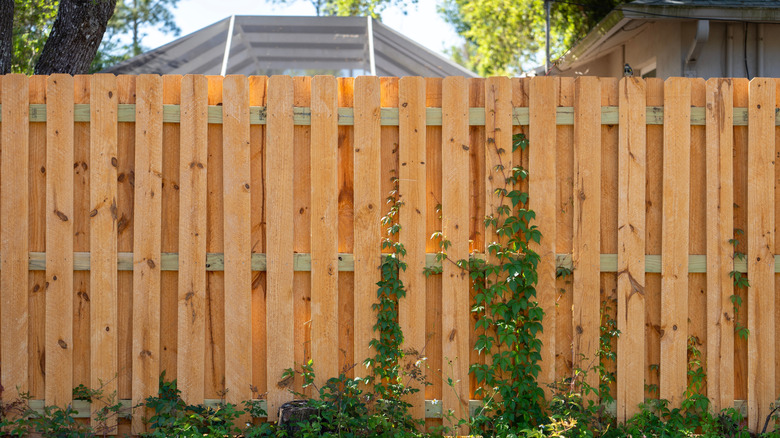
Sharing the cost of a fence is typically what trips people up. For example, if you live in Ohio or somewhere with similar laws, there is a lot of nuance to understand so you don't get taken advantage of by your neighbor. A boundary fence isn't automatically a 50–50 split. Cost-sharing only kicks in when there is proof that a prior "partition fence" existed, or when a previous owner recorded an affidavit with the county showing that both owners were historically responsible for maintaining a shared fence. If no past fence or recorded notice exists, the person who builds a new fence may have to pay the full cost themselves, even if it sits right on the property line.
This is where neighbors sometimes overreach. Someone may build a fence and later try to demand half the cost from you, but if they didn't have legal documentation of a prior shared fence, you aren't obligated to reimburse them. Ohio also requires owners who remove an old fence to record a notice within a year; if they don't, and later rebuild, they may again be responsible for 100% of the cost. So before agreeing to anything, check county recorder filings and verify what was legally established in the past.
Your neighbor's vinyl fence might require a Certificate of Appropriateness if you live in a historic district
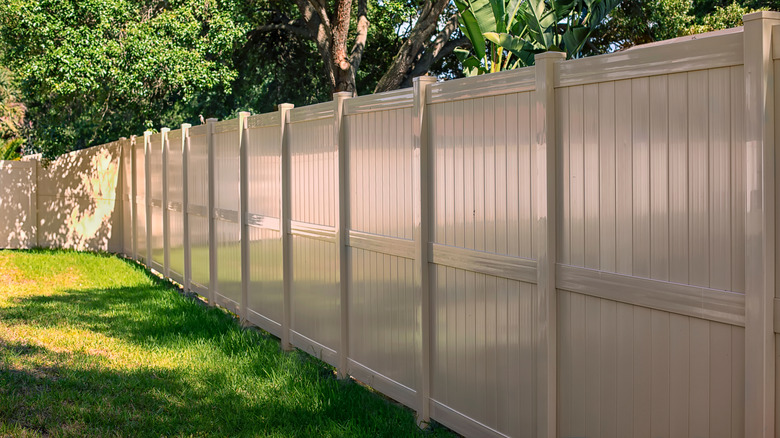
If your home sits in a designated historic district, your neighbor can't just throw up any fence they want. Many cities require a Certificate of Appropriateness before altering anything visible from the street, including fences and gates. These reviews often restrict materials, height, and appearance. In places like Orlando, for example, even minor projects must follow preservation rules if you have a historic property, and plastic or vinyl fencing is outright prohibited.
This becomes a real issue when one neighbor knows the rules and the other doesn't. A savvy neighbor might quietly install a fence that violates historic standards, assuming you won't notice until it's too late. Or worse, they might pressure you to match their noncompliant fence. So if you hate your neighbor's fence and feel like it's ruining everything, one of the easiest ways to boost your home's curb appeal, and that of those around you, is to ensure a compliant one takes its place. If you're in a historic district or have a heritage-listed property, always check with your local preservation board before approving or installing any fence, even if the change seems small. And don't be pressured by a neighbor to follow their lead. Instead, confirm what materials are allowed, what height limits apply, and whether both properties must follow the same design standards.