

Forget Scrubbing: This One Household Staple Melts Away Kitchen Grease Splatters
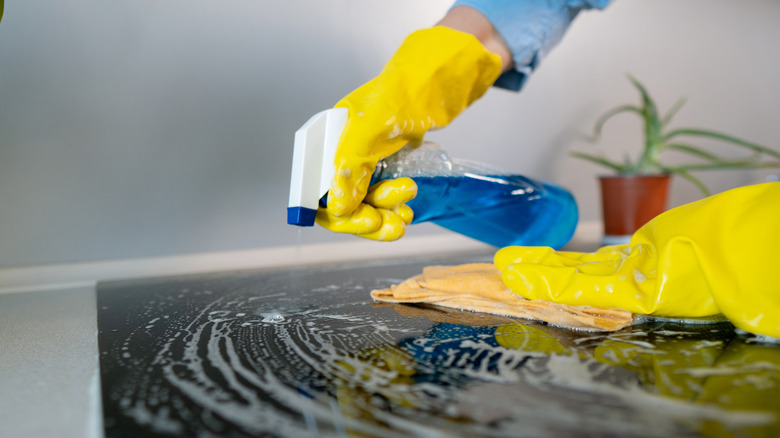
Cleaning tough kitchen stains can be an incredibly ungrateful job. Avid cookers know that the process of preparing food, especially when there's oil involved, can create the most stubborn grease splatters everywhere, leading to scrubbing marathons that don't always produce satisfactory results. Then, when you think you're finally done, you discover some sneaky spot where kitchen grease had been building up without you noticing. Many a remedy has been created, tested, and shared to tackle this challenge, but the solution may already be a part of your house maintenance arsenal, albeit typically used for other purposes.
WD-40, the popular lubricant for squeaky hinges, is actually a fantastic degreaser. Typically used around the garage for grease and grime, it can make a real difference when cleaning your kitchen range hood, walls, and floors. The brand also has a range of water-based degreasing products that break down the oil, making it easier to wipe clean. There are, however, some particularities and precautions to take when using this household staple to melt away grease splatters in your home.
How to use WD-40 to get rid of grease in the kitchen
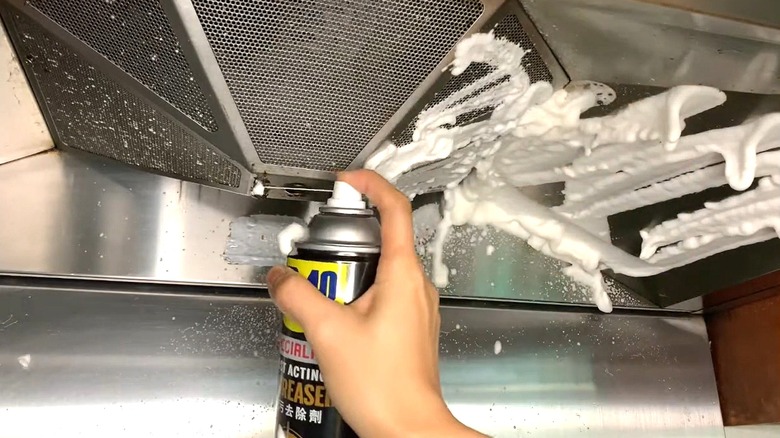
The process of cleaning grease stains with WD-40 is quite straightforward, and it's a genius tip for using WD-40 at home. Simply apply the product to the surface, let it sit for a few seconds up to a few minutes (depending on how ingrained the grime is), and then wipe with a clean cloth. To remove the product residue, wash the surface clean with dish soap and let dry.
This last step is especially important since WD-40 is flammable and toxic. As a rule of thumb, it should not be used on gas appliances, like ranges and grills, or areas that will later come into direct contact with food, like countertops. It's great for floors, walls, exterior cabinet panels, and metal appliance surfaces that are usually kept away from food. Experts also warn against using this product near electrical components. Even when cleaned, the residue can cause electrical shorts. It can also damage plastics, natural stones, woods, rubbers, and paint, so be sure to test it on a small, hidden area before tackling larger surfaces.
The brand does, however, sell different cleaners that promise to solve these issues. The WD-40 Specialist Electric Parts Cleaner claims to be safe for electronics, plastics, and rubbers, getting rid of oil and grease without leaving dangerous residue. In turn, the WD-40 Specialist Cleaner & Degreaser is a non-flammable, low-odor, and biodegradable alternative to WD-40's more aggressive products, which can also be used on granite, paint, rubber, and plastics. With that said, consumers should still take care to read labels, instructions, and warnings before using these products in the kitchen.